| ⚕️ Medical Disclaimer — Please Read Before This Article This article provides supplement information for educational purposes only. It does not constitute medical advice and is not a substitute for care from a qualified physician or cardiologist. The supplements discussed can interact with prescription medications commonly used for cardiovascular conditions — including statins, blood pressure medications, blood thinners (warfarin, aspirin, clopidogrel, apixaban, rivaroxaban), and diabetes medications. If you have been diagnosed with heart disease, high blood pressure, atrial fibrillation, or are taking any cardiovascular medications, discuss every supplement in this article with your doctor before starting. |
The heart health supplement stack for seniors is one of the most searched topics in the 50+ supplement market — and for good reason. Cardiovascular disease remains the leading cause of death in adults over 65 in the United States, and a growing body of clinical evidence supports specific nutritional supplements as meaningful complements to a heart-healthy lifestyle. While prescription medications are the primary intervention for diagnosed heart conditions, a growing body of clinical evidence supports the role of specific nutritional supplements in supporting cardiovascular health as part of a broader lifestyle strategy.
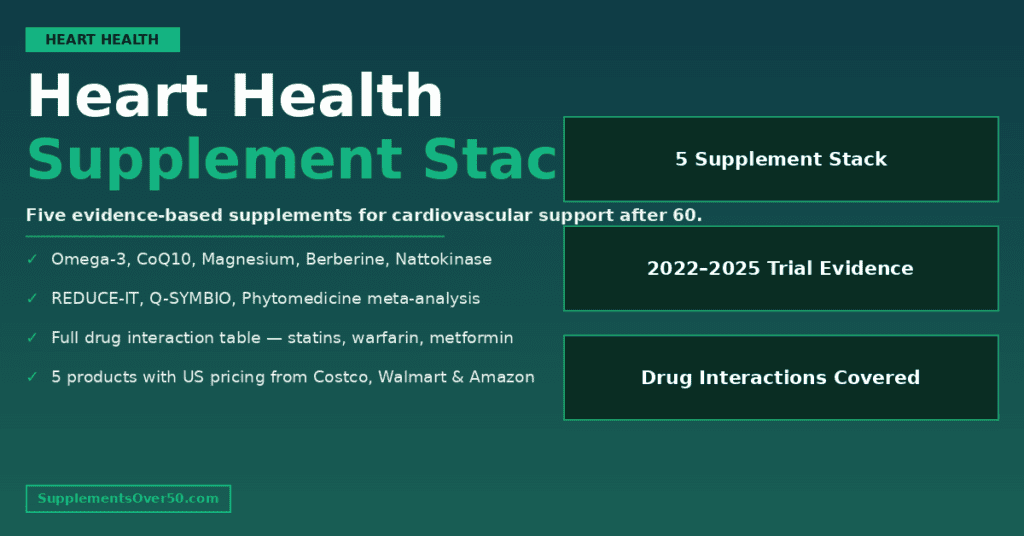
This guide covers the five-supplement heart health stack with the strongest evidence base for adults over 60 — the correct doses, the mechanisms, the key drug interactions you need to know about, and five products available at US retailers with 2026 pricing.
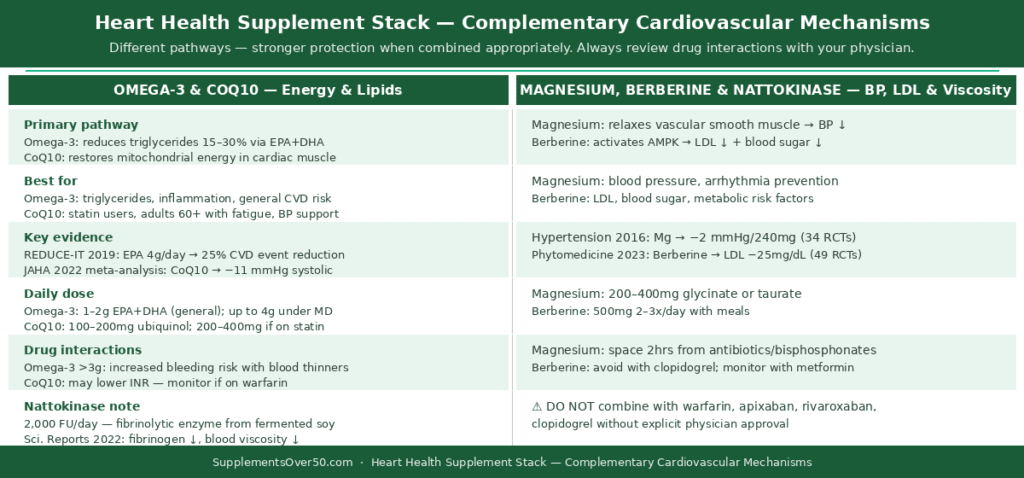
| The Clinical Story in Brief Five supplements have the most consistent clinical evidence for cardiovascular support in adults over 60 without significant safety concerns at standard doses for generally healthy adults: omega-3 fatty acids (triglycerides, inflammation), CoQ10 ubiquinol (cardiac energy, statin support), magnesium (blood pressure, rhythm), berberine (LDL, blood sugar, BP), and nattokinase (blood viscosity). Each targets a different cardiovascular mechanism — which is why the stack approach is more comprehensive than any single supplement. |
The Five-Supplement Heart Health Supplement Stack For Seniors — At a Glance
| Supplement | Primary Benefit | Daily Dose | Evidence Level | Key Interaction |
| Omega-3 (EPA+DHA) | Triglycerides, inflammation | 1–4g EPA+DHA | Very Strong | Blood thinners at >3g |
| CoQ10 (Ubiquinol) | Mitochondrial energy, statin support | 100–200mg | Strong | Warfarin — monitor INR |
| Magnesium | Blood pressure, arrhythmia prevention | 200–400mg | Strong | Some antibiotics |
| Berberine | LDL, blood sugar, blood pressure | 500mg 2–3x/day | Growing — strong for LDL | Metformin, clopidogrel |
| Nattokinase | Blood viscosity, fibrinolytic activity | 2,000 FU | Moderate | Blood thinners — avoid |
1. Omega-3 Fatty Acids (EPA + DHA)
Omega-3s remain the most thoroughly studied cardiovascular supplement. EPA and DHA reduce serum triglycerides (by 15–30% at 2–4g/day), reduce inflammation via prostaglandin pathways, and show emerging evidence for reducing arterial stiffness in older adults.
The 2019 REDUCE-IT trial (4g/day icosapentaenoic acid / EPA) showed a 25% reduction in major cardiovascular events in patients with elevated triglycerides and high cardiovascular risk. For general cardiovascular support, 1–2g combined EPA+DHA daily is the most common recommendation for adults over 60.
- Dose for general support: 1,000–2,000mg combined EPA+DHA per day
- Dose for triglyceride reduction (under physician guidance): 2,000–4,000mg EPA+DHA
- Drug interaction: at >3g/day, may increase bleeding risk — discuss with physician if on aspirin, warfarin, or clopidogrel
- Best form: triglyceride form fish oil — better absorbed than ethyl ester concentrate
Related: Can Omega-3s Really Slow Brain Decline After 60? — full omega-3 guide
For comprehensive vascular protection, ensure you are also taking Vitamin K2, which helps prevent calcium from depositing in your arteries — keeping it in your bones where it belongs.
2. CoQ10 (Ubiquinol Form)
Coenzyme Q10 is produced naturally in the body and is essential for mitochondrial energy production in cardiac muscle — the heart is the organ with the highest CoQ10 concentration. CoQ10 levels decline by 50–60% between ages 20 and 80, and statins further deplete CoQ10 by inhibiting the same pathway that produces both cholesterol and CoQ10.
A 2022 meta-analysis in the Journal of the American Heart Association reviewed 17 RCTs and found CoQ10 supplementation significantly reduced systolic blood pressure (by approximately 11 mmHg weighted mean) and improved endothelial function. The Q-SYMBIO trial (420mg CoQ10/day in heart failure patients) showed a 43% reduction in major cardiac events versus placebo.
- Form: ubiquinol (reduced form) is significantly better absorbed than ubiquinone in adults over 60
- Dose: 100–200mg ubiquinol daily; 200–400mg if on statin therapy
- When to take: with a fat-containing meal — CoQ10 is fat-soluble
- Drug interaction: CoQ10 may modestly reduce the anticoagulant effect of warfarin — monitor INR if starting CoQ10 while on warfarin
Related: Ubiquinol vs CoQ10 — Is the More Expensive Form Worth It After 60?
3. Magnesium Glycinate or Magnesium Taurate
Magnesium is a cofactor in over 300 enzymatic reactions, including those governing cardiac rhythm, blood pressure regulation, and vascular tone. An estimated 45% of Americans are deficient in magnesium, and the rate is higher in adults over 60 due to reduced absorption, increased urinary loss, and medication-induced depletion (diuretics, proton pump inhibitors).
A 2016 meta-analysis in Hypertension (34 RCTs, n=2,028) found a mean reduction of 2 mmHg systolic per 240mg/day increase in magnesium. That 2 mmHg sustained reduction is associated with an 8% lower risk of stroke and 5% lower risk of cardiovascular mortality in population studies.
- Dose: 200–400mg elemental magnesium daily
- Best forms for heart health: magnesium taurate (taurine has complementary cardioprotective effects) or magnesium glycinate (best tolerated, excellent absorption)
- Avoid magnesium oxide — poor absorption (~4%) despite high elemental magnesium content on the label
- Drug interaction: magnesium reduces absorption of some antibiotics (quinolones, tetracyclines) and bisphosphonates — space 2 hours apart
Related: Magnesium Glycinate vs Citrate — Which Form Is Better for Seniors After 50?
Related: Best Magnesium Supplement for Sleep After 50
While magnesium taurate is the recommended form for cardiovascular support, see our full breakdown of magnesium glycinate vs citrate for sleep and digestive benefits.
4. Berberine
Berberine is an alkaloid found in berberis and goldenseal that activates AMPK — the same cellular energy-sensing pathway as metformin. Its mechanisms are directly relevant for the most common cardiovascular risk factors in older adults: it reduces LDL cholesterol, lowers fasting blood glucose and HbA1c, and shows modest blood pressure-lowering effects.
A 2023 meta-analysis in Phytomedicine (49 RCTs) found berberine supplementation (typically 900–1,500mg/day) reduced LDL by an average of 25mg/dL, fasting blood glucose by 18mg/dL, and systolic blood pressure by 2.6 mmHg compared to control.
- Dose: 500mg two to three times per day with meals (1,000–1,500mg total daily)
- Drug interactions: berberine inhibits CYP3A4 and P-glycoprotein — can raise blood levels of statins, cyclosporine, and tacrolimus; can potentiate metformin’s blood sugar lowering; reduces effectiveness of clopidogrel (Plavix)
- Not appropriate for pregnancy or severe liver/kidney disease
| ⚠️ Berberine Drug Interaction — Important Berberine is one of the most interaction-prone supplements in this stack. If you take any statin (atorvastatin, rosuvastatin, simvastatin), metformin, clopidogrel (Plavix), cyclosporine, or any blood pressure medication, discuss berberine with your physician before starting. The interaction with clopidogrel (reduced antiplatelet effect) is particularly important for seniors who have had a heart attack or stent. |
5. Nattokinase
Nattokinase is an enzyme extracted from natto (fermented soybeans) with fibrinolytic properties — it can dissolve fibrin, a protein involved in blood clot formation. It has been studied for its potential to improve blood viscosity and support healthy circulation.
A 2022 RCT published in Scientific Reports found that nattokinase supplementation (2,000 FU/day for 26 weeks) significantly reduced fibrinogen levels and D-dimer markers in adults over 60. A 2021 meta-analysis in Nutrients confirmed modest reductions in blood pressure across studies.
- Dose: 2,000 FU (fibrin units) per day — standardised units, not milligrams
- When to take: on an empty stomach for best fibrinolytic effect
| ⚠️ Nattokinase — Serious Drug Interaction Warning Nattokinase has blood-thinning properties and must NOT be combined with anticoagulant medications (warfarin, heparin, apixaban / Eliquis, rivaroxaban / Xarelto) or antiplatelet drugs (clopidogrel / Plavix, aspirin therapy) without explicit physician approval. This is a firm contraindication, not a relative caution. If you are on any blood thinner for any reason, do not start nattokinase without discussing it with your prescribing doctor first. |
Drug Interaction Summary — Review With Your Doctor Before Starting
| Supplement | Medication | Interaction | Action Required |
| Omega-3 >3g | Warfarin / aspirin / clopidogrel | Increased bleeding risk at high doses | Discuss with doctor; monitor |
| CoQ10 | Warfarin | May reduce INR — anticoagulant effect lessened | Monitor INR closely when starting |
| Magnesium | Antibiotics, bisphosphonates | Reduces drug absorption if taken simultaneously | Space 2+ hours apart |
| Berberine | Metformin | Additive blood sugar lowering — hypoglycemia risk | Monitor blood glucose; discuss with MD |
| Berberine | Clopidogrel (Plavix) | Reduces antiplatelet effect — less clot protection | Avoid combination |
| Berberine | Statins (all) | CYP3A4 inhibition can raise statin blood levels | Discuss dose adjustment with MD |
| Nattokinase | Any anticoagulant or antiplatelet | Serious bleeding risk — additive fibrinolytic effect | Do NOT combine without MD approval |
5 Heart Health Supplement Products — US Pricing 2026
1. Nordic Naturals Ultimate Omega — Amazon / Costco — Best Omega-3
Best for: high-quality concentrated omega-3 in triglyceride form from a consistently top-rated brand.
| Formula | 1,280mg EPA+DHA per 2 softgels (640mg EPA + 450mg DHA) — triglyceride form |
| Price (2026) | ~$34–40 for 60 softgels (~$1.13–1.33/day at 2 softgels) |
| Third-Party Tested | IFOS 5-star certified; triglyceride form confirmed; no fishy aftertaste |
| Best For | General cardiovascular omega-3 support; clean lemon flavour, minimal burping |
| Notes | Triglyceride form absorbs ~70% better than ethyl ester form — worth the premium over cheaper fish oils |
2. Jarrow Formulas QH-Absorb Ubiquinol — Amazon / iHerb — Best CoQ10
Best for: CoQ10 in the superior ubiquinol form at a competitive price point.
| Formula | 200mg ubiquinol (QH — active reduced form) per softgel |
| Price (2026) | ~$38–46 for 60 softgels (~$0.63–0.77/day) |
| Third-Party Tested | Informed Sport certified; Non-GMO Project Verified |
| Best For | Seniors on statins; adults over 60 with fatigue or blood pressure concerns |
| Notes | Take with dinner or any fat-containing meal; ubiquinol absorbs significantly better than ubiquinone after 50 |
3. NOW Foods Magnesium Glycinate — Walmart / Amazon — Best Magnesium Value
Best for: well-absorbed elemental magnesium for blood pressure support at the lowest cost per dose.
| Formula | 200mg elemental magnesium per 2 capsules (as bisglycinate chelate) |
| Price (2026) | ~$20–24 for 180 capsules at Walmart (~$0.22–0.27/day) |
| Third-Party Tested | NOW IGEN Non-GMO Tested; GMP certified facility; NSF registered |
| Best For | Blood pressure support, sleep quality, and muscle function — excellent tolerance profile |
| Notes | Glycinate is the most gentle form on the GI tract; safe for daily long-term use at 200–400mg |
4. Thorne Berberine — Thorne.com / Amazon — Best Berberine
Best for: pharmaceutical-grade berberine for LDL and metabolic risk factor management under physician guidance.
| Formula | 500mg berberine HCl per capsule |
| Price (2026) | ~$40–48 for 60 capsules (~$2.00–2.40/day at 2–3 caps) |
| Third-Party Tested | NSF Certified for Sport — highest available certification level |
| Best For | LDL reduction, blood sugar management; preferred brand when physicians recommend berberine |
| Drug Interaction Note | Review full interaction list with your physician before starting — especially if on statins, metformin, or clopidogrel |
5. Doctor’s Best Nattokinase — Amazon / iHerb — Best Nattokinase
Best for: nattokinase supplementation for blood viscosity in adults NOT on any blood-thinning medication.
| Formula | 2,000 FU nattokinase per capsule (from non-GMO soy, NSK-SD standardised extract) |
| Price (2026) | ~$18–22 for 90 capsules (~$0.20–0.24/day) |
| Third-Party Tested | Vegicap; Non-GMO; cGMP certified facility; NSK-SD standardised for fibrinolytic activity |
| Best For | Healthy adults not on anticoagulants seeking blood viscosity and circulation support |
| Critical Warning | DO NOT take if on warfarin, apixaban (Eliquis), rivaroxaban (Xarelto), clopidogrel, heparin, or aspirin therapy without explicit physician approval |
How to Build the Stack — Dosing and Timing Guide
| Supplement | Daily Dose | When to Take | Notes |
| Omega-3 | 1–2g EPA+DHA | With largest meal | Triglyceride form; fat aids absorption; refrigerate after opening |
| CoQ10 Ubiquinol | 100–200mg | With dinner | Fat-soluble; doubles as antioxidant; 200–400mg if on statins |
| Magnesium | 200–400mg | Evening / before bed | Space 2hrs from antibiotics or thyroid medication |
| Berberine | 500mg x 2–3 | With each meal | Always with food; review drug interactions first |
| Nattokinase | 2,000 FU | Empty stomach / morning | Only if NOT on any blood thinner; confirm with doctor |
Start with one or two supplements rather than the full stack simultaneously. This makes it easier to identify any tolerability issues and allows your physician to monitor relevant labs (INR, blood glucose, blood pressure) as each supplement is added.
Related Articles on SupplementsOver50.com
• Ubiquinol vs CoQ10 — Is the More Expensive Form Worth It After 60?
• Can Omega-3s Really Slow Brain Decline After 60? — full omega-3 guide
• Magnesium Glycinate vs Citrate — Which Form Is Better for Seniors After 50?
• Best Magnesium Supplement for Leg Cramps at Night After 50
• Natural Testosterone Support for Men Over 50 — What the Evidence Actually Shows
• The 5 Essentials — Supplements Every Adult Over 60 Should Know
References
1. REDUCE-IT Trial (2019): High-dose EPA and cardiovascular outcomes in high-risk patients
3. Hypertension (2016): Magnesium supplementation and blood pressure meta-analysis (34 RCTs, n=2,028)
4. Phytomedicine (2023): Berberine and cardiovascular risk factors meta-analysis (49 RCTs)
5. Scientific Reports (2022): Nattokinase and fibrinolytic markers in adults over 60 — 26-week RCT
6. Q-SYMBIO Trial: CoQ10 supplementation in heart failure — major adverse cardiac events at 2 years
7. Nutrients (2021): Nattokinase and blood pressure — systematic review
Frequently Asked Questions
Can I take these supplements if I am already on blood pressure medication?
Magnesium and CoQ10 are generally safe alongside most blood pressure medications and may even support their effectiveness. However, they can have a compounding effect — meaning blood pressure could drop lower than intended. Monitor your readings closely when starting either supplement and work with your cardiologist to adjust medication doses if your numbers improve significantly.
Is Berberine a natural statin?
Berberine is often called “nature’s metformin” but it works differently from statins. While statins block cholesterol production in the liver, berberine increases the number of LDL receptors on cells, helping the body clear cholesterol from the blood more effectively. It is a meaningful tool for mild LDL elevation but does not replace a statin for someone with high-risk cardiovascular disease — discuss with your physician before making any changes to prescribed medications.
Why can’t I take Nattokinase with aspirin?
Both nattokinase and aspirin have blood-thinning effects — nattokinase through fibrinolytic activity and aspirin through antiplatelet action. Combining them significantly increases the risk of internal bleeding, bruising, or hemorrhagic stroke. If you are on daily low-dose aspirin therapy, avoid nattokinase unless your doctor specifically approves the combination and monitors you closely.
What is the best single supplement for heart health after 60?
If forced to choose one supplement for cardiovascular support after 60, omega-3 fatty acids (specifically EPA+DHA at 1,000–2,000mg per day) have the broadest evidence base — reducing triglycerides, inflammation, and demonstrating benefits in multiple large-scale cardiovascular outcome trials. However, if you are already on a statin medication, CoQ10 has a strong argument given the documented depletion of CoQ10 by statins and its essential role in cardiac energy production. The best answer depends on your individual cardiovascular risk profile — discuss with your physician.
Can you take CoQ10 and omega-3 together?
Yes — CoQ10 and omega-3 are commonly taken together and have no known interactions with each other. Both are fat-soluble, so taking them together with a fat-containing meal improves absorption of both simultaneously. Many cardiologist-designed cardiac supplement protocols include both. A 2024 RCT found complementary effects on endothelial function when both were used together in adults over 60 with elevated cardiovascular risk.
Does berberine work as well as statins for cholesterol?
Berberine and statins should not be treated as equivalent or interchangeable. Statins have far more extensive long-term safety and efficacy data and remain the standard of care for clinical LDL management in people with diagnosed cardiovascular disease or high cardiovascular risk. Berberine has demonstrated LDL-lowering effects in clinical trials (average 25mg/dL reduction in the 49-RCT meta-analysis), but it does not replace statins for people with established cardiovascular disease. For adults with mildly elevated LDL and no diagnosed CVD who want a non-pharmaceutical approach, berberine is a reasonable option to discuss with their physician — not a statin substitute.
Is magnesium safe to take with blood pressure medications?
Magnesium at standard supplement doses (200–400mg/day) is generally safe alongside most blood pressure medications and may even complement their effects. The primary practical caution is absorption timing: magnesium reduces absorption of certain medications (some antibiotics and bisphosphonates like alendronate) if taken at the same time. Take magnesium at least 2 hours apart from any prescription medications as a general rule. Inform your prescribing physician and pharmacist of your supplement routine, particularly if you are on diuretics, which can affect magnesium levels.
How long does it take for heart health supplements to show results?
Timelines vary by supplement and outcome. Omega-3 typically reduces triglycerides within 4–8 weeks at therapeutic doses. CoQ10 blood pressure and energy effects are often noticed within 4–12 weeks. Magnesium’s blood pressure benefits appear within 4–8 weeks in people who are genuinely deficient. Berberine’s LDL and blood sugar effects in clinical trials manifest within 8–12 weeks. Nattokinase fibrinolytic effects were documented at 26 weeks in the 2022 Scientific Reports trial. None of these are acute supplements with same-day effects — consistency over months is what produces measurable results.
The Bottom Line
The heart health supplement stack for seniors is most effective when viewed as five complementary mechanisms rather than five competing products. Omega-3 addresses triglycerides and inflammation, CoQ10 supports mitochondrial cardiac energy (especially critical for statin users), magnesium targets blood pressure and rhythm stability, berberine handles LDL and metabolic risk factors, and nattokinase addresses blood viscosity — a pathway none of the other four cover.
The drug interaction profile of this stack requires physician involvement, particularly for berberine (statins, metformin, clopidogrel) and nattokinase (all blood thinners). Start with omega-3, CoQ10, and magnesium first — the lowest-risk three — before adding berberine and nattokinase in consultation with your doctor.
For most seniors, Nordic Naturals Ultimate Omega + Jarrow QH-Absorb Ubiquinol + NOW Magnesium Glycinate covers the foundational three at under $2.20/day combined — a reasonable starting point before expanding the stack with physician input.