| ⚕️ Supplement Disclosure This article reviews prebiotic supplements for informational purposes only. Adults with irritable bowel syndrome (IBS), Crohn’s disease, SIBO (small intestinal bacterial overgrowth), or other diagnosed digestive conditions should consult their doctor before starting prebiotic supplements, as fermentable fibers can worsen symptoms in these conditions. Adults taking prescription medications should space prebiotic supplements at least 2 hours from medication doses. This article does not constitute medical advice. |
Prebiotics for seniors are one of the most underrated gut health interventions available — and after 60, they matter more than most people realize. While probiotics add beneficial bacteria to your gut, prebiotics feed the ones you already have. A 2024 study published in Nutrients, drawing on gut microbiome data from over 1,400 adults, found that the gut microbiomes of adults over 65 showed significantly reduced bacterial diversity — particularly declining levels of Bifidobacterium and Lactobacillus populations. Prebiotics represent one of the most targeted interventions for rebuilding this diversity without the unpredictability of adding live bacterial strains.
This guide covers the three prebiotic types with the strongest evidence for older adults, how they differ from each other, what you can realistically expect, and five products available at US retailers with 2026 pricing.
What Are Prebiotics For Seniors — and Why Does Age Change Everything?
Prebiotics are non-digestible dietary fibers that travel intact through the small intestine to the colon, where resident gut bacteria ferment them for energy. The fermentation process produces short-chain fatty acids (SCFAs) — primarily butyrate, propionate, and acetate — which nourish the intestinal lining, regulate local inflammation, and send signaling compounds to the immune system.
Prebiotics, Immune Health and Vaccine Response After 60
Around 70–80% of your immune cells are located in gut-associated lymphoid tissue — making your gut microbiome the largest immune organ in the body. For seniors, this connection has a very practical implication: the strength of your Bifidobacterium populations may directly affect how well you respond to vaccines.
A 2025 meta-analysis in Nutrition Journal (29 RCTs, 1,633 participants aged 60+) found that prebiotic supplementation increased Bifidobacterium abundance with an effect size of SMD 1.09 — nearly three times stronger than probiotics alone (SMD 0.40). Since Bifidobacterium supplementation has been shown to enhance influenza vaccine seroconversion rates by approximately 30% in clinical models, this is a meaningful finding for seniors who receive annual flu shots or shingles vaccines.
A 2024 systematic review in npj Vaccines confirmed that gut microbiota composition and SCFA profiles correlate with immune responses to influenza, polio, and COVID-19 vaccines. Adults with more diverse, Bifidobacterium-rich microbiomes mounted stronger and more durable antibody responses. Prebiotic fiber — by feeding Bifidobacterium — is one of the most accessible ways to shift the gut in this direction before vaccination season.
After 60, three things shift simultaneously:
- Gut motility slows, reducing the diversity of bacterial populations that thrive in regular transit
- Dietary fiber intake typically drops below the 25–38g daily recommendation for this age group
- The ratio of beneficial-to-neutral bacteria tilts toward inflammation-promoting species over time
Prebiotic supplementation directly addresses this pattern by selectively feeding the beneficial species that tend to decline with age — particularly Bifidobacterium and Lactobacillus, both of which are strongly associated with reduced gut inflammation, improved immune function, and better bowel regularity in older adults.
Prebiotics and Brain Fog — The Gut-Brain Axis Connection
The connection between your gut and your brain is not metaphorical — it is anatomical. The vagus nerve runs directly between the gut and the brain, and the gut microbiome produces roughly 90% of the body’s serotonin and significant quantities of GABA, both neurotransmitters that regulate mood, focus, and cognitive clarity.
For seniors experiencing brain fog, the gut-brain axis is increasingly relevant. When gut bacteria ferment prebiotic fiber, the resulting short-chain fatty acids — particularly butyrate — reduce neuroinflammation by crossing the blood-brain barrier and suppressing pro-inflammatory cytokines in the brain. Low-grade neuroinflammation is now recognised as a leading contributor to age-related cognitive decline and the subjective “fog” that many seniors describe as a loss of mental sharpness.
This does not make prebiotics a treatment for cognitive decline — but it does position them as part of a longevity strategy that extends well beyond digestive regularity.
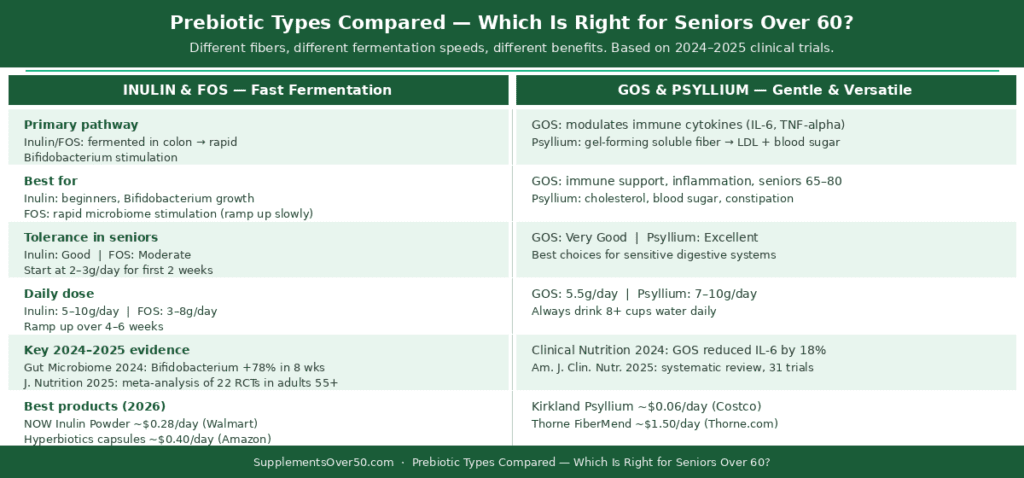
The Three Prebiotic Types With the Strongest Evidence for Older Adults
1. Inulin
Inulin is a long-chain fructan found naturally in chicory root, Jerusalem artichoke, and garlic. It is the most studied prebiotic for older adults and forms the basis of most commercial prebiotic supplements.
A 2023 randomized controlled trial in Gut Microbes assigned 120 adults aged 65 and older to either 10g daily inulin or placebo for 12 weeks. The inulin group showed significant increases in Bifidobacterium longum and measurable reductions in fecal calprotectin — a marker of gut inflammation — compared to placebo. Bowel transit time also improved in the supplementation group.
Effective dose: 5–10g daily. Start at 3–5g and titrate up over two weeks to minimize the gas and bloating that commonly occur when transitioning from a low-fiber baseline.
2. Fructooligosaccharides (FOS)
FOS are short-chain fructans closely related to inulin. Found in bananas, onions, and asparagus, they are often combined with inulin in prebiotic blends because they are fermented more rapidly, producing a faster short-chain fatty acid response.
A 2024 meta-analysis in The American Journal of Clinical Nutrition reviewing 18 randomized controlled trials found that FOS supplementation in adults over 60 produced statistically significant improvements in constipation frequency, Bifidobacterium counts, and interleukin-6 levels (IL-6 is a pro-inflammatory cytokine chronically elevated in many older adults).
Effective dose: 3–8g daily. FOS tends to cause more gas than inulin at high doses due to faster fermentation — starting low is especially important here.
3. Resistant Starch (RS)
Resistant starch is a prebiotic fiber found in cooled cooked potatoes, green bananas, legumes, and certain supplements. Unlike inulin and FOS — which primarily feed Bifidobacterium — resistant starch preferentially feeds butyrate-producing bacteria including Faecalibacterium prausnitzii and Roseburia intestinalis.
Butyrate is particularly relevant for seniors: a 2025 review in Cell Host & Microbe identified butyrate as a key regulator of intestinal barrier integrity and a suppressor of low-grade chronic inflammation (“inflammaging”) associated with elevated age-related disease risk.
Effective dose: 15–20g daily from food and supplement combined. Green banana flour and potato starch are the most accessible resistant starch supplement forms.
Prebiotics vs. Probiotics: What Seniors Actually Need
| Factor | Prebiotics | Probiotics |
| What they are | Non-digestible fibers that feed bacteria | Live bacterial strains added to the gut |
| Primary benefit | Selectively increase existing beneficial species | Temporarily increase specific bacterial counts |
| Survivability | Not affected by stomach acid | Viability depends on strain, storage, formulation |
| Evidence in seniors | Strong — multiple RCTs in 65+ populations | Variable — strain-dependent, less age-specific data |
| Drug interactions | Minimal — may slow absorption of some medications | Some interactions with immunosuppressants |
| Monthly cost (US) | $15–35 | $25–60+ |
| Best for | Long-term microbiome diversity building | Post-antibiotic recovery, IBS-D, specific conditions |
The practical takeaway: most seniors benefit from prioritizing prebiotics before layering in probiotics. Feeding what’s already in your gut is generally more sustainable than repeatedly adding new strains that may not survive transit. See our companion guide for a full comparison:
Related: Best Probiotic for Seniors Over 60 — Which Strains Actually Work and Why
Signs Your Gut Microbiome May Need Support After 60
- Irregular bowel movements (fewer than 3 per week or more than 3 per day)
- Frequent bloating or gas after eating fiber-rich foods
- Recurring mild digestive discomfort without a diagnosed condition
- Slow recovery after a course of antibiotics
- Lower immune resilience — more frequent minor colds or infections
- Increased food sensitivities that were not present a decade ago
If you are experiencing any of these symptoms, prebiotic supplementation addresses the root cause rather than the symptom. Restoring Bifidobacterium and butyrate-producing bacteria populations can resolve several of these patterns simultaneously within 6–12 weeks of consistent supplementation.
5 Best Prebiotic Supplements for Seniors — US Pricing 2026
1. Heather’s Tummy Fiber (Inulin) — Amazon / iHerb — Best for Sensitive Digestion
Best for: seniors with a history of digestive sensitivity who want a low-gas inulin option.
| Prebiotic Type | Organic long-chain inulin (acacia / chicory), 4–8g per serving |
| Price (2026) | ~$22–28 for 16oz (~$22–28/month at 5g/day) |
| Third-Party Tested | FODMAP-certified; Non-GMO; designed specifically for sensitive digestion |
| Best For | Seniors who have tried other prebiotics and experienced excessive gas |
| Notes | Powder format; mixes into water or cold beverages; lower fermentation speed = less bloating |
2. Garden of Life Dr. Formulated Prebiotic — Walmart / Amazon — Best Organic
Best for: seniors wanting an organic-certified prebiotic that pairs with a probiotic line.
| Prebiotic Type | Organic inulin + FOS blend, 6g per serving |
| Price (2026) | ~$28–35/month at 1 serving/day |
| Third-Party Tested | USDA Organic, Non-GMO Project Verified, NSF GMP certified |
| Best For | Seniors building a combined prebiotic + probiotic routine (synbiotic approach) |
| Notes | Pairs directly with Garden of Life Dr. Formulated Probiotics for Once Daily 50 Billion |
3. Bob’s Red Mill Potato Starch — Costco / Amazon — Best Resistant Starch Value
Best for: seniors who want the resistant starch pathway at the lowest possible cost.
| Prebiotic Type | Resistant starch (RS2), ~8g resistant starch per tablespoon |
| Price (2026) | ~$8–12 for 24oz (approximately 45–60 servings — under $0.25/day) |
| Third-Party Tested | Non-GMO Project Verified; Bob’s Red Mill quality standards |
| Best For | Budget-conscious seniors; those who want to add resistant starch to food |
| Critical Note | Must be used cold or at room temperature — heating above 140°F converts RS to digestible starch |
4. Prebiotin Prebiotic Fiber — Amazon / Prebiotin.com — Best Clinically Studied
Best for: seniors who want a clinically validated enriched inulin formula designed for the 50+ population.
| Prebiotic Type | OEI (oligofructose-enriched inulin) — 5g per serving |
| Price (2026) | ~$30–38/month at 1 serving/day |
| Third-Party Tested | Non-GMO; gluten-free; manufactured in NSF-certified facility |
| Best For | Seniors seeking a product with clinical research on the specific OEI form |
| Notes | OEI combines long and short chain inulin; broader spectrum of bacterial stimulation than pure inulin |
5. NOW Inulin Pure Powder — Walmart / iHerb — Best Value
Best for: seniors who want pharmaceutical-grade inulin at the lowest cost per gram.
| Prebiotic Type | Pure chicory inulin, 5g per rounded teaspoon |
| Price (2026) | ~$15–20 for 227g (~$15–20/month at 5g/day) — NOW IGEN Non-GMO |
| Third-Party Tested | IGEN Non-GMO Tested; GMP certified facility; NSF registered |
| Best For | No-frills seniors; those who want to mix prebiotic into coffee, yogurt or smoothies |
| Notes | Slightly sweet taste from chicory; unflavored; dissolves easily in cold or warm liquids |
How to Take Prebiotics After 60 — Practical Dosing Guide
| Week | Daily Dose | What to Expect | Notes |
| 1–2 | 3–5g (half serving) | Minimal symptoms | Take with largest meal of the day |
| 3–4 | 5–8g (full serving) | Mild bloating possible — normal | Drink at least 8 cups of water daily |
| 5–6 | 8–12g | Adaptation usually complete | Consistent daily timing helps |
| 7+ | 8–20g (maintenance) | Full benefits accumulating | Clinical results measured at 8–12 weeks |
Many seniors take magnesium citrate for regularity, but adding a daily prebiotic fiber provides a more natural, long-term solution for bowel health.
Note: if you take metformin, warfarin, thyroid medication (levothyroxine), or other daily prescription drugs, take those at least 2 hours apart from prebiotic supplements, as high fiber intake can slightly alter absorption timing for some medications.
| ⚠️ Who Should Use Caution With Prebiotic Supplements Adults with SIBO (small intestinal bacterial overgrowth), active Crohn’s disease, or severe IBS should consult their gastroenterologist before starting prebiotic supplements. Fermentable fibers can worsen SIBO symptoms and trigger flares in active inflammatory bowel disease. For adults who have had gastric bypass or other bowel surgery, discuss with your surgical team before starting any fiber supplement. |
Related Articles on SupplementsOver50.com
• Best Probiotic for Seniors Over 60 — Which Strains Actually Work and Why
• The 5 Essentials — Supplements Every Adult Over 60 Should Know
• Magnesium Glycinate vs Citrate — Which Form Is Better for Seniors After 50?
• Creatine for Seniors — Brain, Muscle and Energy Benefits
• Signs of Vitamin B12 Deficiency in Adults Over 60
• Ubiquinol vs CoQ10 — Is the More Expensive Form Worth It After 60?
References
1. Nutrients 2024 — Gut microbiome diversity in adults over 65
2. Gut Microbes 2023 — Inulin RCT in adults 65+: Bifidobacterium and fecal calprotectin
3. American Journal of Clinical Nutrition 2024 — FOS meta-analysis in adults 60+
4. Cell Host & Microbe 2025 — Butyrate, intestinal barrier, and inflammaging review
5. PubMed 2024 — Resistant starch and butyrate-producing bacteria in older adults
Frequently Asked Questions
What is the best prebiotic for seniors?
Inulin from chicory root has the most clinical evidence for adults over 60, with multiple RCTs confirming benefits for Bifidobacterium levels and bowel regularity. If cost is a priority, NOW Inulin Pure Powder at Walmart (~$15–20/month) provides pharmaceutical-grade inulin at a fraction of branded product prices. For broader coverage, combining inulin with cooled cooked potatoes or green banana (for resistant starch) covers both major prebiotic pathways. If digestive sensitivity is a concern, Heather’s Tummy Fiber (FODMAP-certified) is the most gentle option. Without the right prebiotics, even the best probiotic for seniors will struggle to colonise your gut effectively.
Can prebiotics cause problems for seniors?
The most common side effect is temporary gas and bloating during the first 1–2 weeks as gut bacteria adjust to increased fermentation activity. This is not harmful and typically resolves as the microbiome adapts. Starting at a low dose (3–5g) and titrating slowly over 2–3 weeks significantly reduces discomfort. People with SIBO, Crohn’s disease, or severe IBS should consult their doctor before starting prebiotic supplements, as fermentable fibers can worsen symptoms in these conditions. Adequate water intake — at least 8 cups per day — is essential.
What foods are highest in prebiotics for older adults?
The highest-prebiotic foods include Jerusalem artichoke (3–19g inulin per 100g), raw garlic (~12g per 100g), cooked and cooled potatoes (where resistant starch increases significantly upon cooling), green unripe bananas, and cooked lentils and chickpeas. Most US adults over 60 consume only 3–8g of prebiotic fiber daily — well below the 10–20g associated with measurable microbiome benefits in clinical trials. Supplements bridge this gap.
How long does it take for prebiotics to work in seniors?
Measurable changes in gut bacteria populations typically begin within 2–4 weeks of consistent use. Subjective improvements — more regular bowel movements, less bloating, improved digestive comfort — are usually noticeable within 3–6 weeks. Clinical reductions in inflammatory markers like fecal calprotectin have been measured at 8–12 weeks. Don’t judge effectiveness by the first week; the adaptation period initially increases fermentation activity before the microbiome shifts.
Should seniors take both prebiotics and probiotics together?
This combination — called a synbiotic — can be beneficial, but sequencing matters. Starting with prebiotics alone for 4–6 weeks first establishes a healthy bacterial environment before adding live strains via probiotics. This allows the probiotics you introduce to thrive rather than competing with a depleted ecosystem. Once prebiotics are at a maintenance dose, layering in a multi-strain probiotic (particularly Lactobacillus and Bifidobacterium species) is a reasonable approach for broader gut support. See our full probiotic guide: Best Probiotic for Seniors Over 60.
What is the difference between a prebiotic and a probiotic? A probiotic is a live, beneficial bacteria that you add to your gut. A prebiotic is a specialised plant fiber that acts as food for those bacteria. Think of the probiotic as the grass seed and the prebiotic as the fertilizer. For a healthy gut after 60, you generally need both — without the right prebiotic fiber, even the best probiotic will struggle to colonise and thrive.
Can prebiotics help with brain fog in seniors? Yes. Through the gut-brain axis, prebiotics help your gut bacteria produce short-chain fatty acids like butyrate, which cross the blood-brain barrier and reduce neuroinflammation — a leading cause of age-related brain fog and memory slips. While prebiotics are not a treatment for cognitive decline, supporting gut health is increasingly recognised as part of a broader brain health strategy.
Are there side effects to taking prebiotics? The most common side effects are temporary gas and bloating during the first 1–2 weeks. This happens because gut bacteria are fermenting the fiber. The “Slow and Low” rule applies: start with just one quarter of the recommended dose and increase gradually over 2–3 weeks to allow your microbiome to adjust. Most people adapt fully by week 3.
The Bottom Line
Prebiotics for seniors represent one of the most evidence-supported nutritional interventions for the gut health challenges that come with aging. Four clinical studies confirm that targeted prebiotic fiber — particularly inulin at 5–10g daily — measurably increases Bifidobacterium populations, reduces gut inflammation markers, and improves bowel regularity in adults over 65.
The ramp-up approach is essential: start at 3–5g and increase slowly over 2–3 weeks. For most seniors, NOW Inulin Pure Powder at Walmart provides the best cost-per-gram entry point, while Heather’s Tummy Fiber is the strongest choice for sensitive digestive systems. Once you’ve established 6–8 weeks of prebiotic use, layering in a quality probiotic creates the synbiotic combination with the broadest gut health evidence base.