| ⚕️ How to use this guide This page is your starting point — each of the 5 supplements below links to a full in-depth article with clinical evidence, dosing details and specific US product recommendations. We cover what the research actually shows, not just what the marketing claims. |
The supplements every adult over 60 should know about are not the ones with the biggest marketing budgets — they are the ones with the strongest clinical evidence for the biological changes that come with ageing. This guide cuts through the noise and identifies the five that make the most consistent difference, based on peer-reviewed research from 2024 and 2025. The supplement industry produces thousands of products and an overwhelming volume of health claims. Most of it is noise.
Knowing which supplements every adult over 60 should know about — and which to skip — is one of the most practical health decisions you can make this decade.
After reviewing the clinical literature across every major supplement category, the evidence consistently points to five core areas where supplementation makes a genuine, research-backed difference for adults over 60. These are not trendy ingredients or expensive proprietary blends. They are the foundational nutrients that address the most significant biological changes that come with ageing — and where diet alone most commonly falls short.
Each section below explains what the supplement does, why it matters specifically after 60, and links to our full evidence-based guide for that topic.
| This is not a list of every supplement worth taking — it is the five that provide the highest return on investment for most adults over 60, based on the balance of clinical evidence available in 2026. Think of it as the foundation before you build. |
The 5 Supplements Every Adult Over 60 Should Know About
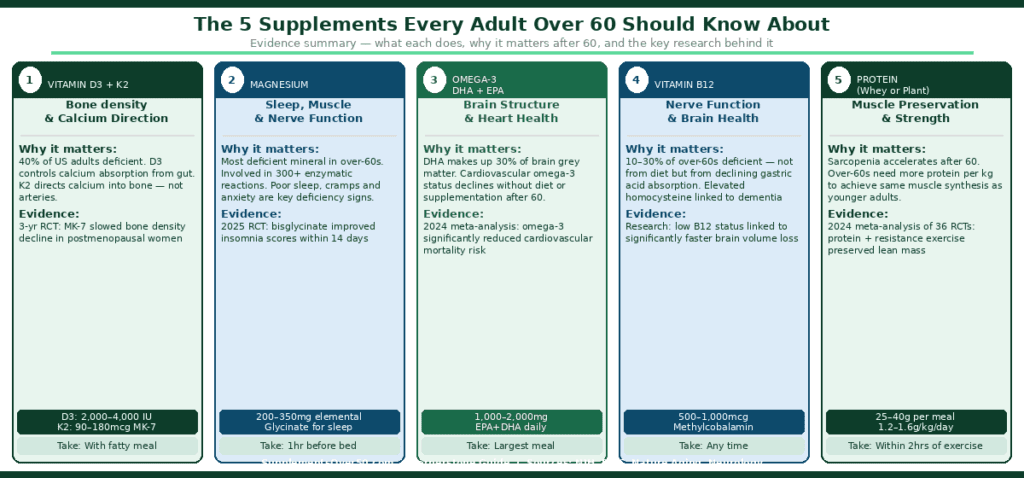
| 1. Vitamin D3 + Vitamin K2 Bone density, immune function and calcium direction Why it matters: Vitamin D3 deficiency affects an estimated 40% of US adults and becomes more prevalent with age as skin synthesis efficiency declines. D3 controls calcium absorption from the gut — without adequate D3, only 10–15% of dietary calcium is absorbed. Vitamin K2 (MK-7) then ensures that absorbed calcium is directed into bone tissue rather than circulating in arteries. The two work as a team — D3 creates the calcium supply, K2 manages where it goes. Evidence: A 3-year randomised controlled trial confirmed MK-7 at 180mcg daily significantly slowed bone density decline in postmenopausal women. A 2024 meta-analysis of multiple RCTs confirmed vitamin K supplementation increased lumbar spine bone mineral density in females. Full guide: How Much Vitamin D Should a 60-Year-Old Woman Take Daily? For a deeper look at why calcium needs a GPS system to reach your bones, read our guide on Vitamin K2, D3 and Boron for Post-Menopausal Bone Density.” |
Also see: K2, D3 and Boron for Post-Menopausal Bone Density — The Triple-Threat Stack
| 2. Magnesium Sleep, muscle function, nerve health and bone strength Why it matters: Magnesium is involved in over 300 enzymatic reactions in the body and is the most commonly deficient mineral in adults over 60 — absorption declines with age while losses through medication use (particularly diuretics and PPIs) increase. The consequences are far-reaching: poor sleep, muscle cramps, anxiety, elevated blood pressure and accelerated bone loss are all associated with suboptimal magnesium status. Most seniors are not eating enough dark leafy greens, nuts and seeds to reach the 320–420mg daily requirement from diet alone. Evidence: A 2025 randomised controlled trial published in Nature and Science of Sleep confirmed magnesium bisglycinate at 250mg elemental magnesium significantly improved insomnia scores in adults with poor sleep quality within 14 days. A 2025 systematic review confirmed magnesium supplementation reduces oxidative stress and inflammation markers. Full guide: Magnesium Glycinate vs Citrate — Which Form Is Better for Seniors After 50? |
Also see: Best Magnesium Supplement for Sleep and Leg Cramps After 50
| 3. Omega-3 Fatty Acids (DHA + EPA) Brain health, cardiovascular protection and inflammation Why it matters: Omega-3 fatty acids — specifically DHA and EPA — are the structural building blocks of brain cell membranes and the precursors to the body’s anti-inflammatory signalling molecules. DHA makes up approximately 30% of the brain’s grey matter and is essential for neuron membrane fluidity and function. After 60, both brain DHA levels and cardiovascular omega-3 status decline if not maintained through diet or supplementation. The gap between recommended and actual omega-3 intake is one of the most consistent nutritional shortfalls in US adults. Evidence: A 2024 meta-analysis of 40 RCTs found omega-3 supplementation produced significant reductions in cardiovascular mortality risk. Research published in Nature Aging found that adults with higher DHA blood levels had measurably slower brain ageing. The half-life of DHA in brain tissue is approximately 2.5 years — consistent long-term supplementation is required to maintain optimal brain DHA levels. Full guide: Can Omega-3s Really Slow Brain Decline After 60? What the Evidence Shows |
| 4. Vitamin B12 Nerve function, brain health and energy metabolism Why it matters: Vitamin B12 deficiency affects an estimated 10–20% of adults over 60 by strict clinical criteria, rising to 40% when borderline insufficiency is included — making it one of the most common nutritional shortfalls in this age group — not because of inadequate dietary intake in most cases, but because gastric acid production declines with age (and with PPI medication use), impairing the absorption of B12 from food. B12 is essential for myelin sheath production (the insulating layer around nerve fibres), DNA synthesis, red blood cell formation and homocysteine regulation. Elevated homocysteine from B12 deficiency is independently associated with increased dementia risk and cardiovascular disease. Crucially, B12 deficiency symptoms — fatigue, brain fog, nerve tingling, memory lapses — can develop gradually over years and are frequently misattributed to normal ageing. Evidence: Research published in Neurology found that adults with low B12 status had significantly faster brain volume loss over 5 years. A systematic review confirmed that B12 supplementation in deficient older adults improves cognitive performance, nerve function and reduces homocysteine levels. For the full breakdown of B12 deficiency signs, symptoms, and why up to 40% of adults over 60 are affected: Full guide: Signs of Vitamin B12 Deficiency in Adults Over 60 — And What to Do |
| 5. Protein — Whey or Plant-Based Muscle preservation, strength and metabolic health Why it matters: Sarcopenia — the age-related loss of muscle mass — begins in earnest after 60 and accelerates through the following decades if not actively countered. Adults over 60 need significantly more protein per kilogram of body weight than younger adults to achieve the same muscle protein synthesis response — yet most are consuming less protein than they were at 40 as appetite naturally decreases. The consequence is progressive muscle loss, reduced strength, increased fall risk and declining metabolic health. Protein supplementation is the most directly evidence-backed nutritional intervention for sarcopenia. Evidence: A 2024 meta-analysis of 36 RCTs found that protein supplementation combined with resistance exercise significantly preserved lean mass and strength in adults over 60. Research specifically in sarcopenic populations found whey protein superior to plant protein for muscle protein synthesis due to its higher leucine content and faster absorption — though adequately dosed plant protein achieves similar outcomes. Full guide: Whey vs Plant Protein for Sarcopenia After 60 — Which Is Better? |
Also see: Best Protein Powder for Seniors on GLP-1 Medications (Ozempic / Wegovy)
Quick Reference — The Core Stack at a Glance
The table below summarises the supplements every adult over 60 should know about and have on hand, with dosing and timing at a glance.
| Supplement | Primary Benefit | Daily Dose | Best Form | Take With |
| Vitamin D3 | Bone, immune, calcium absorption | 2,000–4,000 IU | Cholecalciferol (D3) | Fat-containing meal |
| Vitamin K2 (MK-7) | Directs calcium to bone, artery protection | 90–180 mcg | MK-7 (not MK-4 alone) | Fat-containing meal |
| Magnesium | Sleep, muscle cramps, nerve function | 200–350mg elemental | Glycinate (sleep) / Citrate (digestion) | Evening — 1hr before bed |
| Omega-3 (DHA+EPA) | Brain structure, heart, inflammation | 1,000–2,000mg EPA+DHA | Triglyceride form (not ethyl ester) | Largest meal of the day |
| Vitamin B12 | Nerve health, brain, energy, homocysteine | 500–1,000 mcg | Methylcobalamin or sublingual | Any time — well absorbed orally |
| Protein | Muscle preservation, strength | 25–40g per meal | Whey isolate or complete plant protein | Within 2hrs of exercise |
Beyond the Essentials — The Next Level
Beyond these five, the following supplements build on the foundation that the supplements every adult over 60 should know about have established.
Once the five foundations are in place, the following supplements have strong clinical evidence for specific concerns that become increasingly common after 60. Each links to a full in-depth guide:
| Supplement | Best For | Full Guide |
| Collagen Peptides (Type I/III) | Skin elasticity, joint comfort, hair and nails | Best Collagen Supplement After 50 |
| CoQ10 / Ubiquinol | Cellular energy, heart health, statin users | Ubiquinol vs CoQ10 — Is the More Expensive Form Worth It? |
| Citicoline or Phosphatidylserine | Focus, memory recall, cognitive support | Citicoline vs Phosphatidylserine — Which Is Better After 60? |
| Creatine Monohydrate | Muscle strength, brain energy, cognitive function | Creatine for Seniors Over 60 — Benefits Beyond the Gym |
| Magnesium L-Threonate | Deep sleep, synaptic density, memory | Best Magnesium Supplement for Sleep After 50 |
| Saw Palmetto / Beta-Sitosterol | Prostate and urinary health (men) | Prostate Supplements for Men Over 50 |
| K2 + D3 + Boron | Post-menopausal bone density (women) | K2, D3 and Boron for Post-Menopausal Bone Density |
If focus and mental clarity are your primary concern, explore our Best Caffeine-Free Nootropic Stack for Seniors — citicoline, bacopa and lion’s mane address the root mechanisms of cognitive ageing without stimulants.”
Struggling with joint stiffness or skin elasticity? See our full review of the Best Collagen Supplement After 50 — type I vs II vs III explained with US pricing.”
Complete SupplementsOver50 Article Library
Every article on this site is written to the same standard — clinical evidence cited, US product pricing included, honest caveats given where the research is mixed. Browse by category:
Brain & Memory
• Signs of Vitamin B12 Deficiency in Adults Over 60 — And What to Do
• Natural Alternatives to Prevagen — What the Evidence Actually Shows
• Can Omega-3s Really Slow Brain Decline After 60?
• Best Nootropic Stack for Seniors — Focus Without Caffeine Jitters
• Citicoline vs Phosphatidylserine — Which Brain Supplement Is Better After 60?
Bone & Joint Health
• How Much Vitamin D Should a 60-Year-Old Woman Take Daily?
• Turmeric vs Boswellia for Knee Pain After 50
• K2, D3 and Boron for Post-Menopausal Bone Density
• Best Collagen Supplement After 50 — Types, Evidence and 5 Products Compared
Muscle & Energy
• Best Protein Powder for Seniors on GLP-1 Medications
• NMN vs NR for Energy After 50 — What the Research Shows
• Creatine for Women Over 60 — Benefits Beyond the Gym
• Whey vs Plant Protein for Sarcopenia After 60
• Creatine for Seniors Over 60 — Brain, Muscle and Energy
• Ubiquinol vs CoQ10 — Is the More Expensive Form Worth It After 60?
Sleep Support
• Best Magnesium Supplement for Sleep and Leg Cramps After 50
• Magnesium Glycinate vs Citrate — Which Form Is Better for Seniors After 50?
Men’s Health
• Prostate Supplements for Men Over 50 — Saw Palmetto vs Beta-Sitosterol
Women’s Health
• K2, D3 and Boron for Post-Menopausal Bone Density — The Triple-Threat Stack
Frequently Asked Questions
What is the most important supplement for adults over 60?
If forced to choose one, vitamin D3 combined with vitamin K2 delivers the broadest benefit for the most common deficiency in this age group. An estimated 40% of US adults are vitamin D deficient, and the consequences — poor bone density, reduced immune function, impaired calcium absorption — are significant. Pairing D3 with K2 ensures that absorbed calcium is directed into bone rather than soft tissue. That said, the five supplements covered in this guide work best as a complete foundational stack rather than in isolation.
Do I really need supplements if I eat a healthy diet?
For most adults over 60, the honest answer is yes — at least for a few key nutrients. B12 absorption from food declines significantly with age due to reduced gastric acid production, regardless of dietary intake. Vitamin D synthesis from sunlight drops by up to 75% after 70. Omega-3 intake from diet alone rarely reaches the 1,000–2,000mg EPA+DHA levels associated with cardiovascular and brain health benefits unless you eat fatty fish three or more times per week. Diet is the foundation, but targeted supplementation fills the gaps that are genuinely difficult to close through food alone after 60.
Is it safe to take multiple supplements at once?
The five foundational supplements covered in this guide are safe to take together — there are no significant interactions between vitamin D3, K2, magnesium, omega-3, B12 and protein at standard doses. The important exceptions to know: vitamin K2 interacts with warfarin (Coumadin) — if you are on this blood thinner, discuss K2 with your doctor before starting. High-dose omega-3 can increase bleeding risk at doses above 3g EPA+DHA daily. Always inform your doctor of your complete supplement routine, particularly if you take prescription medications.
How long before supplements start working?
It varies significantly by supplement and by what you are trying to address. Magnesium for sleep typically produces noticeable improvement within 1–2 weeks. B12 for energy and cognitive symptoms in deficient adults often shows improvement within 4–6 weeks. Vitamin D3 takes 8–12 weeks to meaningfully raise blood levels. Omega-3 for cardiovascular and brain benefits requires consistent supplementation over months to years. Protein for muscle preservation works alongside resistance exercise with benefits measurable after 8–12 weeks of consistent training and nutrition. Patience and consistency matter more than any single dose.
Where should I start if I am new to supplements?
Start with a blood test. Ask your doctor to check vitamin D, B12 and omega-3 index (if available) at your next check-up. These are the three most commonly deficient nutrients in adults over 60 and knowing your baseline levels tells you where supplementation is most likely to make a difference. Then follow the links in this guide to the specific articles for each supplement — each one covers the clinical evidence, the right dose and the best products at US retail pricing. Build the stack gradually over 4–6 weeks rather than starting everything simultaneously.
About SupplementsOver50.com
SupplementsOver50.com is an independent supplement review site written specifically for US adults over 60. Every article cites peer-reviewed research, includes honest assessments of where the evidence is mixed, and provides specific product recommendations with current US retail pricing from Costco, Walmart and Amazon. We do not accept payment from supplement brands to feature or promote their products.
These are the supplements every adult over 60 should know about — not because they are magic, but because the evidence for each is genuine and the consequences of deficiency are real.
Our editorial team reviews the most recent clinical evidence — including 2024 and 2025 randomised controlled trials — to provide guidance that reflects what the science actually shows rather than what the marketing claims. Where study quality is mixed or industry funding creates bias, we say so.
References
National Institutes of Health — Vitamin D Fact Sheet for Health Professionals https://ods.od.nih.gov/factsheets/VitaminD-HealthProfessional/
NIH Office of Dietary Supplements — Vitamin B12 Fact Sheet https://ods.od.nih.gov/factsheets/VitaminB12-HealthProfessional/
NIH Office of Dietary Supplements — Magnesium Fact Sheet https://ods.od.nih.gov/factsheets/Magnesium-HealthProfessional/