Review Disclaimer: This article is for informational purposes only and does not constitute medical advice. Information is sourced from peer-reviewed research including PMC, PubMed, and the NIH Office of Dietary Supplements. Always consult your physician before starting any supplement, especially if you take prescription medications or have kidney disease. This article covers magnesium for sleep support only — it does not replace evaluation for sleep apnea or other medical sleep disorders.
The best magnesium supplement for sleep after 50 is a question more adults are asking — and for good reason. Sleep disorders affect an estimated 50–70% of adults over 65 in the United States. Unlike younger adults who struggle to fall asleep, older adults tend to experience fragmented sleep — waking frequently, losing deep slow-wave sleep, and waking earlier than intended. The result is daytime fatigue, cognitive fog, and a diminished quality of life that compounds over time.
Magnesium is one of the most evidence-backed natural sleep supplements available — and after 50, your body is almost certainly getting less of it. A 2025 randomized controlled trial published in Nature and Science of Sleep confirmed that magnesium bisglycinate produced statistically significant improvements in insomnia severity scores in adults reporting poor sleep. But the form of magnesium you take makes a significant difference — particularly when sleep quality (not just getting to sleep, but staying asleep and waking rested) is the goal.
This article explains the research, walks through the two best magnesium forms for sleep after 50 — glycinate and L-threonate — and reviews five specific products with current US pricing.
Quick Answer: Best Magnesium for Sleep After 50
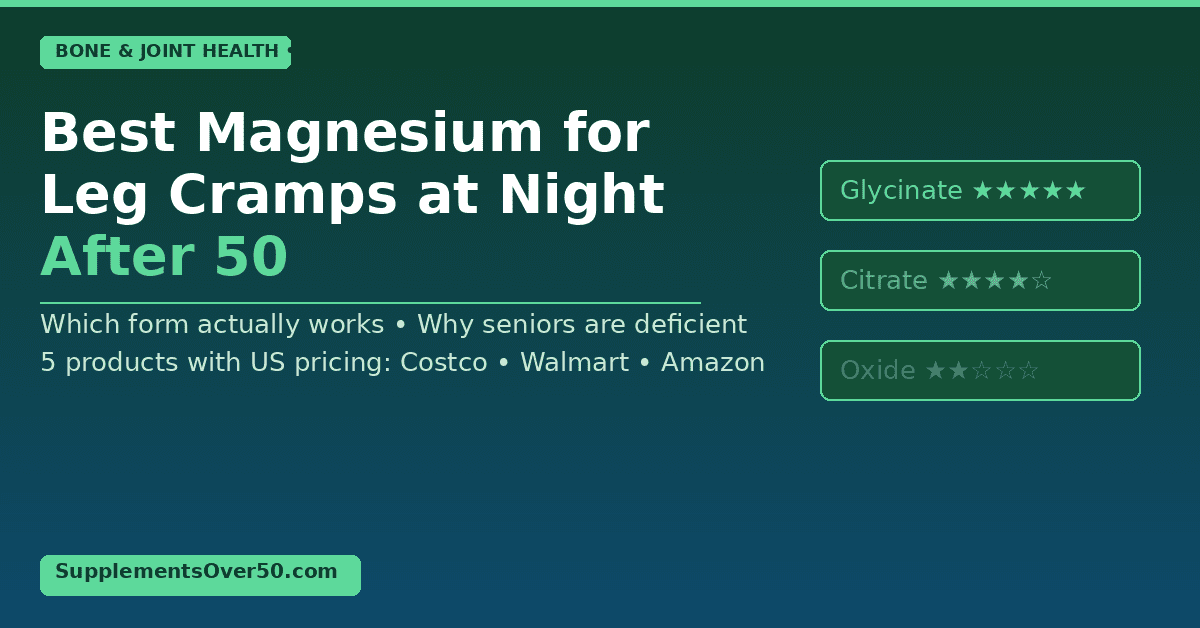
For sleep: magnesium glycinate is the best all-around form — affordable, proven, gentle on digestion. For sleep plus brain health: magnesium L-threonate (Magtein) is the premium upgrade — it is the only form that efficiently crosses the blood-brain barrier and has its own RCT data for sleep improvement. Take 200–350 mg of elemental magnesium 1–2 hours before bed. Best budget pick: Doctor’s Best High Absorption Glycinate (Amazon, ~$0.08/serving). Best clinical grade: Thorne Magnesium Bisglycinate (~$28 for 60 servings). Best brain+sleep option: Life Extension Neuro-Mag Magtein (~$30–35 for 30 servings).
👉 Jump to Product Recommendations
Best Magnesium for Sleep After 50: Why Sleep Changes and Where Magnesium Fits
Understanding why sleep deteriorates after 50 helps explain why magnesium supplementation can be particularly effective for this age group.
Age-related sleep changes are not just about insomnia. The architecture of sleep shifts:
- Deep slow-wave sleep (SWS) decreases — from roughly 20% of total sleep in young adults to under 5% by age 70. SWS is when the body repairs tissue, consolidates memory, and clears metabolic waste from the brain via the glymphatic system
- REM sleep quality declines — affecting mood regulation and memory consolidation
- Sleep becomes more fragmented — lighter, with more awakenings
- Circadian rhythm shifts earlier — natural melatonin production begins earlier in the evening and declines faster
- Menopause in women drives additional disruption through hot flashes, night sweats, and hormonal effects on GABA neurotransmission
Magnesium addresses several of these mechanisms simultaneously — and uniquely so compared to melatonin or antihistamine sleep aids.
How Magnesium Supports Sleep — The Mechanism
Magnesium is not a sedative. It does not knock you out. What it does is create the neurological conditions that make deep, restorative sleep more accessible. It works through four interconnected pathways:

| Mechanism | What Happens | Sleep Effect |
| GABA receptor activation | Magnesium potentiates GABA-A receptors — the brain’s primary inhibitory neurotransmitter system | Reduces neuronal excitability, quiets racing thoughts, promotes relaxation before sleep onset |
| NMDA receptor regulation | Blocks NMDA receptors at rest — prevents over-stimulation of excitatory glutamate pathways | Reduces nighttime wakefulness driven by stress and cortisol; glycinate in mag glycinate adds additional NMDA benefit |
| Cortisol and melatonin balance | Magnesium deficiency is associated with elevated evening cortisol and disrupted melatonin production | Restoring magnesium levels helps regulate the cortisol-melatonin rhythm that drives the sleep-wake cycle |
| Muscle relaxation | Magnesium regulates calcium movement in muscle cells — calcium drives contraction, magnesium drives relaxation | Reduces nighttime restlessness, leg cramps, and the physical tension that delays sleep onset |
Why after 50 specifically: The NIH Office of Dietary Supplements confirms that older adults absorb less magnesium from food as they age, while the kidneys excrete more of it. Combined with common medications (PPIs, diuretics, statins) that deplete magnesium further, adults over 50 are disproportionately likely to have suboptimal magnesium status — even if their blood levels test ‘normal.’ Blood magnesium accounts for less than 1% of total body magnesium.
What the Research Shows — Honest Evidence Review
The 2025 Landmark RCT: Magnesium Bisglycinate and Sleep
The most significant recent trial is a 2025 double-blind, placebo-controlled RCT published in Nature and Science of Sleep (PMC). This was the largest placebo-controlled trial on magnesium and sleep conducted to date, enrolling 155 adults across Germany. Participants took 250 mg of elemental magnesium as bisglycinate (plus 1,523 mg of glycine) daily for four weeks.
Results: the magnesium bisglycinate group showed a statistically significant 28% reduction in Insomnia Severity Index (ISI) scores, compared to 18% in the placebo group (p=0.049). Among participants who showed clinically significant improvement (defined as 6+ point ISI reduction), 19% were in the magnesium group vs 11% in the placebo group. The effect was most pronounced in participants who reported lower dietary magnesium intake at baseline — supporting the hypothesis that supplementation works best when correcting an underlying deficit.
The authors noted this is the first study to specifically test magnesium bisglycinate for sleep — and both the intention-to-treat and per-protocol analyses confirmed the benefit, making the result robust.
The 2024 Magnesium L-Threonate Sleep RCT
A 2024 randomized controlled trial published in Sleep Medicine X (Hausenblas et al.) found that magnesium L-threonate (Magtein) improved both sleep quality and daytime functioning in adults with self-reported sleep problems. This is a particularly important finding because L-threonate is the only form of magnesium designed to efficiently cross the blood-brain barrier — meaning it raises magnesium levels specifically inside brain cells, not just in the bloodstream.
The implications for older adults are significant: brain magnesium levels decline with age, and restoring them may support the slow-wave sleep architecture that deteriorates most dramatically after 50. The L-threonate form thus addresses both the physiological and neurological dimensions of age-related sleep disruption.
Earlier Foundational Research
A double-blind placebo-controlled clinical trial by Abbasi et al. (2012) in the Journal of Research in Medical Sciences tested magnesium supplementation specifically in elderly patients with primary insomnia. Results showed significant improvements in sleep efficiency, sleep time, early morning awakening, and serum levels of melatonin and cortisol — providing direct evidence in the specific population most relevant to this article.
A systematic review by Arab et al. (2023) in Biological Trace Element Research found consistent associations between magnesium status and sleep quality in observational studies, and noted that interventional trials showing benefit tend to involve participants who are deficient at baseline — reinforcing the importance of addressing underlying magnesium insufficiency rather than treating magnesium as a sedative.
Honest bottom line: Magnesium for sleep works best in people who are deficient — which describes a substantial proportion of adults over 50. It is not a sleeping pill: it does not create sedation but rather restores the neurochemical conditions that allow natural, deeper sleep. Realistic expectations: reduced nighttime wakefulness, easier sleep onset, and improved sleep quality over 4–8 weeks of consistent use. Effects are typically subtle but meaningful.
Magnesium Glycinate vs L-Threonate for Sleep After 50: Which Should You Choose?
This is the question Article 6 (magnesium for leg cramps) did not need to answer. For sleep specifically, two forms are in a different class from all others:
| Form | Magnesium Glycinate / Bisglycinate | Magnesium L-Threonate (Magtein) |
| How it works | Chelated to glycine, an inhibitory amino acid that calms neurons and promotes relaxation | Chelated to L-threonic acid, which allows magnesium to cross the blood-brain barrier into brain cells |
| Sleep mechanism | GABA enhancement, muscle relaxation, cortisol reduction — whole-body calming effect | Raises brain magnesium specifically — supports slow-wave sleep architecture and synaptic plasticity |
| Key RCT evidence | 2025 PMC trial: significant improvement in ISI insomnia scores (p=0.049) over 4 weeks | 2024 Sleep Med X trial: improved sleep quality and daytime functioning |
| Best for | General sleep improvement, leg cramps, muscle relaxation, overall magnesium deficiency | Sleep + cognitive health, brain fog, memory support — the brain-sleep dual benefit |
| GI tolerance | Excellent — virtually no laxative effect | Excellent — less GI effect than any other form |
| Elemental magnesium per dose | High — 120–200 mg per capsule typically | Low — ~144 mg per 3-capsule serving (2,000 mg L-threonate) |
| Price point | Budget to mid-range — $0.08–0.45 per serving | Premium — $0.90–1.50 per serving |
| Who should choose it | Most adults over 50 wanting reliable, affordable sleep + overall magnesium support | Those prioritizing brain health + sleep; already meeting general magnesium needs; willing to pay premium |
Important distinction from our magnesium for leg cramps article: Article 6 focused on magnesium glycinate for nighttime leg cramps. The two uses overlap — glycinate taken at night helps both. But for those whose primary concern is sleep quality rather than cramps, magnesium L-threonate adds a brain-specific dimension that glycinate does not provide. If you already take glycinate for cramps and want to also address sleep quality, you are already covered. If you want to prioritize cognitive sleep benefits specifically, L-threonate is worth considering.
Dosage and Timing for Sleep After 50
Choosing the best magnesium supplement for sleep after 50 also means getting the dose and timing right.
| Form | Dose (elemental Mg) | When to Take | Timeline for Effect |
| Magnesium Glycinate | 200–400 mg/day | 1–2 hours before bed | 2–4 weeks |
| Magnesium Bisglycinate | 250 mg/day (as used in 2025 RCT) | 30–60 min before bed | 2–4 weeks |
| Magnesium L-Threonate | 144 mg/day (from 2,000 mg L-threonate) | Split: 2 capsules at night, 1 capsule in morning | 4–6 weeks |
The NIH Tolerable Upper Intake Level (UL) for supplemental magnesium is 350 mg/day of elemental magnesium from supplements alone. Both glycinate and L-threonate at standard doses fall well within this limit. The low elemental magnesium content of L-threonate (144 mg per 2,000 mg serving) is a feature, not a bug — it means you get the brain-specific benefit without approaching the UL.
Timing tip: Both forms are best taken in the evening. The 2025 RCT instructed participants to take magnesium bisglycinate 30–60 minutes before bed. For L-threonate, the typical protocol splits the dose: 1 capsule (48 mg elemental Mg) in the morning and 2 capsules (96 mg elemental Mg) in the evening — roughly 1–2 hours before sleep. Taking the full dose too close to bedtime occasionally causes vivid dreaming in some users, though this is generally harmless.
5 Best Magnesium Supplements for Sleep After 50 — US Pricing
Products are listed in order from most targeted for brain/sleep to most budget-friendly general pick. All five are available at major US retailers with current 2026 pricing.
1. Life Extension Neuro-Mag Magnesium L-Threonate — Best for Sleep + Brain Health
Life Extension Neuro-Mag uses Magtein — the patented magnesium L-threonate developed by MIT researchers. It is the only commercially available magnesium form clinically shown to raise brain magnesium levels. Each 3-capsule serving delivers 2,000 mg of magnesium L-threonate providing 144 mg of elemental magnesium — a lower dose by weight but concentrated where it matters most: inside brain cells. Life Extension is a longevity-focused clinical brand with over 45 years of research history. Non-GMO, vegetarian, gluten-free.
| Retailer | Size | Price (approx.) | Cost/Serving |
| Amazon | 90 capsules / 30 servings | ~$30–36 | ~$1.00–1.20 |
| Amazon (150 ct) | 150 capsules / 50 servings | ~$40–48 | ~$0.80–0.96 |
| Life Extension website | 90 capsules / 30 servings | ~$35 (subscribe: ~$29) | ~$0.97 subscribe |
- Active ingredient: 2,000 mg Magtein (magnesium L-threonate) = 144 mg elemental magnesium per serving
- Third-party tested: Yes — Life Extension COA available on request; GMP certified
- Certifications: Non-GMO, vegetarian, gluten-free; manufactured in USA
- Protocol: 1 capsule morning + 2 capsules 1–2 hours before bed
- Best for: Adults 50+ prioritizing both sleep quality and cognitive health
2. Sports Research Magtein Magnesium L-Threonate — Best Value Magtein
Sports Research uses the identical Magtein ingredient as Life Extension but at a slightly lower price point per serving, and in a cleaner minimal-excipient formula (just rice flour and hypromellose capsule). It has been available at Costco as a limited-time offering, making it accessible to members. Vegan, non-GMO, gluten-free. Third-party certified. Each 3-capsule serving provides 2,000 mg Magtein.
| Retailer | Size | Price (approx.) | Cost/Serving |
| Amazon | 90 capsules / 30 servings | ~$32–40 | ~$1.07–1.33 |
| Costco (limited) | 90 capsules / 30 servings | ~$28–35 (when available) | ~$0.93–1.17 |
| iHerb | 90 capsules / 30 servings | ~$30–37 | ~$1.00–1.23 |
- Active ingredient: 2,000 mg Magtein (magnesium L-threonate) = 144 mg elemental magnesium per serving
- Third-party tested: Yes — third-party certified; cGMP facility
- Certifications: Vegan, non-GMO, gluten-free, soy-free
- Costco note: Sports Research Magtein has been available at Costco in limited runs — check in-warehouse and online seasonally
- Best for: Magtein users who want a clean formula and are price-sensitive between the two main Magtein brands
3. Thorne Magnesium Bisglycinate — Best Clinical-Grade Glycinate
Thorne’s Magnesium Bisglycinate comes as a powder — a versatile format that dissolves easily in water or a warm drink and can be mixed into an evening pre-bed routine. NSF Certified for Sport, FSA/HSA eligible. The bisglycinate form is the exact chelated magnesium-glycine compound used in the 2025 sleep RCT. Each scoop provides approximately 200 mg of elemental magnesium. No added flavors or sweeteners — pure bisglycinate.
| Retailer | Size | Price (approx.) | Cost/Serving |
| Amazon | 6.3 oz / 60 servings | ~$28–34 | ~$0.47–0.57 |
| Thorne.com | 6.3 oz / 60 servings | ~$30 (FSA/HSA eligible) | ~$0.50 |
- Active ingredient: 200 mg elemental magnesium per scoop (as magnesium bisglycinate)
- Third-party tested: Yes — NSF Certified for Sport
- Certifications: NSF Certified, gluten-free, dairy-free, soy-free; FSA/HSA eligible via Truemed
- Format advantage: powder dissolves into warm water as a calming evening drink — better suited to a wind-down routine than capsules
- Best for: Adults who prefer powder format; those working with a physician; women over 50 who want the exact bisglycinate form studied in the 2025 RCT
4. Doctor’s Best High Absorption Magnesium Glycinate Lysinate — Best Budget Sleep Pick
Doctor’s Best is consistently the best-value magnesium glycinate on Amazon with verified purity and strong user reviews. While covered in Article 6 in the context of leg cramps, it is equally effective for sleep — the glycine content promotes relaxation and the chelated form ensures absorption without GI distress. Each 2-tablet serving provides 200 mg of elemental magnesium. 100% chelated, vegan, non-GMO, no fillers. At roughly $0.08 per serving, it is the most affordable quality magnesium glycinate available in the US.
| Retailer | Size | Price (approx.) | Cost/Serving |
| Amazon | 240 tablets / 120 servings | ~$18–22 | ~$0.08 |
| Walmart | 120 tablets / 60 servings | ~$12–15 | ~$0.20–0.25 |
- Active ingredient: 200 mg elemental magnesium per serving (magnesium glycinate lysinate chelate)
- Third-party tested: Yes — independent lab verified
- Certifications: Vegan, non-GMO, gluten-free, soy-free; 100% chelated, no buffering
- Supply: ~4 months at 1 serving/day from 240-tablet bottle
- Best for: Adults looking for the most affordable path to magnesium glycinate sleep support
5. Natural Vitality Calm Magnesium Citrate Powder — Best Evening Drink Format
Natural Vitality Calm is the best-selling magnesium supplement in the US by volume — and for good reason. The powdered citrate format dissolves into warm water to create a fizzing, lightly flavored drink that naturally fits into an evening wind-down ritual. While citrate is less well-absorbed than glycinate, the format itself has behavioral sleep benefits — a warm drink before bed signals sleep onset to the brain. Available at Walmart and Amazon in multiple flavors including Raspberry Lemon and Cherry. Each serving provides 325 mg of elemental magnesium.
Laxative note: Magnesium citrate at high doses can have a laxative effect. The 325 mg serving in Natural Vitality Calm is close to the NIH upper intake level for supplements (350 mg). Start with a half-serving (one teaspoon) and increase gradually. If you notice loose stools, reduce the dose. This effect is much less common with glycinate or L-threonate.
| Retailer | Size | Price (approx.) | Cost/Serving |
| Walmart | 8 oz / ~48 servings | ~$18–22 | ~$0.38–0.46 |
| Amazon | 16 oz / ~76 servings | ~$28–34 | ~$0.37–0.45 |
| Costco (seasonal) | 26 oz bulk | ~$30–38 | ~$0.25–0.32 |
- Active ingredient: 325 mg elemental magnesium per 2-teaspoon serving (magnesium citrate)
- Third-party tested: Yes — Non-GMO Project Verified; gluten-free
- Certifications: Non-GMO, vegan, gluten-free; Raspberry Lemon and Cherry flavors widely available
- Best for: Adults who prefer a warm evening drink ritual; those who find capsule-taking at night inconvenient
Quick Buyer’s Reference
| Your Priority | Best Choice | Why |
| Sleep + brain health (premium) | Life Extension Neuro-Mag Magtein | Only form that raises brain magnesium; RCT-proven for sleep + daytime function |
| Best value Magtein | Sports Research Magtein | Same Magtein ingredient; cleaner formula; sometimes at Costco |
| Clinical-grade bisglycinate (powder) | Thorne Magnesium Bisglycinate | NSF Certified, exact form from 2025 sleep RCT, FSA/HSA eligible |
| Best budget glycinate | Doctor’s Best High Absorption Glycinate | ~$0.08/serving, 100% chelated, 4-month supply on Amazon |
| Evening ritual / warm drink format | Natural Vitality Calm Powder | Widely available, behavioral wind-down benefit, multiple flavors |
Magnesium Works Best Alongside Good Sleep Habits
No supplement — including magnesium — can fully compensate for poor sleep environment or habits. Magnesium supports the neurochemistry of sleep, but these behavioral factors create the conditions for it to work:
- Consistent sleep and wake times: Even on weekends. The circadian rhythm is a biological clock — irregular timing weakens it
- Cool room temperature: 65–68°F is the optimal range for sleep onset; magnesium L-threonate may help by supporting core body temperature drop at night
- Light exposure management: Bright light in the morning sets the circadian clock; avoid screens in the hour before bed
- Alcohol reduction: Alcohol fragments sleep architecture and suppresses REM sleep — it may help you fall asleep faster but degrades sleep quality significantly
- Caffeine cutoff: Caffeine’s half-life is approximately 5–6 hours — a 3 p.m. coffee still has significant caffeine active at 10 p.m.
- Ruling out sleep apnea: Magnesium cannot help fragmented sleep caused by untreated sleep apnea. If you snore loudly, wake gasping, or your partner has noted breathing pauses, see your physician before supplementing
Magnesium is also a required co-factor for Vitamin D activation in the body — the two nutrients work together, which is why correcting both simultaneously is more effective than either alone. See our Vitamin D guide for adults over 60 for dosing
Important note: This article covers magnesium supplementation for general sleep quality in adults over 50. If you are experiencing severe insomnia, have been diagnosed with a sleep disorder, or are taking prescription sleep medications (benzodiazepines, z-drugs such as zolpidem/Ambien), discuss any supplement additions with your physician before starting.
Who Should NOT Take Magnesium for Sleep
Kidney disease
Impaired kidneys cannot regulate magnesium excretion efficiently. Supplemental magnesium can accumulate to toxic levels in people with chronic kidney disease (CKD) or significantly reduced eGFR. This is the most important caution. If you have CKD, are on dialysis, or have elevated creatinine levels, do not supplement magnesium without nephrologist supervision. Request a baseline creatinine measurement before starting if your kidney function is uncertain.
People taking certain antibiotics or bisphosphonates
Magnesium can reduce absorption of tetracyclines, quinolone antibiotics, and bisphosphonates (Fosamax, Boniva). Separate doses by at least 2 hours. This applies to all magnesium forms.
People taking potassium-sparing diuretics
Medications like spironolactone and amiloride reduce magnesium excretion. Adding supplemental magnesium alongside these could lead to elevated magnesium levels. Discuss with your cardiologist or prescribing physician.
People with myasthenia gravis
Magnesium can worsen neuromuscular junction impairment in myasthenia gravis. Avoid supplementation without specialist guidance.
Frequently Asked Questions
Here are the most common questions we see about the best magnesium supplement for sleep after 50.
Q: Is magnesium glycinate or L-threonate better for sleep after 50.
The best magnesium supplement for sleep after 50 comes down to two forms: glycinate and L-threonate. Magnesium glycinate is the better all-around choice for most adults over 50 — it addresses the whole-body magnesium deficit, supports muscle relaxation, and has the 2025 RCT specifically confirming sleep improvement. Magnesium L-threonate is the better choice if you also want to support brain health and cognitive function alongside sleep — it crosses the blood-brain barrier efficiently, which standard glycinate does not. Budget-conscious? Choose glycinate. Want the brain-specific benefit? L-threonate is worth the premium.
Q: How long before I notice magnesium helping my sleep?
The 2025 clinical trial found significant improvement by Week 4 at 250 mg/day of elemental magnesium as bisglycinate. Most people notice subtle improvements in sleep quality — less frequent waking, feeling more rested — within 2–4 weeks. Magnesium builds up in tissues gradually; do not assess efficacy after just a few days. If you see no change after 6–8 weeks at a therapeutic dose, the sleep disruption may have a different primary cause.
Q: Can I take magnesium with melatonin?
Yes — they are complementary and commonly combined. Melatonin signals sleep timing to the brain (when to sleep); magnesium supports the neurochemical depth and quality of sleep once you are asleep. They work at different points in the sleep process. Start with magnesium alone to assess its effect before adding melatonin. If you do combine them, take melatonin 30–60 minutes before bed and magnesium 1–2 hours before bed.
Q: Can I take magnesium with my other supplements from this site?
Magnesium glycinate or L-threonate can be safely combined with most other supplements covered on this site. It pairs well with vitamin D (which also supports sleep quality and is covered in Article 1), creatine (Article 8), and NMN/NR (Article 7) with no known interactions. If you take turmeric or boswellia (Article 9) — no interaction concerns with magnesium. The main interaction to watch is iron supplements: take magnesium and iron at least 2 hours apart as they compete for absorption.
Q: Will magnesium make me feel groggy in the morning?
No — this is one of the key advantages over antihistamine sleep aids like diphenhydramine (Benadryl PM, ZzzQuil). Magnesium does not produce next-day sedation or grogginess. It supports natural sleep mechanisms rather than forcing sedation chemically. In fact, the 2024 L-threonate RCT specifically found improved daytime functioning alongside better sleep — the opposite of the grogginess pattern seen with conventional sleep aids.
Q: Is Natural Vitality Calm the same as magnesium glycinate?
No. Natural Vitality Calm uses magnesium citrate, not glycinate. Citrate is well-absorbed but can cause loose stools at higher doses — glycinate does not. Citrate also does not contain glycine, so it does not provide the same calming amino acid benefit. The main advantage of Natural Vitality Calm is its format — the powder drink ritual can be a helpful behavioral cue for winding down. For pure sleep support efficacy, glycinate or L-threonate are the stronger choices.
Sources & Citations
| # | Source | Type | URL |
| 1 | Schuster et al. — Magnesium Bisglycinate Supplementation and Sleep Quality: RCT, Nature and Science of Sleep, PMC 2025 | Peer-Reviewed / RCT | pmc.ncbi.nlm.nih.gov/articles/PMC12412596/ |
| 2 | Hausenblas et al. — Magnesium L-Threonate Improves Sleep Quality and Daytime Functioning: RCT, Sleep Medicine X 2024 | Peer-Reviewed / RCT | pubmed.ncbi.nlm.nih.gov/39252819/ |
| 3 | Abbasi et al. — Magnesium Supplementation on Primary Insomnia in Elderly, Journal of Research in Medical Sciences 2012 | Peer-Reviewed / RCT | pmc.ncbi.nlm.nih.gov/articles/PMC3703169/ |
| 4 | Arab et al. — Role of Magnesium in Sleep Health: Systematic Review, Biological Trace Element Research 2023 | Peer-Reviewed / Systematic Review | pubmed.ncbi.nlm.nih.gov/35184264/ |
| 5 | NIH Office of Dietary Supplements — Magnesium Fact Sheet for Health Professionals, Updated January 2026 | Government / Tier 1 | ods.od.nih.gov/factsheets/Magnesium-HealthProfessional/ |
| 6 | Zhang et al. — Association of Magnesium Intake with Sleep Duration and Quality: CARDIA Study, Sleep 2022 | Peer-Reviewed / Observational | pubmed.ncbi.nlm.nih.gov/34883514/ |
| 7 | Miner & Kryger — Sleep in the Aging Population, Sleep Medicine Clinics 2017 | Peer-Reviewed / Review | pmc.ncbi.nlm.nih.gov/articles/PMC5300306/ |
| 8 | Sports Research Magtein Launches at Costco, PR Newswire January 2025 | Retail Reference | prnewswire.com/news-releases/sports-research-magtein-magnesium-l-threonate-launches-at-costco |
* These statements have not been evaluated by the Food and Drug Administration. These products are not intended to diagnose, treat, cure, or prevent any disease. Always consult your physician before starting any new supplement, especially if you have kidney disease or take prescription medications.