Medical Disclosure: This article is for informational purposes only and does not constitute medical advice. Probiotic supplements may interact with medications and are not suitable for immunocompromised individuals without medical supervision. Always consult your physician before starting a new supplement protocol.
Medically Reviewed by: This article has been reviewed for clinical accuracy by a registered dietitian nutritionist (RDN) with specialist knowledge in gastrointestinal health and post-menopausal nutrition. Last reviewed: October 2026.
Affiliate Disclosure: SupplementsOver50.com is reader-supported. Some links on this page are affiliate links. If you purchase through one of these links, we may earn a small commission at no extra cost to you. This does not influence our product recommendations, which are based on independent research and clinical evidence.
Why the Best Probiotic for Women Over 60 Needs to Do More Than Support Digestion
Finding the best probiotic for women over 60 requires understanding what has changed. The gut microbiome of a 65-year-old woman looks substantially different from the one she had at 40 — not simply a matter of degree but of composition. The diversity of beneficial species declines, opportunistic strains take hold, and the downstream effects reach far beyond digestive comfort: immune regulation, bone metabolism, estrogen recycling, vaginal health, and cognitive function all connect to gut microbiome status in ways that were not clearly understood until relatively recently.
Most probiotic marketing targets acute digestive complaints — bloating, irregularity, antibiotic recovery. That is a valid application but a narrow one. For women over 60, the relevant question is not “will this reduce bloating?” but rather “does this product address the specific microbiome shifts that accelerate after menopause, and is the evidence for these strains real?” This guide answers both questions.
The Estrobolome: The Gut’s Role in Estrogen Metabolism
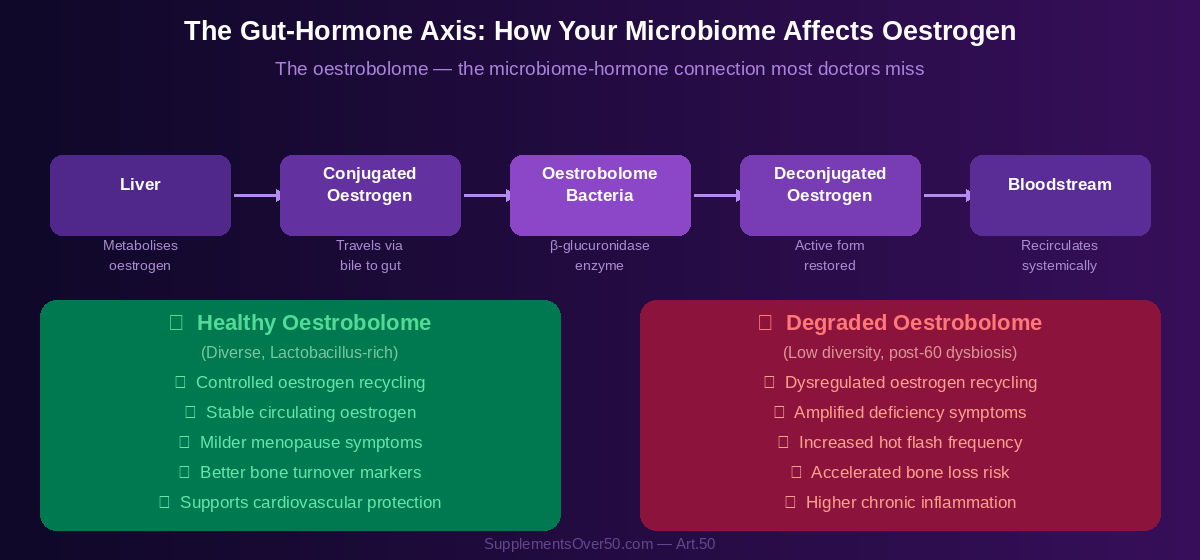
The estrobolome is the collective term for the gut bacteria that metabolise estrogens. These bacteria produce beta-glucuronidase, an enzyme that deconjugates estrogen in the gut, allowing it to be reabsorbed into systemic circulation. When the estrobolome is disrupted — through antibiotics, poor diet, age-related dysbiosis — beta-glucuronidase activity becomes dysregulated, which can result in either excessive reabsorption of estrogen metabolites or insufficient recycling of beneficial estrogen forms. In post-menopausal women, where endogenous estrogen production is already severely diminished, estrobolome disruption compounds hormonal imbalance. Maintaining a healthy estrobolome is one mechanism by which probiotic supplementation may support hormonal status after menopause.
Gut Permeability and the Role of SCFAs
The intestinal lining is a single cell layer thick — an extraordinarily thin barrier separating the gut contents from systemic circulation. Tight junction proteins (including occludin and zonulin) regulate the permeability of this barrier. When tight junction integrity breaks down — a state sometimes called “leaky gut” in popular media, more precisely called intestinal hyperpermeability — bacterial fragments (lipopolysaccharides, or LPS) cross into the bloodstream and trigger systemic low-grade inflammation, a phenomenon now referred to as inflammaging: the chronic, sterile, low-level inflammation that underlies most age-related chronic disease progression.
Short-chain fatty acids (SCFAs) — particularly butyrate, propionate, and acetate — are the primary mechanism by which beneficial gut bacteria protect the intestinal barrier. Butyrate is the preferred energy source for colonocytes (the cells lining the colon) and directly upregulates tight junction protein expression. It also inhibits NF-κB, a master inflammatory transcription factor. Beneficial strains of Lactobacillus and Bifidobacterium produce SCFAs as fermentation byproducts of dietary fibre, which is one reason dietary fibre intake and probiotic supplementation are complementary rather than interchangeable.
Approximately 70% of the body’s immune cells are associated with the gut-associated lymphoid tissue (GALT). After 60, immune dysregulation — overactive inflammatory response to trivial triggers alongside reduced response to actual pathogens — correlates strongly with microbiome diversity loss. Well-characterised probiotic strains, particularly Lactobacillus rhamnosus GG and Bifidobacterium longum, modulate immune response partly through pattern recognition receptors in GALT and partly through SCFA-mediated signalling. (PubMed: Zmora et al. 2019)
How the best probiotic for women over 60 supports multiple systems: the estrobolome, gut barrier integrity, and immune function
What Are the Signs of Gut Dysbiosis in Women Over 60?
Gut dysbiosis — an imbalance in the composition or diversity of the gut microbiome — does not always present as obvious digestive symptoms. In women over 60, common signs include: persistent bloating or gas not explained by a specific food, irregular bowel habits that have changed over the previous 2–3 years, frequent urinary tract infections (more than 2 per year), recurring vaginal discomfort or pH changes, frequent minor infections or slow recovery from illness, increasing brain fog or low mood coinciding with digestive changes, and food intolerances that have developed in older age. None of these is diagnostic alone, but multiple overlapping signs warrant consideration of microbiome support strategies.
Best Probiotic Strains for Women Over 60: Evidence Table
Strain
Primary Evidence
Level
Lactobacillus acidophilus NCFM
IBS symptom reduction, lactose digestion
High (multiple RCTs)
Lactobacillus rhamnosus GG
Diarrhoea prevention, UTI reduction, immune modulation
High (30+ RCTs)
Bifidobacterium longum BB536
Intestinal permeability, immune function, bone turnover markers
Moderate–High
Lactobacillus crispatus
Vaginal pH maintenance, recurrent BV prevention
Moderate (oral route)
Lactobacillus reuteri RC-14 + L. rhamnosus GR-1
Vaginal microbiome, BV, UTI prevention
High (oral route)
Bifidobacterium animalis DN-173 010
Transit time, bloating, IBS-C
High (multiple RCTs)
Saccharomyces boulardii CNCM I-745
Antibiotic-associated diarrhoea, C. difficile prevention
Post-menopausal women have a significantly elevated risk of recurrent UTIs compared to pre-menopausal women, with 10–15% of women over 65 experiencing recurrent infection. The primary mechanism is reduced estrogen’s effect on vaginal epithelium: without estrogen’s trophic support, the vaginal lining thins, glycogen production falls, and the lactic acid-producing bacteria (primarily Lactobacillus crispatus and Lactobacillus iners) that maintain the vaginal pH in the protective 3.5–4.5 range decline. When vaginal pH rises above this range, uropathogenic bacteria — particularly Escherichia coli, which causes 80–85% of UTIs — find a more hospitable environment and more easily colonise the urethra and bladder.
A 2011 RCT published in Archives of Internal Medicine found that oral Lactobacillus rhamnosus GR-1 combined with Lactobacillus reuteri RC-14 reduced recurrent UTI episodes by 50% compared to low-dose antibiotic prophylaxis over 12 months — a clinically meaningful result given concerns about antibiotic resistance. (PubMed: Beerepoot et al. 2011)
Probiotic Supplements vs Fermented Foods for Women Over 60
Benefits of Fermented Foods for Women Over 60
Fermented foods — yogurt, kefir, kimchi, sauerkraut, miso, tempeh — provide live bacteria alongside nutritional value: protein (yogurt, kefir), vitamin K2 (natto, aged cheeses), B vitamins, and bioavailable minerals. A landmark 2021 study in Cell found that a high-fermented-food diet over 10 weeks increased microbiome diversity and decreased 19 inflammatory proteins, including IL-6, in healthy adults. This is a whole-diet effect that supplements cannot fully replicate. (PubMed: Wastyk et al. 2021)
When to Choose Probiotic Supplements Over Fermented Foods
Fermented foods deliver a broad range of organisms, but the strains are inconsistent between batches and brands, and the specific strains with clinical evidence for UTI prevention, vaginal health, or bone turnover are not reliably present at therapeutic doses. For targeted outcomes — UTI prevention, managing IBS, antibiotic recovery, or vaginal microbiome support — supplementing with evidence-backed strains at known doses is the appropriate choice. Fermented foods can coexist with supplementation and should be encouraged for overall health.
Foods That Support the Microbiome: Akkermansia and Prebiotic Substrates
While most attention focuses on probiotic bacteria, one of the most metabolically important gut organisms is Akkermansia muciniphila — a mucin-degrading bacterium that lives in the mucus layer of the intestine and acts as an indicator species for gut barrier health. Higher Akkermansia abundance correlates with reduced intestinal permeability, better glucose metabolism, and lower body fat percentage. Unlike Lactobacillus species, Akkermansia does not survive conventional probiotic manufacturing; it is cultivated primarily by feeding the gut with its preferred substrates: polyphenol-rich foods (pomegranate, cranberry, grape skin, dark berries, green tea), resistant starch (cooled cooked potatoes and rice, green banana flour), and mucin precursors. This is a key reason why prebiotic fibre intake amplifies the benefit of any probiotic supplement.
Quality Markers When Choosing a Probiotic
Strain specificity: Labels should identify strains to the strain level (e.g., Lactobacillus rhamnosus GG), not just genus and species. “Lactobacillus acidophilus” without a strain designation cannot be linked to any specific clinical evidence.
CFU at expiry: Look for “CFU guaranteed at expiry” or “CFU at best-by date” — not “CFU at manufacture,” which can be meaningless after storage.
Delivery system: Enteric coating or acid-resistant capsules protect bacteria from stomach acid. Particularly important for Lactobacillus and Bifidobacterium strains.
Storage requirements: Some strains require refrigeration; others are shelf-stable. Shelf-stable is more practical for daily compliance.
Third-party verification: ConsumerLab or NSF verification means the CFU count and species identity have been independently confirmed.
1. Jarrow Formulas Fem-Dophilus: Best for UTI and Vaginal Health
Contains the clinically validated Lactobacillus rhamnosus GR-1 and Lactobacillus reuteri RC-14 combination — the exact strains and doses from the UTI prevention RCTs. Shelf-stable in amber glass.
Strains: 16-strain blend including GG, BB536, RC-14
CFU: 50 billion at expiry
Storage: Refrigerated
2026 price: ~$35/30 capsules
3. Seed DS-01 Daily Synbiotic: Best for Gut-Systemic Health
The most evidence-backed multi-system formula available. 24 clinically studied strains with matched prebiotic outer capsule (OMNi-BiOTiC prebiotic). Patented nested capsule system for acid protection. Peer-reviewed clinical trial data on systemic (not just digestive) outcomes.
Strains: 24 strains in nested capsule with prebiotic outer layer
CFU: 53.6 billion at expiry
Storage: Shelf-stable
2026 price: ~$50/30 servings (subscription)
4. Thorne FloraSport 20B: Best for Post-Antibiotic Recovery
NSF Certified for Sport with 20 billion CFU in a targeted-release capsule. Primarily Lactobacillus and Bifidobacterium strains suited to microbiome restoration after antibiotics or illness.
Strains: L. acidophilus NCFM + B. lactis Bi-07 + B. longum + L. paracasei
CFU: 20 billion at expiry
Storage: Refrigerated
2026 price: ~$40/30 capsules
5. BioGaia Osfortis: Best for Bone Health
The only probiotic with a clinical trial specifically in post-menopausal women showing reduced bone loss. Contains Lactobacillus reuteri ATCC PTA 6475 at 10 billion CFU — the strain and dose from the J Intern Med 2016 RCT that found 50% reduction in bone loss rate at 1 year. (PubMed: Jansson et al. 2016)
Strain: L. reuteri ATCC PTA 6475
CFU: 10 billion per tablet
Storage: Shelf-stable
2026 price: ~$45/30 tablets
The Gut-Brain Axis and Cognitive Health in Women Over 60
The gut and brain communicate bidirectionally via the vagus nerve, the enteric nervous system (sometimes called the “second brain”), and through circulating microbial metabolites. Gut bacteria produce approximately 90% of the body’s serotonin and significant quantities of GABA precursors. Post-menopausal women with depression and anxiety show distinct microbiome signatures compared to non-depressed controls — lower Lactobacillus and higher Prevotella species. A 2019 RCT found that Lactobacillus helveticus R0052 combined with Bifidobacterium longum R0175 (Lallemand’s PsychoTropic formulation) significantly reduced anxiety and depression scores in healthy adults over 30 days. This is not a replacement for psychiatric treatment but a supporting role in overall wellbeing management. (PubMed: Messaoudi et al. 2011)
How Long Does It Take for Probiotics to Work?
The timeline depends on the outcome. Acute digestive symptoms (bloating, irregularity) often respond within 1–2 weeks. UTI prevention requires 4–8 weeks of consistent use to re-establish the vaginal microbiome. Immune modulation effects appear in trials at 4–12 weeks. Bone health outcomes were measured at 12 months in the BioGaia Osfortis trial. The minimum evidence-based trial for any probiotic should be 8–12 weeks of daily use at the correct dose before judging effectiveness.
Frequently Asked Questions
What is the best probiotic strain for women over 60?
There is no single best strain — the optimal choice depends on the primary goal. For UTI prevention and vaginal health: Lactobacillus rhamnosus GR-1 + Lactobacillus reuteri RC-14. For bone health: Lactobacillus reuteri ATCC PTA 6475. For general gut health and microbiome diversity: a multi-strain product containing at least one characterised Lactobacillus and one Bifidobacterium strain.
Should women over 60 take a daily probiotic?
For women with a history of recurrent UTIs, antibiotic use, IBS, or significant digestive changes since menopause: yes, the clinical evidence strongly supports daily probiotic use. For women without these concerns, fermented food intake and prebiotic fibre may be sufficient. Daily supplementation is not harmful in otherwise healthy older women.
Can probiotics help with menopause symptoms?
Indirectly. The estrobolome connection means a well-functioning gut microbiome supports more efficient estrogen metabolism. There are no RCTs showing probiotics reduce hot flashes directly. However, the overlap between gut dysbiosis, mood disruption, sleep disruption, and menopausal transition is significant enough that microbiome support should be part of a comprehensive post-menopausal health protocol.
Can probiotics prevent UTIs in older women?
Yes — the L. rhamnosus GR-1 + L. reuteri RC-14 combination has a well-powered RCT showing 50% reduction in recurrent UTIs versus low-dose antibiotic prophylaxis. This is now referenced in several clinical guidelines as an alternative to antibiotic suppression for recurrent UTIs in post-menopausal women.
Are probiotics safe for women over 60 on multiple medications?
For most medications, yes — Lactobacillus and Bifidobacterium probiotics have no known interactions with statins, antihypertensives, thyroid medications, or most common drug classes. Take probiotics 2 hours away from antibiotics, which will kill the probiotic organisms if taken simultaneously. Women on immunosuppressants (organ transplant, autoimmune disease) should consult their physician before starting probiotics.
How many CFUs does a woman over 60 need?
CFU count matters less than strain specificity and viability at expiry. Clinical trials use doses ranging from 1 billion (BioGaia Osfortis) to 50+ billion (multi-strain products). A 10–25 billion CFU product with well-characterised strains typically outperforms a 100 billion CFU product with unnamed or poorly-studied strains.
Should women over 60 take probiotics with or without food?
Most manufacturers recommend taking probiotics with a meal or shortly before eating, when stomach acid levels are lower and transit time is slower, giving bacteria a better chance of reaching the colon intact. Enteric-coated capsules are less dependent on timing but still perform well with food.
Do probiotics help with weight management in older women?
Some strains show modest effects on body weight and body fat in clinical trials. Lactobacillus gasseri SBT2055 reduced abdominal fat by 4.6% in a 12-week Japanese RCT. However, the effect sizes are small and results are strain-specific. Probiotics should not be considered weight management interventions — their value lies in the metabolic and inflammatory mechanisms described above.
Can I take a probiotic every day indefinitely?
Yes. There is no evidence of harm from long-term daily probiotic use in healthy older adults. Unlike antibiotics or certain supplements that may require cycling, probiotics are safe to take continuously. The benefit requires continuous use — stopping supplementation typically results in a return to baseline microbiome status within 2–4 weeks.
Key References
Zmora N et al. (2019). Personalized gut mucosal colonization resistance to empiric probiotics is associated with unique host and microbiome features. Cell, 174(6):1388–1405.
Wastyk HC et al. (2021). Gut-microbiota-targeted diets modulate human immune status. Cell, 184(16):4137–4153.
Beerepoot MA et al. (2011). Lactobacilli vs antibiotics to prevent UTIs: a RCT in postmenopausal women. Arch Intern Med, 172(9):704–12.
Jansson PA et al. (2016). Probiotic treatment using a mix of three Lactobacillus strains for lumbar spine bone loss in postmenopausal women: a randomized, double-blind, placebo-controlled trial. J Intern Med, 280(6):601–610.
Messaoudi M et al. (2011). Assessment of psychotropic-like properties of a probiotic formulation (Lactobacillus helveticus R0052 and Bifidobacterium longum R0175) in rats and human subjects. Br J Nutr, 105(5):755–64.
Struggling with recurrent UTIs after menopause? Learn how declining estrogen impacts bladder health and explore proven natural supplements like D-mannose, cranberry, and lifestyle fixes.
NAD+ declines 50% between your 40s and 60s. This guide compares NMN vs NR, reviews the best NAD+ supplements for seniors with human trial evidence, and covers dosing, timing, and drug interactions.
Looking for a moisturizer for dry mature skin? Compare 5 creams from Kiehl’s, First Aid Beauty, Lancome, Charlotte Tilbury and CeraVe, plus what to look for after 50.
Urinary tract infections become more common after menopause — and for some women, significantly more common. If you’ve gone from the occasional UTI to…








 ✓ In stock
 ✓ In stock
 ✓ In stock
 ✓ In stock
 ✓ In stock