This guide contains affiliate links. If you buy through them, we may earn a small commission at no extra cost to you.
⚡ Quick Answer
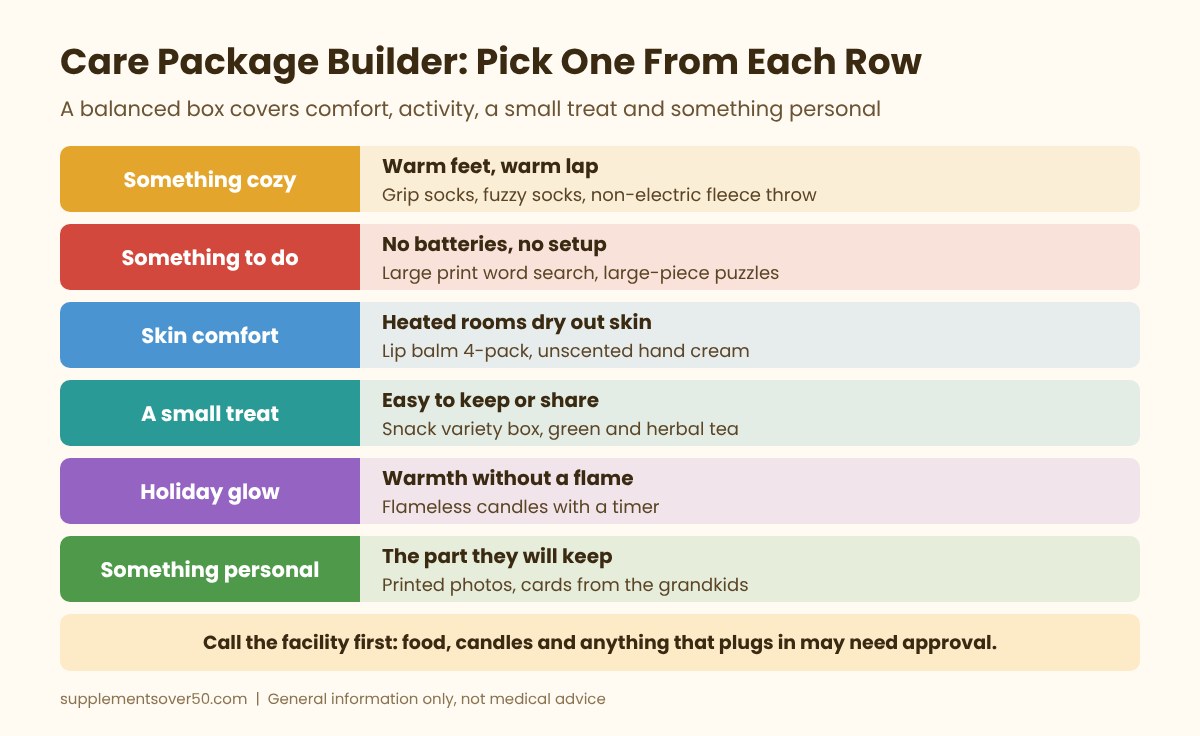
A good Thanksgiving care package for an elderly parent has four parts: something cozy, something to do, a small treat and something personal from the family. Our core picks: non-slip grip socks (cozy and safer on facility floors), a KAPPA large print word search pack (something to do), a healthy snack variety box (a treat that is easy to share with neighbors), and a soft fleece throw instead of an electric blanket. Add printed family photos and a handwritten card, and schedule a video call for Thanksgiving afternoon. Check facility rules before you ship food, candles or anything that plugs in.
Not every parent or grandparent gets to sit at the family table on Thanksgiving. Some are in assisted living or memory care. Some are recovering in a rehab facility after a fall or surgery. Others live alone across the country and are not up for the trip this year. A Thanksgiving care package for an elderly loved one does not replace being there, but it can turn a quiet Thursday into a day when they feel remembered.
This guide covers what to pack, what to leave out and how to make the box feel personal rather than generic. We focused on items that are easy to use with aging hands and eyes, safe in a shared living space and inexpensive enough that you can send a box to more than one person. Product details come from the Amazon listings, and we do not quote prices because they change daily during Black Friday week.
Thanksgiving is Thursday, November 26 this year. If you are shipping, aim to have the box arrive by Tuesday or Wednesday so it is there before the day, not after.
Table of Contents
Care Package Checklist: Quick Comparison
Item
Why it belongs
Facility friendly?
Non-slip grip socks
Warm feet, better traction on smooth floors
Yes, usually encouraged
Large print word search books
Easy, relaxing activity
Yes
Large piece puzzles
Something to do with visitors
Yes
Healthy snack variety box
Treat to keep or share
Check food rules and diet
Green and herbal tea sampler
Warm drink, gentle on sleep
Usually yes
Lip balm and hand cream
Heated buildings dry out skin
Yes
Soft fleece throw (not electric)
Warmth without a cord
Yes
Flameless candles with timer
Holiday glow without fire
Often yes; open flames never
Printed family photos and a card
The most personal item in the box
Yes
Before You Pack: Check the Rules
If your parent lives in a care setting, a five-minute call to the front desk or activities director saves a lot of frustration. Ask about the following.
Food: many facilities allow sealed, store-bought snacks but not homemade food. Residents on special diets for diabetes, kidney disease or swallowing problems may need staff approval.
Candles and heat: open flames are almost always banned. Many places also restrict heating pads and electric blankets. Flameless candles are usually fine.
Electronics: anything that plugs in may need a safety check by maintenance staff.
Delivery: ask how packages are received on a holiday week and whether staff will hand it to your parent or leave it at the desk.
Labeling: write your parent’s full name and room number on every item. Socks and blankets disappear in shared laundry.
If your parent lives at home alone, the rules are yours to set, but the same thinking applies. Choose items that are easy to open, easy to read and safe to use without help.
Cozy Items for Warm Hands and Feet
Older adults often feel cold even in a heated building, and the floors in facilities and many older homes are smooth and slippery. Grip socks solve both problems. They are also one of the few gifts nursing staff actively encourage.
This 12-pair pack covers a man or a woman for weeks and gives you enough to tuck a pair into more than one box. Pick the right size, since socks that are too big can twist under the foot and defeat the purpose.
🧦 Best Overall Care Package Item
Grip Socks for Women and Men, 12 Pairs
Non-slip grips on the sole for hospital, home and facility floors. Choose a snug size.
A throw blanket is one of the most welcome items in any care package, but many facilities restrict electric blankets. A soft, non-electric throw is the safer choice. The UGG Nita throw is plush fleece and large enough to cover a lap or a bed.
🛋️ Best Throw (No Cord)
UGG Nita Plush Fleece Throw Blanket, 50" x 70"
Plush fleece throw for a chair or bed; no plug, so no facility approval needed.
Dry indoor air in winter is hard on aging skin, and chapped lips and cracked knuckles are among the most common complaints. A lip balm multipack and a tube of good hand cream are small, cheap and used every single day.
If your parent has fragile or very dry skin, our guide to moisturizers for dry mature skin covers fragrance-free options in more detail.
Something to Do: Puzzles and Brain Games
Holidays in a care setting can mean long, quiet afternoons. Activities that need no setup and no batteries help fill them, and they give visiting family something to do side by side.
Large print word search books are a favorite because they are relaxing, portable and easy to pick up and put down. The KAPPA Super Saver pack includes six full-size books, so there is one for your parent and a few to share with neighbors.
🔎 Best Activity
KAPPA Large Print Word Search Puzzle Pack, 6 Books
Six full-size large print word search books; easy on the eyes.
Large piece puzzles are a good choice for people with arthritis, low vision or memory changes. This four-pack has 100 pieces each, with big pieces and cheerful country scenes, so a puzzle can be finished in one visit.
🧩 Best for Memory Care
Large Piece Puzzles for Seniors, 4 Pack, 100 Pieces Each
Big, easy-to-handle pieces and simple country scenes; finishable in an afternoon.
A small treat makes the box feel festive. A variety box of individually wrapped snacks is easy to keep in a room and easy to share with neighbors, which is part of the fun in assisted living. This healthy snack box leans on granola bars, nut mixes and fruit snacks rather than candy.
Check for dietary limits first. Nuts can be hard for people with dentures or swallowing problems, and anyone managing blood sugar should look at the labels with their care team.
🍪 Best Snack Box
Healthy Snack Variety Box for Adults, Deluxe Assortment
Individually wrapped granola bars, nut mixes and fruit snacks. Check diet rules before sending.
A tea sampler is a cozy extra that most facilities allow. The Taylors of Harrogate green and herbal sampler offers caffeine-free herbal blends for evenings alongside green teas for the daytime.
🍵 Best Warm Drink
Taylors of Harrogate Green and Herbal Tea Sampler, 48 ct
Green teas and herbal blends in one box; herbal teas are caffeine free.
Rooms in care facilities can feel institutional, especially on a holiday. Flameless candles with a timer add warmth without the fire risk, and they switch off on their own. Confirm the facility allows battery-operated decor before you send them.
🕯️ Best Holiday Decor
Homemory Real Wax Flameless LED Votives, 6 Pack
Real wax look, 6-hour timer, battery operated. No open flame.
The items above are the frame. The personal touches are what your parent will remember.
Printed photos: a handful of recent family pictures, printed large, with names and dates on the back. Many older adults do not see the photos we share on our phones.
Cards from the grandkids: drawings and short notes are often taped to the wall for months.
A family recipe card: write out the stuffing or pie recipe they used to make, with a note about the year you made it together.
A schedule for the day: a simple card saying when each family member will call on Thursday.
If you want to go further, a digital photo frame that the family can update from their phones is one of the best gifts for a grandparent who lives apart. We cover the Aura and other options in our Thanksgiving gifts for seniors guide.
What to Leave Out
Some well-meant items cause more trouble than they are worth. We would skip these.
Real candles, lighters and matches: banned almost everywhere.
Homemade food: many facilities do not allow it, and it spoils in transit.
Large items: rooms are small, and storage is limited.
Anything with small parts or complicated packaging: hard for arthritic hands and a choking risk for anyone with memory loss.
Medications or supplements: even over-the-counter items should go through the care team, since they can interact with prescriptions.
Expensive jewelry or electronics without a plan: things go missing in shared spaces, and gadgets that need setup can become frustrating.
Timing and Shipping Tips
Thanksgiving week is one of the busiest shipping weeks of the year, so build in a buffer. Order by the weekend before if you are shipping directly from Amazon, and ask the facility if they accept deliveries on the Wednesday before the holiday. If you can, pack the box yourself and drop it off in person, even a day early. A short visit to deliver it is worth more than anything inside.
On Thursday, set a time for a video or phone call and let staff know so they can help your parent get to the phone. If your parent uses an Echo Show or tablet, check that it is charged and connected the day before.
What should I put in a Thanksgiving care package for an elderly parent?
Pack something cozy like grip socks or a soft fleece throw, something to do like large print word searches or large piece puzzles, a small treat, lip balm and hand cream, and something personal such as printed family photos and a handwritten card.
Can I send food to someone in assisted living?
Usually sealed, store-bought snacks are allowed, but homemade food often is not. Residents on special diets may need staff approval. Call the facility before you send any food.
Are electric blankets allowed in nursing homes?
Many facilities restrict electric blankets and heating pads because of burn and fire risk. A soft, non-electric fleece throw is the safer choice for a care package.
What are good activities for seniors in a care facility over the holidays?
Large print word search and crossword books, large piece jigsaw puzzles, photo albums and simple card games work well. They need no batteries or setup and give visitors something to do together.
When should I ship a Thanksgiving care package?
Aim for the box to arrive by the Tuesday before Thanksgiving. Thanksgiving falls on November 26 this year, and holiday week shipping is slower, so order by the weekend before.
Should I include vitamins or supplements in a care package?
No. Supplements and over-the-counter medicines can interact with prescriptions and should go through your parent’s doctor or care team. Stick to comfort items, activities and personal keepsakes.
Our Take
The best Thanksgiving care package for an elderly parent is simple: warm grip socks, a large print word search pack, a small treat they can share and a stack of printed family photos, all labeled with their name. Check the facility rules, aim to arrive before Thursday and set a time to call. The box tells them you were thinking of them. The call tells them you still are.
This guide is for general information only. Check with your parent’s doctor or care team about dietary restrictions, skin conditions and anything that plugs in.
Do natural GLP-1 supplements work? An honest look at berberine, psyllium, Akkermansia and yerba mate for adults over 50, what the evidence shows, and better options.
Supplements to avoid with kidney disease: why potassium, magnesium, phosphorus, vitamins A, E, K and C, creatine and some herbals are risky with CKD after 60.