Do Natural GLP-1 Supplements Work? An Evidence Check for Adults Over 50
This guide contains affiliate links. If you buy through them, we may earn a small commission at no extra cost to you.
Searches for natural glp-1 supplements have exploded as Ozempic, Wegovy and similar medicines became household names. Supplement shelves now carry bottles labeled “GLP-1 support,” “GLP-1 probiotic” or “nature’s Ozempic,” and many of them are marketed directly to people over 50 who want help with weight or blood sugar but are wary of injections, side effects or cost.
So do these products work? The honest answer is that a few ingredients have real, modest benefits, but none of them behave like a GLP-1 drug, and some of the boldest label claims rest on studies in rats or cells. This evidence check explains what GLP-1 actually is, what each popular ingredient claims, what human research shows, and what tends to work better.
Table of Contents
Why Natural GLP-1 Supplements Appeal to Adults Over 50
GLP-1, short for glucagon-like peptide-1, is a hormone your own gut makes. Specialized cells in the intestine, called L cells, release it after you eat. It tells the pancreas to release insulin when blood sugar is high, slows how fast food leaves your stomach, and helps signal fullness to the brain. Your body breaks down its own GLP-1 within minutes, so its natural effect is short.
Prescription GLP-1 medicines are built to last far longer. According to the MedlinePlus semaglutide drug page, semaglutide (sold as Ozempic and Wegovy) belongs to a class of medicines called incretin mimetics. It helps the pancreas release the right amount of insulin when blood sugar is high, slows stomach emptying, and may decrease appetite and cause weight loss. These are injections or tablets tested in large trials and prescribed by a doctor.
Popular Supplement Guides:



After 50, the reasons people look for a natural option are easy to understand. Blood sugar and waistlines tend to creep up with age, many people already take several medicines, and prescription GLP-1 drugs can be expensive or hard to get covered. Losing weight quickly can also cost muscle, which older adults can least afford to lose. A capsule that promises the same benefits without a prescription sounds appealing. The problem is that the science behind most of these promises is thin.
Do Natural GLP-1 Supplements Actually Work?
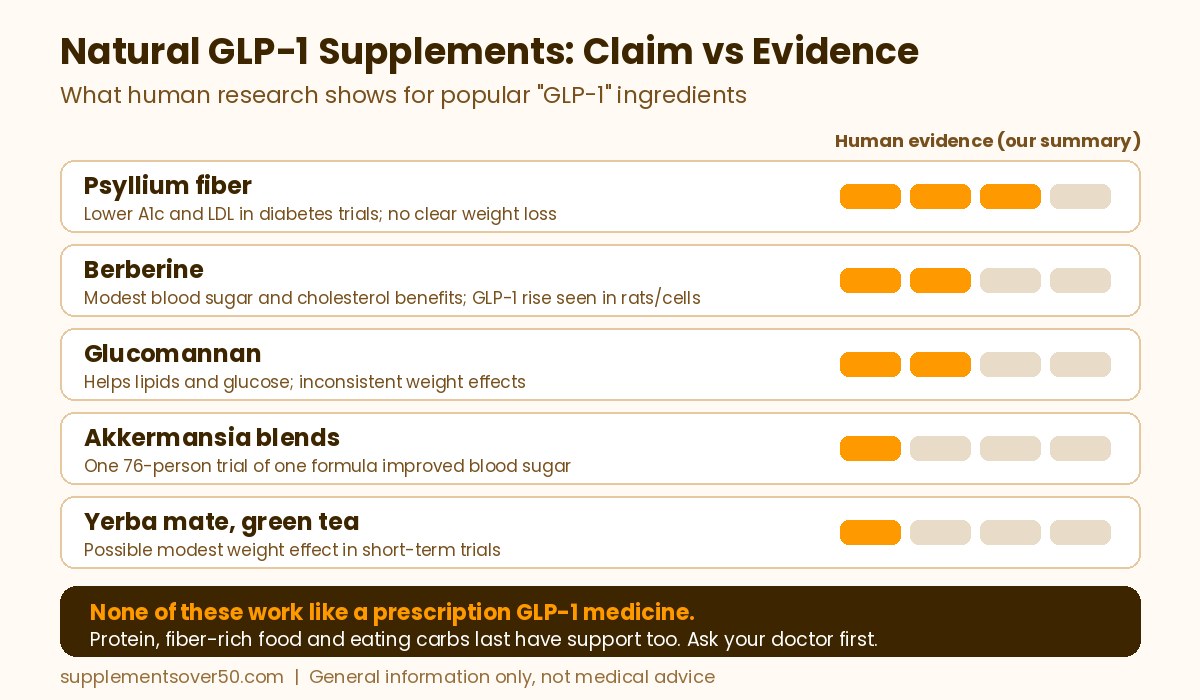
No supplement has been shown to raise GLP-1 to anything like the levels a prescription drug delivers. What the research does show varies a lot by ingredient. Here is how the most common ones stack up.
Berberine
Berberine is the ingredient most often called “nature’s Ozempic.” The GLP-1 claim traces back largely to animal and lab work, such as a study in rats and lab-grown human gut cells that found berberine increased GLP-1 release. That is a long way from proof in people. In human studies, berberine’s main effects are on blood sugar and cholesterol, and they are modest.
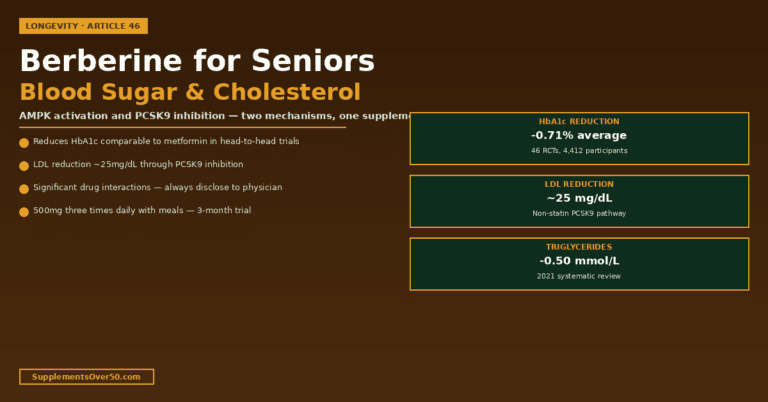
The National Center for Complementary and Integrative Health (NCCIH) describes a review of 46 studies with 4,158 participants suggesting berberine may lower blood glucose, reduce insulin resistance and improve lipids in type 2 diabetes. It also notes that most studies were done in China, results varied widely, and some studies were poor quality. NCCIH lists nausea, diarrhea, bloating and constipation as common side effects and warns that berberine may interact with some medicines. For a full side-by-side, see our Berberine vs Ozempic: What Berberine Can and Can’t Do guide.
Psyllium and Other Soluble Fibers
Soluble fibers like psyllium form a gel in the gut that slows digestion, which can help you feel full and blunt blood sugar spikes after meals. The evidence for blood sugar is reasonably good. A meta-analysis of 8 trials in people with diabetes found that psyllium lowered fasting blood sugar, A1c (by about 0.9 percentage points), LDL cholesterol and triglycerides. However, it found no significant change in body weight or BMI.
That weight finding matches a meta-analysis of 22 randomized trials in adults, which found no significant effect of psyllium on body weight, BMI or waist size overall. In short, psyllium is a solid fiber for blood sugar, cholesterol and regularity, but it is not a weight-loss drug substitute. Glucomannan, another gel-forming fiber, follows a similar pattern: the NIH Office of Dietary Supplements weight loss fact sheet says it appears to have beneficial effects on blood lipids and glucose, but its effects on weight loss are inconsistent, and tablet forms carry a choking and esophageal blockage risk.
Akkermansia and “GLP-1 Probiotics”
Several probiotics are now sold with “GLP-1” right on the label, often featuring the gut microbe Akkermansia muciniphila. The best-known human study behind this category is a 12-week randomized trial of 76 people with type 2 diabetes. A five-strain formula that included Akkermansia and inulin fiber improved blood sugar after meals and lowered A1c by about 0.6 points compared with placebo. The authors called it a proof-of-concept study and said its small size means larger studies are needed. The abstract reports blood sugar results, not weight loss.
More broadly, the NIH weight loss fact sheet rates probiotics as having inconsistent effects on body weight, body fat and waist size. A single-strain Akkermansia product is also not the same as the formula that was tested. Our Best Akkermansia Supplement for Gut Health guide covers the gut-health side in more detail.
Yerba Mate, Green Tea and Caffeine Blends
Many “GLP-1” blends include yerba mate, green tea extract or other caffeine sources. The NIH fact sheet says caffeine-containing herbs like yerba mate may have a possible modest effect on body weight, mostly in short-term trials of combination products. Green tea catechins show a possible modest effect too, but green tea extract has some safety concerns. None of these work by copying a GLP-1 medicine, and stimulants can be a poor fit for people with heart rhythm problems, high blood pressure or sleep trouble.
Natural GLP-1 Supplements: Claims vs Evidence
| Ingredient | What labels claim | What human evidence shows | Evidence strength |
|---|---|---|---|
| Berberine | “Nature’s Ozempic,” boosts GLP-1 | GLP-1 rise shown in rats and cells; modest blood sugar and cholesterol benefits in trials | Moderate for blood sugar, weak for GLP-1 |
| Psyllium | Appetite control, blood sugar support | Lower A1c and LDL in diabetes trials; no significant weight change overall | Good for blood sugar and cholesterol |
| Glucomannan | Fullness, weight loss | Helps lipids and glucose; inconsistent weight effects | Mixed |
| Akkermansia blends | “GLP-1 probiotic” | One 76-person trial of a specific formula improved blood sugar after meals | Early |
| Yerba mate, green tea | Metabolism, appetite | Possible modest weight effect, mostly short-term | Weak to modest |
What Works Better Than a Pill
If your goal is to support your body’s own GLP-1 response and feel full longer, everyday habits have at least as much evidence as any bottle:
- Eat carbohydrates last. In a small study of 16 adults with type 2 diabetes, eating protein and vegetables first and carbohydrates 10 minutes later led to a 53% smaller rise in blood sugar and higher GLP-1 levels than eating the carbohydrates first. It costs nothing to try.
- Build meals around protein. Protein helps you feel full and protects muscle, which matters more after 50, especially if you are losing weight.
- Get more fiber from food. Beans, lentils, oats, vegetables, fruit and whole grains bring soluble and fermentable fiber plus nutrients a supplement does not.
- Stay active, including strength training. Muscle is one of the main places your body stores and uses blood sugar.
- Talk to your doctor about medicines. If you have type 2 diabetes or obesity with health problems, prescription GLP-1 drugs and other proven treatments may be worth discussing. Supplements are not a substitute.
What to Look for in Natural GLP-1 Supplements
If you still want to try a supplement, these checks matter more than the “GLP-1” wording on the front of the bottle:
- A well-studied ingredient at a sensible dose. Psyllium and berberine have the most human research. Be skeptical of proprietary blends that hide how much of each ingredient you get.
- No drug-like promises. Labels that claim to work “like Ozempic” or replace medication are a red flag. NCCIH warns that products claiming to replace diabetes medicine are marketed illegally.
- Third-party quality checks where available, such as USP or NSF marks, or brand-reported independent testing.
- Your current medicines. Berberine can interact with drugs, and fiber can slow absorption of some medicines if taken at the same time. Ask your pharmacist about timing.
- Your digestive tolerance. Start low and add fiber slowly, with plenty of water.
Natural GLP-1 Supplements: Quick Comparison
| Product | Best for | Key details | Daily dose |
|---|---|---|---|
| Metamucil 4-in-1 Sugar-Free Psyllium | Flavored daily fiber | Psyllium husk fiber, sugar-free orange flavor, brand cites appetite control and blood sugar support | As directed on the label |
| NOW Psyllium Husk Powder | Plain, unflavored soluble fiber | 6 g soluble fiber per serving, vegan, Non-GMO Project Verified | 1 level tablespoon in at least 12 oz of liquid |
| Nature’s Bounty Berberine 1000 mg | Blood sugar and cholesterol plans your doctor approves | From Berberis aristata, vegetarian, non-GMO, gluten-free | 2 capsules (1,000 mg) |
Top Picks If You Want to Try Natural GLP-1 Supplements
We chose these based on the ingredients with the most human evidence, not on GLP-1 marketing. All three are long-established, widely reviewed choices on Amazon. None of them will do what a prescription GLP-1 medicine does.
1. Metamucil 4-in-1 Sugar-Free Psyllium Fiber (Best Flavored Daily Fiber)
Metamucil is made with psyllium husk, and the brand says it supports digestive health, heart health by lowering cholesterol, healthy blood sugar levels and appetite control. That last claim is worth keeping in perspective: psyllium can help you feel fuller, but trials have not shown meaningful weight loss on its own. The bigger benefits are for regularity, cholesterol and blood sugar.
This version is sugar-free with an orange flavor, and the brand notes it is not a low calorie food. The listing points out that only about 1 in 10 Americans get enough fiber from diet alone. Follow the label serving, mix it with plenty of water, and check the label for the sweetener used if you avoid certain ones.
2. NOW Psyllium Husk Powder (Best Plain Soluble Fiber)
If you would rather skip flavors and sweeteners, NOW Psyllium Husk Powder is a simple, plain option. One level tablespoon supplies 6 grams of soluble fiber, which the brand says covers 6 of the 7 grams of soluble fiber a day linked to its heart health claim. It is vegan and Non-GMO Project Verified.
The directions say to mix one level tablespoon into at least 12 ounces of water or juice and drink it right away, before it thickens. Many people start with a smaller amount and build up over a week or two to limit gas and bloating. For more choices, see our Best Psyllium Husk Supplement for Seniors guide.
3. Nature’s Bounty Berberine 1000 mg (Best Berberine Option)
Nature’s Bounty Berberine provides 1,000 mg per two-capsule serving, sourced from Berberis aristata. The brand positions it for maintaining healthy cholesterol and triglyceride levels already in a normal range. It is vegetarian, non-GMO, gluten-free and sodium-free, and one bottle is a month’s supply.
This is the pick that most needs a conversation with your doctor first, because berberine can lower blood sugar and interact with medicines. It is a reasonable option for someone with mildly raised numbers whose doctor is on board, not a replacement for diabetes treatment. Our Best Berberine Supplement for Seniors guide compares more forms.
How to Choose Natural GLP-1 Supplements Wisely
- If you mainly want to feel fuller and improve regularity, start with psyllium, either Metamucil or plain NOW powder, and pair it with protein-rich meals.
- If you have mildly raised blood sugar or cholesterol and no diabetes medicines yet, psyllium is the safer first step; ask your doctor whether berberine makes sense.
- If you already take diabetes medicine or a GLP-1 drug, do not add berberine without your prescriber’s okay, and space fiber away from other pills.
- If you want real weight loss, talk to your doctor about proven options. Supplements in this category produce small effects at best.
If you are on a GLP-1 medicine, protecting muscle with enough protein is one of the most useful things you can do, and our Best Protein Powder for Seniors on GLP-1 Medications (Ozempic and Wegovy) guide explains how.
Who Should Avoid These Supplements
Check with your doctor or pharmacist before trying any supplement marketed for GLP-1 support if any of these apply:
- You take diabetes medicines, including insulin, sulfonylureas or a GLP-1 drug. Adding berberine could push blood sugar too low.
- You take several prescription medicines. NCCIH notes berberine may interact with some medicines, and fiber can affect how other pills are absorbed.
- You have trouble swallowing, a narrowed esophagus or bowel blockage history. Bulk fibers must be taken with plenty of liquid, and glucomannan tablets have caused blockages.
- You have heart rhythm problems, high blood pressure or anxiety, if the product contains caffeine, yerba mate or green tea extract.
- You have liver disease, since some green tea extract products have safety concerns.
When to See a Doctor
See your doctor if you are thinking about a supplement because of rising blood sugar, weight gain or a family history of diabetes. A simple blood test can show whether you have prediabetes or diabetes, and that changes what makes sense. The National Center for Complementary and Integrative Health (NCCIH) stresses that it is very important not to replace medical treatment for diabetes with an unproven product.
Get prompt care for signs of low blood sugar such as shakiness, sweating, confusion or a racing heart, or for severe abdominal pain, chest pain or trouble swallowing after taking a fiber supplement. Unexplained weight loss after 50 also deserves a checkup rather than a supplement.
Frequently Asked Questions
Do natural GLP-1 supplements work like Ozempic?
No. Prescription GLP-1 medicines like semaglutide are designed to mimic the hormone for long periods and were tested in large trials. Supplements marketed for GLP-1 support have, at most, small or indirect effects, and many GLP-1 claims come from animal or lab studies.
Is berberine a natural GLP-1?
No. Berberine is not a GLP-1 medicine. A study in rats and lab cells found it increased GLP-1 release, but in people its main benefits are modest improvements in blood sugar and cholesterol. It can also interact with some medicines.
Does psyllium increase GLP-1 or help weight loss?
There is little direct human evidence that psyllium raises GLP-1. It slows digestion and can help you feel full, and trials show it lowers A1c and LDL cholesterol in people with diabetes. However, a meta-analysis of 22 randomized trials found no significant effect on body weight overall.
Are GLP-1 probiotics worth it?
The evidence is early. One 76-person trial of a specific multi-strain formula with Akkermansia improved blood sugar after meals in type 2 diabetes. Single-strain products are not the same formula, and probiotics have inconsistent effects on weight.
Can I take natural GLP-1 supplements with Ozempic or Wegovy?
Ask your prescriber first. Berberine can also lower blood sugar and commonly causes stomach upset, as GLP-1 drugs do. Fiber is often fine but should be spaced away from other medicines and taken with plenty of water.
What is the most natural way to boost GLP-1?
Food habits have good support. Eating protein and vegetables before carbohydrates raised GLP-1 and lowered blood sugar spikes in a small study, and protein and fiber-rich meals help you feel full. Staying active and building muscle also helps blood sugar.
Our Take
On natural glp-1 supplements, the label hype runs well ahead of the science. No pill copies a prescription GLP-1 medicine. Psyllium is a sensible, well-studied fiber for blood sugar, cholesterol and regularity, and berberine may help some people with mildly raised numbers if their doctor agrees. GLP-1 probiotics and caffeine blends remain unproven for meaningful weight loss. For most adults over 50, the better plan is protein and fiber at every meal, carbohydrates last, regular strength training, and an honest talk with your doctor about whether a prescription option fits.
This article is for informational purposes only and is not medical advice. Talk to your doctor or pharmacist before starting any supplement, especially if you have diabetes or take prescription medicines.