This guide contains affiliate links. If you buy through them, we may earn a small commission at no extra cost to you.
Finding the best berberine supplement for seniors means weighing dose and absorption against the interaction risks. Berberine has gone from obscure plant alkaloid to one of the most-discussed supplements among seniors managing blood sugar and cardiovascular risk. The comparison to metformin, which gets repeated across every health publication, is both the most interesting thing about berberine and the most misleading. What the research actually shows is more nuanced, and for seniors specifically, the interaction profile deserves as much attention as the potential benefits.
Table of Contents
Why berberine matters for seniors
Berberine is a compound extracted from several plants including barberry, goldenseal, and Oregon grape. It’s been used in traditional Chinese and Ayurvedic medicine for centuries, but the mechanism that drives modern interest is its activation of AMPK, an enzyme that regulates glucose metabolism, insulin sensitivity, and lipid levels. Metformin works through a similar pathway, which is why the two are frequently compared.
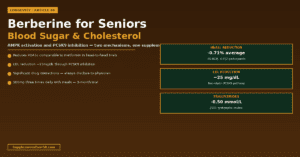
For seniors, metabolic health becomes harder to maintain with age. Insulin sensitivity naturally declines, fasting glucose tends to creep upward, and LDL cholesterol management often requires more active intervention. Berberine addresses multiple aspects of this picture simultaneously: multiple clinical trials show meaningful reductions in fasting glucose, HbA1c, LDL cholesterol, and triglycerides. The effect sizes are real. The important caveat is that berberine also interacts with several medications that are extremely common in seniors, which means this is not a supplement to start without telling your doctor.
🏆 Best Berberine for Seniors
Thorne Berberine 500mg
Pure berberine HCl 500mg, NSF Certified, supports healthy blood sugar and cholesterol levels
Bioavailability is the biggest practical challenge with berberine. The compound has poor oral absorption on its own, which is why dosing protocols typically split the daily amount across three meals rather than taking it all at once. Some formulas address this with absorption enhancers like BioPerine (black pepper extract), which can modestly improve uptake. Others use phytosome technology to encapsulate berberine in a lipid complex that crosses the gut lining more effectively.
For purity, look for berberine HCl rather than vague ‘berberine extract’ on the label. Third-party testing (NSF, USP, Informed Sport, or independent lab verification) matters a lot here because the supplement market has documented problems with berberine products not matching their labels. A certificate of analysis from the brand confirms potency and absence of heavy metals and contaminants.
⚡ Best Budget Berberine for Seniors
NOW Foods Berberine 400mg
400mg berberine HCl per capsule, GMP certified, reliable blood sugar and metabolic support
Top Picks for the Best Berberine Supplement for Seniors
Thorne Berberine 500mg
Thorne sets the standard for quality in the berberine category. Each capsule delivers 500mg of pure berberine HCl, and the formula is NSF Certified, which means it’s been independently tested for label accuracy, potency, and contaminants. That matters more than it might seem in a category where quality control varies widely.
At 500mg per capsule, the standard protocol is one capsule three times daily with meals, totaling 1500mg. This lands in the range where most clinical studies demonstrate blood sugar and cholesterol effects. It’s the most expensive option on this list, but for seniors taking berberine alongside other medications and wanting confidence in what they’re putting in their body, the certification is genuinely valuable.
🔬 Best Research-Grade Berberine for Seniors
Integrative Therapeutics Berberine
1,500 mg berberine per day (three 500 mg capsules), supports healthy glucose and lipid metabolism
NOW Foods delivers a clean, reliable berberine HCl formula at a price point that makes consistent long-term use easy. At 400mg per capsule, three capsules daily (1200mg total) falls within the effective range while allowing some flexibility in dosing. NOW’s manufacturing facilities are GMP certified, and the brand has a decades-long track record of quality.
With over 14,000 reviews, this is one of the most widely used berberine products available, and the feedback consistently notes both its effectiveness and tolerability. For seniors who want a trustworthy formula without paying a premium for brand prestige, NOW Berberine is the place to start.
Integrative Therapeutics Berberine
Integrative Therapeutics is a practitioner-oriented brand, and its berberine is a straightforward single-ingredient formula: 500 mg capsules taken up to three times a day for 1,500 mg daily. It is free of wheat, gluten, corn, soy, dairy and artificial colors or flavors, which keeps it simple for seniors with sensitivities.
The split dosing suits seniors who want to take berberine with each main meal, which also helps with GI tolerance. Talk to your doctor before starting, especially if you take glucose-lowering medication.
🌿 Best High-Purity Berberine for Seniors
Toniiq Ultra High Strength Berberine
Berberine HCl standardized to 97% from wild Himalayan Berberis aristata, NSF certified
Toniiq’s berberine is a highly concentrated extract from wild Himalayan Berberis aristata, standardized to 97% berberine HCl. It carries NSF certification, which adds independent verification of what is in the bottle.
The high purity and third-party certification make this a strong choice for seniors who want confidence in potency. As with any berberine, start low and take it with meals.
Double Wood Berberine HCl 500mg
Double Wood’s berberine comes as 500 mg capsules of berberine HCl, verified by HPLC to meet the label claim at 97% purity. That makes it easy to build a daily dose in 500 mg steps, and the price is among the lowest from a brand that verifies potency.
This isn’t the product to start with if you’re new to berberine, since you’ll want to titrate up from a lower dose and assess tolerance first. But for seniors who’ve established their protocol and want to reduce their supplement spend, Double Wood delivers solid value with a clean label.
💰 Best Value Berberine for Seniors
Double Wood Berberine HCl 500mg
500 mg berberine HCl per capsule, HPLC verified, 97% purity
How to Choose the Best Berberine Supplement for Seniors
If certification and purity are the priority, Thorne is the clear answer. If value is the priority, NOW Foods and Double Wood both deliver. If purity and certification concern you, Toniiq is worth the extra few dollars. Integrative Therapeutics suits seniors who want a simple practitioner-brand formula. No matter which you choose, take berberine with meals to reduce GI side effects and tell your prescribing physician what you’re adding.
Frequently Asked Questions
Is berberine safe for seniors?
For most healthy seniors, berberine at standard doses (300-500mg three times daily with meals) is generally well-tolerated. GI side effects like nausea, cramping, and diarrhea are most common early on. More importantly, berberine interacts with several medications common in seniors, so a conversation with your doctor before starting is not optional, it is essential.
Can berberine replace metformin?
No, and you should not stop or reduce a prescribed medication without your doctor’s guidance. Some studies show berberine produces blood sugar reductions comparable to metformin in certain patient populations, which is why the comparison is popular. But berberine is not FDA-approved as a drug treatment for diabetes, the evidence base is smaller, and the comparison doesn’t account for individual variation.
What are the side effects of berberine for seniors?
GI effects are most common: nausea, stomach cramping, constipation or diarrhea, especially in the first few weeks. Taking berberine with or right after meals significantly reduces these. More serious concerns include interactions with blood sugar medications (risk of hypoglycemia) and some cardiovascular drugs. Berberine can also affect how the liver processes certain drugs via CYP enzyme pathways.
How long does berberine take to work?
Most research showing blood sugar effects uses a 12-week study period. Some seniors notice changes in fasting glucose within a few weeks, while cholesterol effects typically take longer. If you’re tracking blood markers with your doctor, 8-12 weeks at a consistent dose gives you enough data to assess whether it’s working.
What is AMPK and why does berberine activate it?
AMPK (AMP-activated protein kinase) is often called the body’s metabolic master switch. It regulates glucose uptake, fat burning, and energy balance at the cellular level. Berberine activates AMPK through a mechanism similar to metformin, which is why both compounds produce broadly similar metabolic effects. This activation improves insulin sensitivity and reduces glucose production in the liver.
Berberine is one of the more compelling supplements in the metabolic health category, with a genuine body of clinical evidence behind it. For seniors managing blood sugar or cholesterol, it’s worth discussing with your physician. The key is picking a quality-verified product, starting at a lower dose, taking it with food, and monitoring your response with actual blood work.
Do lymphatic drainage supplements work? An honest look at cleavers, dandelion and horse chestnut for swelling after 50, when to see a doctor, and what helps.
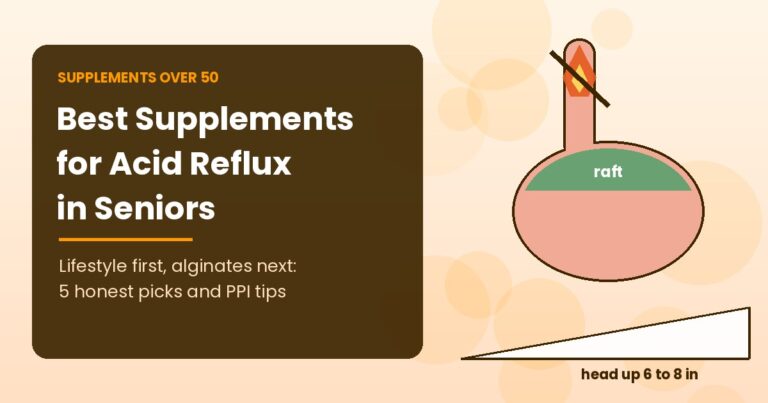
The best supplements for acid reflux in seniors, honestly ranked: alginates first, plus DGL, zinc carnosine, melatonin, PPI nutrient tips and red flags.