Best Supplements for Acid Reflux in Seniors: 5 Gentle Picks and What to Try First
This guide contains affiliate links. If you buy through them, we may earn a small commission at no extra cost to you.
If you are looking for the best supplements for acid reflux, chances are heartburn has become a regular evening visitor. Maybe it wakes you at night, or you have been on omeprazole or another acid reducer for years and wonder whether something gentler could help. Both are very common after 50.
Here is the honest picture. Supplements for reflux have far less research behind them than prescription and over-the-counter medicines, and some popular remedies may even make things worse. A few options do have a reasonable case, especially alginates, and others are low-risk to try if your doctor agrees. This guide covers the lifestyle changes that matter most, what long-term acid reducers can do to your nutrient levels, the red flags that need a doctor rather than a supplement, and five products with a clear reason to choose each one.
Table of Contents
Why Acid Reflux Gets More Common After 50
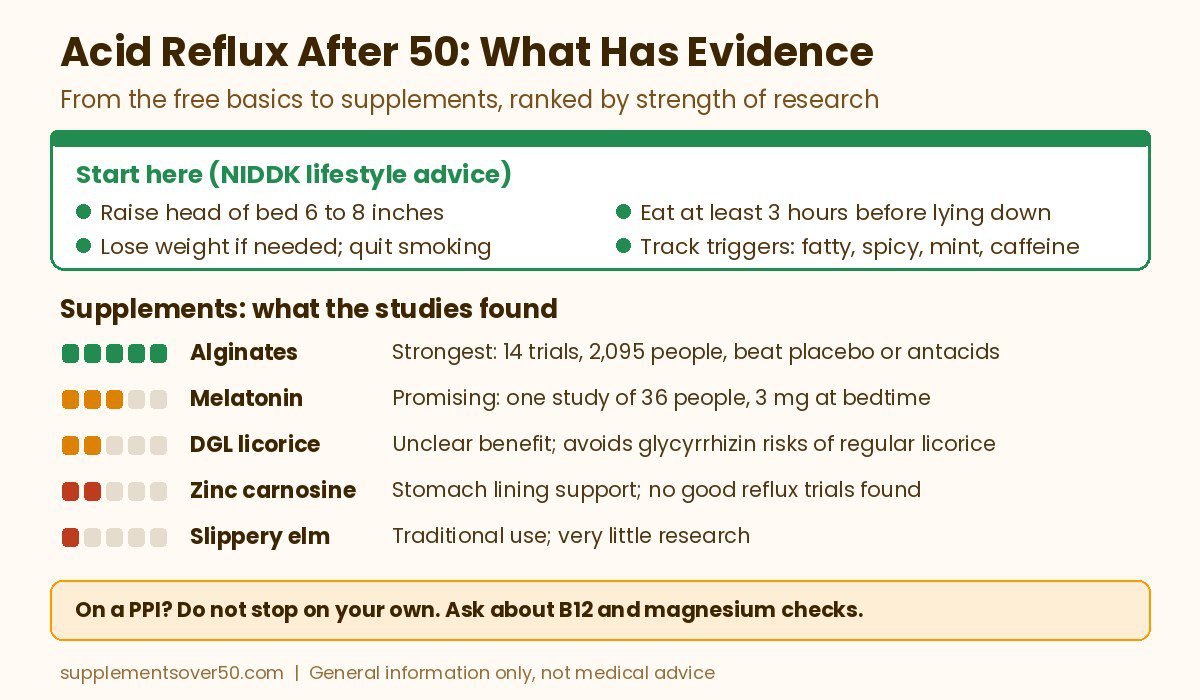
Reflux happens when stomach contents come back up into the esophagus. According to the NIDDK, this usually is prevented by the lower esophageal sphincter and the diaphragm. Gastroesophageal reflux disease (GERD) may develop when that sphincter becomes weak or relaxes when it should not. The classic symptoms are heartburn, a burning feeling behind the breastbone that rises toward the throat, and regurgitation, where you taste food or acid in your mouth. Not everyone has heartburn, though. Chest pain, nausea, trouble swallowing, a chronic cough and hoarseness can also be signs.
Several things that build up with age can tip the balance. NIDDK lists being overweight, smoking and a hiatal hernia, where part of the stomach moves up through the diaphragm. It also lists medicines that can cause reflux or make it worse, and many of them are common in older adults:
Popular Supplement Guides:


- Calcium channel blockers for high blood pressure
- NSAIDs such as ibuprofen and naproxen
- Benzodiazepines and other sedatives
- Tricyclic antidepressants
- Certain asthma medicines
If your reflux started or got worse after a new prescription, tell your doctor. Changing the medicine, the dose or the timing may help more than any supplement. Never stop a prescribed medicine on your own.
Start Here: The Lifestyle Steps That Help Most
Before spending money on the best supplements for acid reflux, do the free things first. The National Institute of Diabetes and Digestive and Kidney Diseases (NIDDK) says your doctor may recommend:
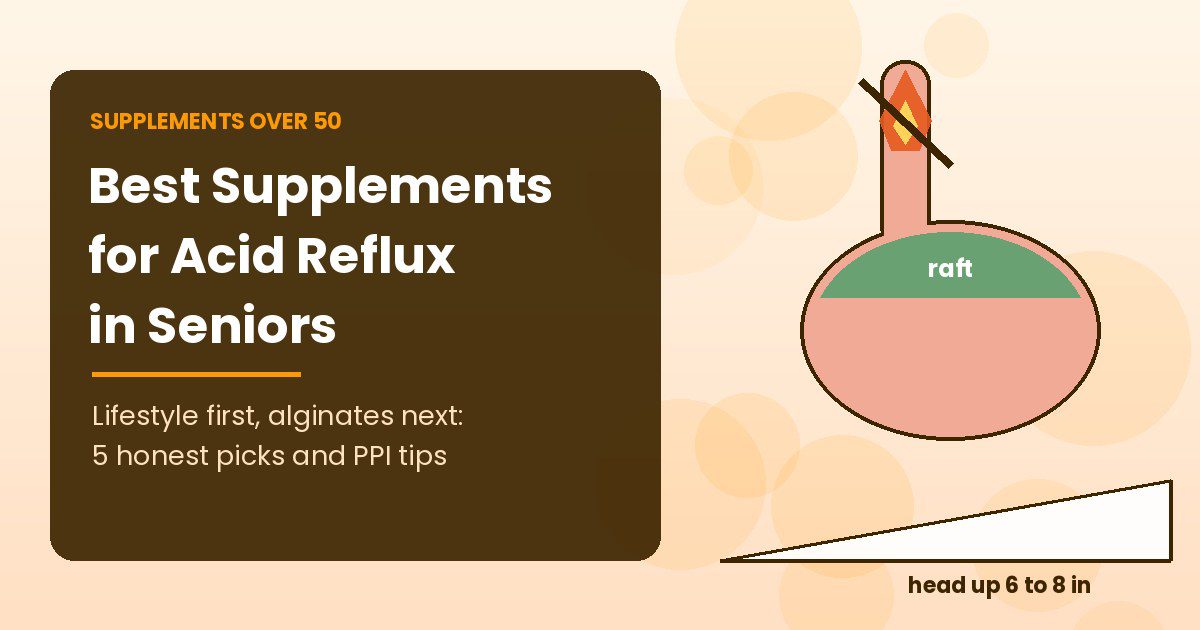
- Raising your head during sleep. NIDDK suggests a foam wedge or extra pillows under your head and upper back so your head is 6 to 8 inches higher than the bed. Bed risers under the head of the bed frame work on the same idea.
- Eating earlier. If symptoms hit at night or when lying down, NIDDK’s diet guidance for GERD says finishing meals at least 3 hours before you lie down may help.
- Losing weight if you are overweight.
- Quitting smoking.
- Finding your triggers. Common ones include citrus fruits and tomatoes, alcohol, chocolate, coffee and other caffeine, high-fat foods, mint and spicy foods. Not everyone reacts to all of them, so a two-week food and symptom diary is worth the effort.
The American College of Gastroenterology GERD guideline also includes lifestyle advice alongside medicine, surgery and endoscopic options, and it reflects growing concern about long-term PPI use and overprescribing. Lifestyle changes are cheap, safe and make every other treatment work better.
PPIs After 50: Nutrients to Watch and Why Not to Quit Cold Turkey
Proton pump inhibitors (PPIs) such as omeprazole, esomeprazole and pantoprazole are the strongest acid reducers. NIDDK says they are better at treating GERD symptoms than H2 blockers and can heal the esophageal lining in most people. NIDDK also notes they are generally safe, that side effects are uncommon, and that experts are still studying the effects of taking them for a long time or in high doses.
For older adults, a few long-term issues are worth discussing with your doctor:
- Vitamin B12. The NIH Office of Dietary Supplements vitamin B12 fact sheet says gastric acid inhibitors may affect vitamin B12 levels. Stomach acid helps free B12 from food, and low B12 can cause tiredness, numbness and memory problems. Our guide to signs of vitamin B12 deficiency in adults over 60 covers what to look for.
- Magnesium. The NIH magnesium fact sheet notes that proton pump inhibitors can affect magnesium status, and it cites an FDA safety communication that low magnesium levels can be associated with long-term PPI use. See signs of magnesium deficiency after 60.
- Calcium and bones. Questions have also been raised about calcium absorption and bone health with long-term acid suppression. The research is still being sorted out. If you take calcium, our comparison of calcium citrate vs calcium carbonate explains the difference between the two forms.
- Infections. NIDDK says research suggests PPIs may increase the chance of C. diff infection, a serious type of diarrhea.
None of this means you should stop. The American Gastroenterological Association (AGA) expert review on stopping PPIs is clear that a side effect, or a risk factor for one, is not on its own a reason to quit a PPI you actually need. It says people with complicated GERD, such as severe erosive esophagitis, an esophageal ulcer or a stricture, and those with Barrett’s esophagus, should generally not stop. It also warns that people who come off long-term PPIs may get temporary symptoms from rebound acid hypersecretion, meaning the stomach briefly makes extra acid. Your doctor can choose between tapering and stopping, and may suggest an alginate or antacid to cover the rebound weeks. Ask for a yearly review of whether you still need your PPI, and ask for B12 and magnesium checks if you have been on one for years.
Do Supplements for Acid Reflux Actually Work?
Some have reasonable evidence, most have very little. Here is what we found for each ingredient, from strongest to weakest.
Alginates (the strongest evidence). Alginates come from seaweed and form a gel “raft” that sits on top of stomach contents after a meal. A systematic review and meta-analysis in Diseases of the Esophagus pooled 14 randomized trials with 2,095 people. Alginate products increased the odds of GERD symptom relief compared with placebo or antacids (odds ratio 4.42). Compared with PPIs or H2 blockers, alginates looked less effective, though that result was not statistically significant. Note that many of these trials tested alginate medicines such as Gaviscon-type products, which are sold as over-the-counter antacid drugs rather than supplements. Alginate supplements work on the same principle, but the exact products have not been studied the same way.
Melatonin (promising, but tiny studies). Melatonin is best known for sleep, but it is also made in the gut. In a small study in BMC Gastroenterology, 36 people were split into four groups of nine: healthy controls, and people with GERD taking 3 mg of melatonin at bedtime, omeprazole, or both, for 4 and 8 weeks. Melatonin helped heartburn and upper abdominal pain alone or with omeprazole, but omeprazole alone worked better than melatonin alone. The authors said more studies are needed before routine use. That is a long way from proof.
DGL licorice (traditional, limited evidence). Deglycyrrhizinated licorice (DGL) has the glycyrrhizin removed. That matters, because the National Center for Complementary and Integrative Health (NCCIH) warns that glycyrrhizin in regular licorice can cause serious problems such as irregular heartbeat, especially in large amounts or with long-term use, and that even small amounts have been linked to severe effects in people with high blood pressure, heart or kidney conditions, or a high salt intake. NCCIH says DGL products might be safe for up to 4 months, but also that it is unclear whether licorice alone helps digestive symptoms.
Zinc carnosine (stomach lining, not reflux trials). Zinc-L-carnosine, sold as PepZin GI, is studied mainly for supporting the stomach lining. We did not find good-quality trials in acid reflux itself, so treat it as an experiment. The NIH zinc fact sheet sets the adult upper limit for zinc at 40 mg a day and says 50 mg or more over weeks can block copper absorption.
Slippery elm (traditional use only). Slippery elm bark contains mucilage, a gel-like fiber that coats the throat and gut. It has a long history in herbal medicine, but there is very little modern research in reflux.
Ginger and D-limonene. Ginger is often suggested for nausea and digestion, and D-limonene from orange peel is sold specifically for heartburn. Evidence for either in GERD is thin, and we did not include them as picks. See the section below on what we left out.
Probiotics and digestive enzymes. These are aimed at gut balance and digestion of food, not acid reflux. If bloating or gas is your main problem, see our guides to the best probiotic for seniors over 60 and the best digestive enzymes for seniors.
What to Look for in Acid Reflux Supplements
- An alginate as your first try. It has the most evidence and works physically, not by changing stomach acid.
- DGL, never regular licorice. The label should say deglycyrrhizinated or DGL.
- Low doses of melatonin. The reflux study used 3 mg. More is not better, especially after 60.
- Total zinc under 40 mg a day, counting your multivitamin.
- Third-party testing such as USP Verified or NSF where available.
- Sodium content if you are on a low-salt diet for blood pressure or heart failure. Check the label of any alginate product.
- Nothing that adds acid unless a doctor has confirmed low stomach acid. Betaine HCl, apple cider vinegar and strong bitters can backfire if your problem is reflux.
Best Supplements for Acid Reflux: Quick Comparison
| Product | Best for | Key details | Daily dose |
|---|---|---|---|
| Reflux Gourmet Vanilla Caramel Rescue | Best overall (after meals and bedtime) | Alginate complex that forms a gel layer; no glycerin, potassium or parabens; gluten-free | 1 tsp (5 mL) after meals and before bed |
| Natural Factors DGL Chewable | Licorice without glycyrrhizin | Deglycyrrhizinated licorice chewable; vegan; no sugar or artificial sweeteners | 1 tablet, 1 to 3 times a day, 20 min before meals |
| Doctor’s Best PepZin GI | Stomach lining support | 75 mg zinc-L-carnosine complex; vegan, gluten-free, soy-free | See label |
| Nature Made Melatonin 3 mg | Nighttime reflux | 3 mg tablets; USP Verified; gluten free | 1 tablet 1 hour before bed |
| NOW Slippery Elm 400 mg | Soothing herb | 400 mg slippery elm bark; mucilage; GMP certified | See label |
Top Picks for the Best Supplements for Acid Reflux in Seniors
1. Reflux Gourmet Vanilla Caramel Rescue (Best Overall)
If you only try one supplement, make it an alginate, since that is where the evidence is strongest. Reflux Gourmet is an alginate-based liquid developed by physicians and a chef. According to the listing, the seaweed-derived alginate forms a gel layer that rests above your stomach contents and breaks down gradually. The suggested use is one teaspoon (5 mL) after meals and before bed, which fits neatly with the times reflux tends to strike.
It is made without glycerin, potassium or parabens, is non-GMO, gluten-free and free from major allergens, and is produced in a GMP-compliant facility in Northern California. It has more than 6,500 ratings with a 4.2 rating. The trade-off: this is a supplement, and the trials above mostly tested alginate medicines. If you prefer a studied drug product, ask your pharmacist about an over-the-counter alginate antacid instead.
2. Natural Factors DGL Chewable (Best DGL Licorice)
Natural Factors DGL Chewable is a Best Seller and one of the most reviewed DGL products on Amazon, with more than 8,100 ratings and a 4.3 rating. The label says to chew one tablet one to three times a day, 20 minutes before each meal. The brand says DGL supports the natural mucosal lining of the stomach. It is vegan and free from artificial colors, preservatives and sweeteners, as well as sugar, dairy, gluten and soy.
Because the glycyrrhizin is removed, DGL avoids the main risk of regular licorice, which is a big deal if you have high blood pressure. Keep in mind that NCCIH says DGL might be safe for up to 4 months and that its benefit for digestive symptoms is unclear. Try it for a few weeks, track your symptoms and stop if nothing changes.
3. Doctor’s Best PepZin GI (Best for Stomach Lining Support)
Doctor’s Best PepZin GI provides 75 mg of a zinc-L-carnosine complex per serving. The brand says it supports healthy mucus secretion and the natural repair and maintenance of the stomach lining. The capsules are vegan, gluten-free, soy-free and non-GMO. It has more than 5,400 ratings and a 4.5 rating.
This is a pick for people whose symptoms feel more like a sore, irritated stomach than classic reflux, and who want something to try alongside lifestyle changes. Count the zinc it adds to your day, along with any multivitamin or zinc lozenges, and stay under the 40 mg daily upper limit. Long courses of high zinc can lower copper. If you also take zinc for immunity, see our best zinc supplement for seniors guide.
4. Nature Made Melatonin 3 mg (Best for Nighttime Reflux)
If reflux wakes you at night and you also struggle to fall asleep, a low dose of melatonin is a reasonable thing to discuss with your doctor. Nature Made’s tablet contains 3 mg, the same dose used in the small GERD study above. The label says to take one tablet an hour before bed with water. It is USP Verified, gluten free and made without synthetic dyes or artificial flavors. It is the most reviewed pick here, with more than 19,200 ratings and a 4.7 rating.
Be cautious after 60. NCCIH says melatonin may stay active longer in older people and cause daytime drowsiness, that people taking blood thinners need medical supervision when using it, and that sleep specialists recommend against it for people with dementia. Do not combine it with sleeping pills or other sedatives without asking your doctor. Our guide to melatonin for seniors explains why lower doses often work better.
5. NOW Slippery Elm 400 mg (Best Soothing Herb)
NOW Slippery Elm offers 400 mg of slippery elm bark per veg capsule. According to the brand, the bark’s mucilage can help coat and soothe the tissues of the digestive tract, and it has been used by herbalists for over 100 years. NOW holds an NPA A-rated GMP certification. It has more than 12,200 ratings and a 4.6 rating.
This is the weakest pick on evidence, which is why it sits last. It may suit people who like a gentle, traditional herb and want to avoid zinc or melatonin. Because it forms a coating, it is sensible to take it a couple of hours apart from your prescription medicines unless your pharmacist tells you otherwise.
What We Left Out and Why
- Betaine HCl and apple cider vinegar. These add acid. They are sometimes promoted on the idea that reflux comes from too little acid, but that is not how most GERD works, and adding acid may worsen heartburn or irritate an already inflamed esophagus.
- Digestive bitters. Bitters are meant to stimulate digestive juices. For people with active reflux, that may be the opposite of what you need. Ask your doctor first.
- Peppermint oil. Mint is on NIDDK’s list of common reflux triggers, even though peppermint is often sold for digestion.
- Regular licorice root. Because of glycyrrhizin and its heart and blood pressure risks.
- D-limonene. Sold for heartburn, but we could not find solid published trials to support it.
- Homeopathic “acid relief” tablets. There is no good evidence that they work.
How to Choose the Best Supplements for Acid Reflux
- If you get heartburn after meals or at bedtime, start with Reflux Gourmet or ask your pharmacist about an alginate antacid.
- If you want a chewable before meals and have high blood pressure, choose Natural Factors DGL, never regular licorice.
- If your stomach feels sore or irritated, try Doctor’s Best PepZin GI, keeping total zinc under 40 mg a day.
- If reflux and poor sleep go together, ask your doctor about Nature Made Melatonin 3 mg, especially if you take blood thinners.
- If you prefer a traditional herb, NOW Slippery Elm is the gentlest option, with the least evidence.
- If you take a PPI, keep taking it as prescribed and ask about B12 and magnesium testing and whether a step-down is right for you.
Already taking other supplements? Our guide to supplements to avoid with blood thinners explains interactions to watch. If digestion in general is your concern, compare the best digestive enzymes for seniors. And if night reflux keeps you awake, the best sleep supplement for seniors guide lists options that will not interfere with your stomach.
When to See a Doctor
Heartburn is common, but it should never be treated with supplements alone when warning signs are present. NIDDK says to see a doctor if symptoms do not improve with over-the-counter medicines or lifestyle changes, and especially if you have:
- Chest pain. Always rule out your heart first. MedlinePlus lists bad indigestion as a possible heart attack symptom and notes that older adults, women and people with diabetes may have little or no chest pain. Call 911 for chest pain with shortness of breath, sweating, nausea or pain spreading to your arm, jaw or back.
- Trouble swallowing or pain when swallowing, or food that feels stuck.
- Unexplained weight loss or loss of appetite.
- Persistent vomiting.
- Signs of bleeding: vomit with blood or that looks like coffee grounds, or black, tarry stools.
- New heartburn that starts after 60, or a clear change in long-standing symptoms. New symptoms later in life deserve a proper check.
- Heartburn more than twice a week, or needing antacids most days.
Frequently Asked Questions
What is the best supplement for acid reflux?
Alginates have the strongest evidence. A meta-analysis of 14 trials found alginate products were more effective than placebo or antacids for GERD symptoms. DGL, zinc carnosine, melatonin and slippery elm have much less research. Lifestyle steps such as earlier dinners and raising the head of your bed come first.
Can I stop my PPI and take supplements instead?
Not on your own. The American Gastroenterological Association says some people, such as those with severe erosive esophagitis or Barrett’s esophagus, should generally stay on a PPI. Coming off long-term PPIs can also cause temporary rebound acid. Ask your doctor whether a step-down or taper is right for you.
Does DGL licorice raise blood pressure?
DGL has the glycyrrhizin removed. Glycyrrhizin is the part of regular licorice that NCCIH links to serious effects such as irregular heartbeat, especially in people with high blood pressure or heart or kidney conditions. NCCIH says DGL might be safe for up to 4 months. Avoid regular licorice root if you have any of those conditions.
Does melatonin help acid reflux at night?
Possibly. A small study of 36 people found 3 mg of melatonin at bedtime eased heartburn, but omeprazole worked better. After 60, melatonin can cause next-day drowsiness, and people on blood thinners need medical supervision when taking it.
Do long-term PPIs cause vitamin B12 or magnesium deficiency?
They can affect both. The NIH says acid-reducing medicines may lower vitamin B12 levels and that PPIs can affect magnesium status, with low magnesium linked to long-term use. Ask your doctor to check your levels if you have taken a PPI for years.
Is apple cider vinegar good for acid reflux?
There is no good evidence that it helps, and adding acid may make heartburn worse for many people with reflux. The same caution applies to betaine HCl and strong digestive bitters. Talk to your doctor before trying anything that increases stomach acid.
Our Take
The best supplements for acid reflux work best on top of the basics: smaller, earlier dinners, a raised head of the bed, weight loss if needed and cutting your trigger foods. If you want something extra, an alginate such as Reflux Gourmet has the strongest case. Natural Factors DGL is a safer licorice option, PepZin GI suits a sore stomach, low-dose melatonin may help at night, and slippery elm is a gentle traditional choice with little research. Keep taking any prescribed PPI until you talk to your doctor, ask about B12 and magnesium checks, and never ignore chest pain, trouble swallowing, weight loss or signs of bleeding.
This article is for informational purposes only and is not medical advice. Talk to your doctor before taking supplements for acid reflux, especially if you take a PPI, blood thinners, sedatives or blood pressure medicine, or have heart, kidney or liver disease.