Supplements to Lower Blood Pressure After 50: What the Evidence Supports
This guide contains affiliate links. If you buy through them, we may earn a small commission at no extra cost to you.
If your last reading came back high, it is natural to wonder whether supplements to lower blood pressure could help before, or alongside, a prescription. Pharmacy shelves are full of “blood pressure support” formulas, and many are aimed squarely at people over 50, when readings tend to climb and the first pill is often discussed.
Here is the honest picture. A small number of supplements have decent human trials showing modest drops in blood pressure. Most effects are smaller than what you get from changing how you eat, and some herbs can push blood pressure up or clash with your medicines. This guide covers what the evidence supports and how to use any supplement safely.
Table of Contents
Why Blood Pressure Rises After 50
High blood pressure is common. The National Center for Complementary and Integrative Health (NCCIH) notes that it affects almost half of U.S. adults and, over time, can damage the heart, blood vessels, kidneys and brain. It is a major cause of heart attack, heart failure, stroke and chronic kidney disease, and it usually causes no symptoms at all.
Age is a big part of the story. As we get older, large arteries become stiffer, so the top number (systolic pressure) often rises even when the bottom number stays steady. Weight gain, less activity, more salt from processed and restaurant food, poor sleep and some medicines (such as certain pain relievers and decongestants) add to the trend. Many people over 50 also start medicines that change how the body handles potassium and other minerals, which matters a lot when choosing supplements.
Popular Supplement Guides:
Do Supplements to Lower Blood Pressure Actually Work?
Some do, a little. NCCIH says research suggests cocoa, garlic, fish oil, flaxseed, tea, probiotics and hibiscus may help reduce blood pressure in people with hypertension, but the evidence is limited and the effects are small. Its clearest line is the most important one: no dietary supplement has been shown to have effects comparable to those of drugs used to treat high blood pressure. Here is what the stronger research shows, ingredient by ingredient.
Aged Garlic Extract
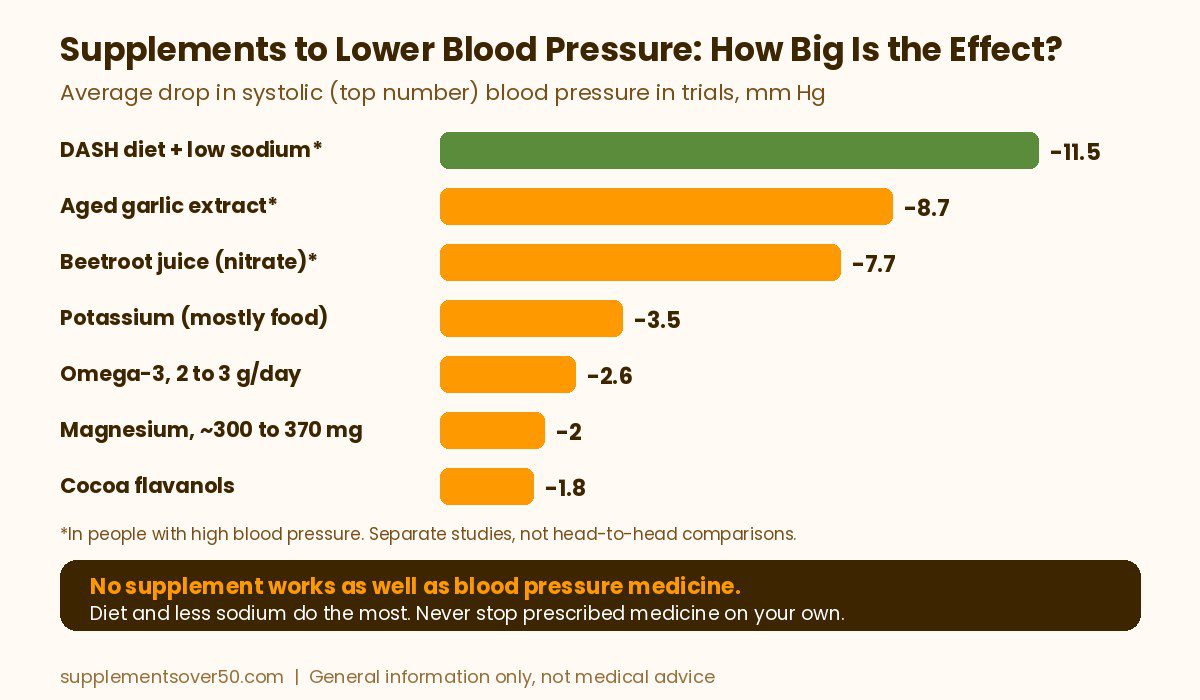
Garlic has some of the larger reported effects. In an updated meta-analysis of 20 trials with 970 participants, garlic supplements lowered systolic pressure by about 5 points and diastolic by about 2.5 points compared with placebo. In people whose blood pressure was 140/90 or higher, the drop was larger, about 8.7 systolic and 6.1 diastolic. Many of these trials used aged garlic extract and were small, and much of this research comes from one research group, so the numbers may shrink in larger independent studies. The NCCIH garlic page warns that garlic supplements may raise bleeding risk, which matters if you take a blood thinner.
Magnesium
Magnesium has the most double-blind trial data. In a meta-analysis of 34 double-blind trials with 2,028 people, a median of 368 mg a day for about three months lowered systolic pressure by 2 points and diastolic by about 1.8 points. The authors found that 300 mg a day for a month was enough to see an effect. The NIH Office of Dietary Supplements magnesium fact sheet sums it up fairly: supplementation only marginally lowers blood pressure. It is most useful if your diet is low in magnesium, and the upper limit for supplemental magnesium is 350 mg a day for adults unless your doctor advises more. For forms and doses, see our Best Magnesium for Heart Health and Blood Pressure After 50 guide.
Dietary Nitrate (Beetroot Juice)
Beets and leafy greens are rich in nitrate, which the body converts to nitric oxide, a molecule that relaxes blood vessels. A meta-analysis of 16 short trials (254 people) found beetroot juice and nitrate lowered systolic pressure by about 4.4 points, with little change in diastolic. In a 4-week trial in 68 people with high blood pressure, a daily 250 mL glass of beetroot juice lowered systolic pressure by 7.7 points in the clinic and about 8 points at home compared with nitrate-free juice, and the effect held for the full 4 weeks. Trials are still short, and the nitrate dose matters, so beet powders that do not state their nitrate content are hard to judge.
Potassium (Mainly From Food)
Potassium helps the body get rid of sodium and relaxes blood vessel walls. A review of 22 randomized trials published in the BMJ found that eating more potassium lowered systolic pressure by about 3.5 points overall, with the benefit seen in people with high blood pressure. Most of that came from food and higher intakes than pills supply. The NIH potassium fact sheet notes that most over-the-counter potassium supplements contain no more than 99 mg, a small fraction of the 2,600 mg (women) to 3,400 mg (men) daily intake recommended for adults over 50. Potatoes, beans, bananas, leafy greens, yogurt and tomatoes are a safer route, and potassium pills should only be used with your doctor’s say-so.
Omega-3 Fish Oil
A dose-response meta-analysis of 71 trials found that 2 to 3 grams a day of EPA plus DHA lowered systolic pressure by about 2.6 points and diastolic by about 1.6 to 1.8 points, with stronger effects in older adults and people with high blood pressure. That is far more than a typical one-capsule dose. Fish oil also has a bleeding consideration with blood thinners. Our Best Fish Oil for Seniors guide covers forms and purity.
Cocoa Flavanols
A Cochrane review of 35 trials found flavanol-rich cocoa products lowered blood pressure by about 1.8 points in mostly healthy adults over a few weeks, with a possibly larger effect in people with high blood pressure. The reviewers rated the evidence moderate and noted some signs of industry influence.
Supplements to Lower Blood Pressure: Evidence Summary
| Option | Average systolic drop in trials | Who it was studied in | Main caution |
|---|---|---|---|
| DASH diet with low sodium | 7.1 to 11.5 points | Adults with and without high blood pressure | Takes real diet change |
| Aged garlic extract | About 5 (8.7 in hypertension) | Small trials, often one research group | Bleeding risk with blood thinners |
| Dietary nitrate (beetroot juice) | About 4 to 8 | Short trials, small groups | Dose varies widely by product |
| Potassium (mostly food) | About 3.5 | People with high blood pressure | Dangerous with some heart and kidney drugs |
| Omega-3 (2 to 3 g EPA+DHA) | About 2.6 | Many trials, stronger in older adults | High dose; bleeding with blood thinners |
| Magnesium (about 300 to 370 mg) | About 2 | 34 double-blind trials | Diarrhea; caution with kidney disease |
| Cocoa flavanols | About 1.8 | Mostly healthy adults | Sugar and calories in chocolate |
What Lowers Blood Pressure More Than Any Supplement
If you only change one thing, change your plate. In the DASH-Sodium trial, following the DASH diet with low sodium led to systolic pressure about 7 points lower in people without hypertension and 11.5 points lower in people with hypertension, compared with a typical American diet high in salt. That beats every supplement above. The NHLBI DASH eating plan recommends vegetables, fruits, whole grains, low-fat dairy, fish, poultry, beans and nuts, with sodium at 2,300 mg a day or less, and notes that 1,500 mg lowers blood pressure even further.
- Cut sodium first. Most comes from bread, deli meat, soups, sauces, frozen meals and restaurant food rather than the salt shaker. Read labels.
- Move most days. Brisk walking, cycling or swimming, plus some strength work, helps blood pressure and blood sugar together.
- Limit alcohol and, if you carry extra weight, aim for gradual loss. Both make a measurable difference.
- Sleep and stress matter. NCCIH notes meditation, tai chi, qigong and yoga may have small benefits as part of a broader plan.
- Take your medicine as prescribed. If your doctor has prescribed a blood pressure drug, supplements are add-ons, never replacements.
What to Look for in Supplements to Lower Blood Pressure
- An ingredient with human trials. Garlic, magnesium, nitrate and omega-3 have the most data. Be wary of long “blood pressure blend” labels with tiny amounts of many herbs.
- A dose that matches the research. Around 300 mg of magnesium, roughly 400 mg of nitrate from beet juice, or 2 to 3 grams of EPA plus DHA. Many products fall short.
- No hidden stimulants or licorice. NCCIH lists bitter orange, ephedra, ginseng and licorice root among supplements that may raise blood pressure.
- Third-party quality checks such as USP, NSF or Informed-Sport, where available.
- No promises to replace medicine. That claim alone is a reason to put the bottle back.
Supplements to Lower Blood Pressure: Quick Comparison
| Product | Best for | Key details | Daily dose |
|---|---|---|---|
| Kyolic Aged Garlic Extract Formula 100 | The garlic form used in many trials | Organically grown aged garlic extract, odorless, non-GMO | 2 capsules (600 mg) twice daily |
| Nature Made Magnesium Glycinate | Gentle magnesium for low intake | Chelated bisglycinate, gluten-free, no artificial flavors | 2 capsules (200 mg) with a meal |
| BEET IT Sport Pro-Elite Shot | Measured dietary nitrate | 400 mg nitrate per 2.4 oz shot, 100% beet juice, Informed-Sport certified | 1 shot (ask your doctor) |
Top Picks If You Want to Try Supplements to Lower Blood Pressure
We chose these for the ingredients with the strongest human evidence and clear labeling, not for bold blood pressure claims. All are long-established, widely reviewed products on Amazon. Check with your doctor or pharmacist first, especially if you take blood pressure medicine, a blood thinner or have kidney disease.
1. Kyolic Aged Garlic Extract Formula 100 (Best Studied Garlic Form)
Kyolic is the aged garlic extract brand behind many of the published garlic trials, and the brand says its extract has been the subject of more than 1,000 scientific papers. Formula 100 is the plain extract positioned for heart health and circulation, without the extra ingredients found in some of the brand’s other formulas. It uses organically grown garlic and non-GMO ingredients, and it is described as odorless and gentle on digestion.
The label serving is two capsules for 600 mg of aged garlic extract, taken twice daily. That is close to the doses used in several trials. Garlic may raise bleeding risk, so skip it or ask first if you take warfarin, apixaban, clopidogrel or daily aspirin, and stop before surgery as your surgeon directs.
2. Nature Made Magnesium Glycinate (Best Gentle Magnesium)
Magnesium glycinate, a chelated form, is often easier on the stomach than magnesium oxide or citrate, which matters because diarrhea is the most common side effect of magnesium. Nature Made’s version provides 200 mg per two-capsule serving, and the brand describes it as gentle on the stomach and highly bioavailable. It is gluten-free with no added color or artificial flavors, and one bottle is a 30-day supply.
200 mg plus the magnesium in a decent diet gets many people into the range used in the blood pressure trials. Take it with a meal, as the label directs. If you have kidney disease, do not take magnesium without your doctor’s approval, because weak kidneys can let it build up.
3. BEET IT Sport Pro-Elite Shot (Best Measured Nitrate Dose)
Most beet powders do not say how much nitrate they contain, which is the active part. BEET IT shots do: each 2.4 oz shot of 100% beet juice concentrate provides 400 mg of dietary nitrate, roughly in line with the 250 mL beetroot juice used in the hypertension trial above. The product is free from preservatives and artificial ingredients and is Informed-Sport certified.
It is marketed to athletes, so ignore the workout timing on the label; for blood pressure the trials used a daily dose. Beet juice can turn urine and stools pink or red, which is harmless. Mouthwash may blunt the effect, since mouth bacteria help convert nitrate. Ask your doctor first if you take nitrate heart medicines or erectile dysfunction drugs, and note it contains natural sugars.
How to Choose Supplements to Lower Blood Pressure Safely
- If your blood pressure is only mildly raised and you are not on medicine yet, start with DASH and sodium reduction, then ask your doctor whether garlic or magnesium is worth a 2 to 3 month trial.
- If your diet is low in leafy greens, nuts and whole grains, magnesium glycinate is a reasonable add-on.
- If you take a blood thinner, avoid adding garlic or high-dose fish oil without your prescriber’s okay.
- If you take an ACE inhibitor, ARB or spironolactone, or have kidney disease, do not use potassium pills or salt substitutes unless your doctor approves.
- If you already take blood pressure medicine, add only one thing at a time and track your readings, since combined effects can drop pressure too far.
For how these fit into a wider routine, see our Heart Health Supplement Stack for Seniors: The Evidence-Based Guide.
Who Should Avoid These Supplements
- People on ACE inhibitors, ARBs or spironolactone. The NIH potassium fact sheet explains that these drugs, including benazepril, losartan and potassium-sparing diuretics like spironolactone, can raise potassium levels. Potassium pills or potassium-based salt substitutes on top can cause dangerous heart rhythm problems.
- People with chronic kidney disease. Potassium and magnesium can build up when the kidneys cannot clear them. Our Supplements to Avoid With Kidney Disease After 60 guide explains which products to skip.
- People on blood thinners or antiplatelet drugs. Garlic and fish oil may raise bleeding risk. See Supplements to Avoid With Blood Thinners for the full list.
- Anyone using licorice. Real licorice root, including some teas, candies and herbal blends, can raise blood pressure and lower potassium.
- People on nitrate heart medicines or erectile dysfunction drugs, who should ask before using concentrated nitrate products.
Check Your Numbers at Home
The only way to know whether anything is working, diet, medicine or supplement, is to measure. The American Heart Association recommends home monitoring for everyone with high blood pressure and advises an automatic, upper-arm cuff monitor that has been validated, since wrist and finger monitors give less reliable readings. Make sure the cuff fits, avoid caffeine, exercise and smoking for 30 minutes beforehand, and have your clinician check the monitor against theirs. Do not stop or change a blood pressure medicine based on home readings without talking to your doctor.
When to Seek Urgent Care
According to the American Heart Association guidance on when to call 911, if a reading is higher than 180/120, wait a minute and check again. If it is still that high and you feel fine, contact your healthcare professional as soon as possible. Call 911 if it is that high and you have symptoms such as chest pain, shortness of breath, back pain, numbness, weakness, vision changes or trouble speaking. Do not try to bring a reading like that down with a supplement.
See your doctor promptly, too, if you feel dizzy or faint after starting a new supplement while on blood pressure medicine, or if you notice muscle weakness or an irregular heartbeat, which can be signs of a potassium problem.
Frequently Asked Questions
What is the best supplement to lower blood pressure?
No single supplement is best for everyone. Aged garlic extract, magnesium and dietary nitrate from beetroot juice have the most human evidence, with average drops of about 2 to 8 points systolic in trials. The DASH diet with less sodium lowers blood pressure more than any of them.
Can supplements replace my blood pressure medication?
No. NCCIH states that no dietary supplement has been shown to work as well as drugs used to treat high blood pressure. Never stop or reduce a prescribed medicine without your doctor’s guidance.
Is it safe to take potassium supplements for blood pressure?
Only with your doctor’s approval. Potassium can build up to dangerous levels if you take ACE inhibitors, ARBs or spironolactone, or if you have kidney disease. Getting more potassium from foods like beans, potatoes and leafy greens is the safer route.
How long does it take for supplements to lower blood pressure?
In trials, magnesium showed effects within about a month and beetroot juice within days to weeks, while garlic trials usually ran for a few months. Track your readings at home and review them with your doctor after a few months.
Can I take garlic or fish oil if I am on a blood thinner?
Ask your prescriber first. Both may increase bleeding risk when combined with warfarin, newer anticoagulants or antiplatelet drugs, and you may need to stop them before surgery.
Do any supplements raise blood pressure?
Yes. NCCIH lists bitter orange, ephedra, ginseng and licorice root as supplements that may raise blood pressure. Some pre-workout and weight loss products with stimulants can too. Check labels and tell your doctor about everything you take.
Our Take
The evidence for supplements to lower blood pressure is real but modest. Aged garlic extract, magnesium and beetroot nitrate can each shave a few points off your readings, and that can help as part of a bigger plan. They are not substitutes for prescribed medicine, and the DASH diet with less salt, regular activity and limiting alcohol will do more. Keep potassium in your food unless your doctor says otherwise, check every supplement against your medicines, and let your home monitor tell you whether anything is working.
This article is for informational purposes only and is not medical advice. Talk to your doctor or pharmacist before starting any supplement, especially if you have high blood pressure, kidney disease or take prescription medicines.