Best Protein Powder for Women Over 50: 5 Picks for Muscle, Bone and Sensitive Stomachs
This guide contains affiliate links. If you buy through them, we may earn a small commission at no extra cost to you.
Choosing the best protein powder for women over 50 is less about finding a miracle tub and more about solving a specific problem. After menopause, muscle and bone both get harder to hold on to, appetite often shrinks, and breakfast turns into coffee and toast. A good protein powder makes it easy to add 20 to 30 grams of protein to a meal that would otherwise have almost none.
This guide covers how much protein you actually need, whether whey will upset your stomach, what lead testing found in plant powders, and why collagen is not the same as protein. Then it walks through five picks, each with a different job.
Table of Contents
Why Protein Needs Change for Women After 50
Two changes drive this. The first is hormonal. A review on muscle mass and strength after menopause (Maltais and colleagues, 2009) explains that the natural fall in estrogen at menopause increases fat around the middle and reduces bone density, muscle mass and strength. Among the things you can change, the authors found that low physical activity and low protein intake were the strongest contributors to muscle loss in postmenopausal women.
The second is that older muscle responds less well to the protein you eat. The PROT-AGE Study Group position paper, written by an international group of geriatric experts, describes declining anabolic responses to protein with age. In plain terms, a meal that would have maintained your muscle at 35 does less of that work at 65.
Popular Supplement Guides:




Bone is part of the same picture. The MedlinePlus menopause overview notes that lower estrogen is linked to bone loss and osteoporosis in some women, and advises getting enough calcium and vitamin D. Stronger muscles also mean fewer falls, so protein, calcium and strength training work as a team.
Appetite tends to shrink with age too, and protein is often the first thing to slip, especially at breakfast. Cutting calories to manage midlife weight gain can make it worse, because a low-protein diet strips muscle along with fat.
How Much Protein Do Women Over 50 Need?
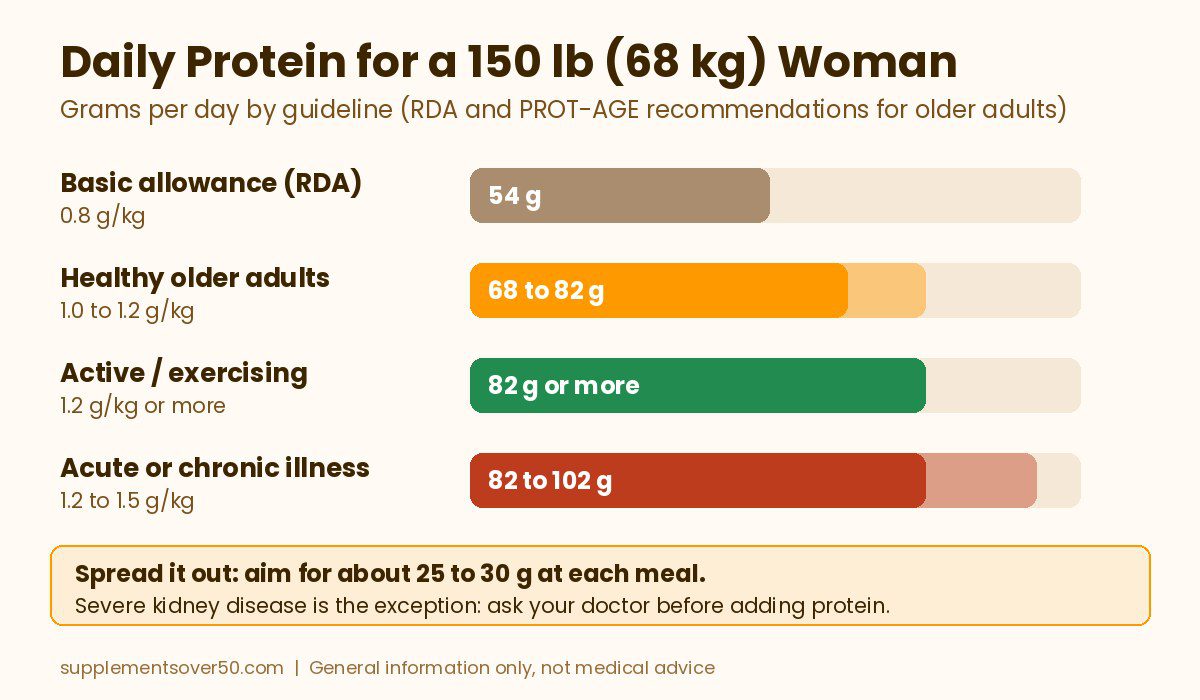
The standard recommended dietary allowance for adults is 0.8 grams of protein per kilogram of body weight per day, or about 0.36 grams per pound. That figure was set to prevent deficiency, not to protect aging muscle.
The PROT-AGE group recommends that healthy adults over 65 get at least 1.0 to 1.2 grams per kilogram a day, at least 1.2 grams for those who exercise or are otherwise active, and 1.2 to 1.5 grams for most older adults with acute or chronic illness. The paper focuses on people over 65, so treat these as a target to grow into through your 50s rather than a strict rule. It also notes that the evidence on protein quality and timing was not yet strong enough for specific recommendations.
For a 150-pound (68 kg) woman, that works out to roughly 54 grams a day at the basic allowance and about 68 to 82 grams a day on the PROT-AGE range. Spreading it out matters too. In Consumer Reports’ coverage, protein researcher Nicholas Burd says the body can use about 25 to 30 grams per meal, so a 60 gram dinner does not make up for a 5 gram breakfast.
Food can get you there. According to MedlinePlus, one ounce of most protein foods, such as meat, fish or poultry, provides about 7 grams of protein, and a large egg counts as one ounce. Consumer Reports also points out that most Americans, women included, already exceed the basic allowance. A powder makes the most sense when your appetite is small, you eat little meat, fish or dairy, or one meal of the day is consistently low.
Are Protein Powders Safe? What Testing Found on Heavy Metals
This is the question that has kept many women from buying a tub at all, and it deserves a straight answer. A Consumer Reports investigation of lead in protein powders and shakes, first published in October 2025 and later updated, tested 23 popular powders and shakes. For more than two-thirds of them, a single serving contained more lead than CR’s experts consider safe to have in a day. CR’s level of concern is 0.5 micrograms per day, which is based on California’s very strict Prop 65 limit.
The pattern by protein type is what matters most for choosing. On average, the plant-based products had about nine times the lead of the dairy-based ones. Dairy-based powders and shakes generally had the lowest levels, although half of them were still above CR’s daily threshold. One of the better choices for daily use on CR’s list was Optimum Nutrition Gold Standard 100% Whey. A supplement trade group disputes CR’s threshold, and CR says there is no reason to panic, but lead builds up over time and is linked to kidney damage and high blood pressure in adults.
What this means in practice: favor a dairy protein if you want a daily shake, keep plant powders to a few servings a week unless the brand publishes heavy metal test results, and avoid products carrying a Prop 65 warning. Supplements are not approved by the FDA before they are sold, and there are no federal limits for heavy metals in protein powder, so a third-party seal and published testing are worth looking for.
What to Look for in a Protein Powder After 50
- 20 to 30 grams of protein per serving. That lands in the range the body can use at one meal.
- A complete protein. Whey, milk proteins and blended plant proteins (such as pea with rice) provide all nine essential amino acids. Collagen does not.
- Low added sugar. Aim for a few grams or less. Many flavored powders and shakes use sweeteners instead, so check the ingredient list if sugar alcohols or sucralose bother your stomach.
- Lactose tolerance. Whey isolate is filtered to remove most lactose. If dairy of any kind is a problem, choose a plant powder.
- Heavy metal transparency. Look for a third-party seal or a brand that publishes contaminant testing, and skip products with a Prop 65 warning.
- Calcium and vitamin D. A milk-based shake can add some, but add up what you already get from food and other supplements first.
- A label you can read. Our guide on how to read a supplement label explains serving sizes, seals and what each line on the panel means.
Best Protein Powder for Women Over 50: Quick Comparison
| Product | Best for | Key details | Per serving |
|---|---|---|---|
| Dymatize ISO100 Whey Isolate | Best overall, lactose sensitive | 100% whey isolate filtered to remove excess lactose; 1g fat, 1g sugar, under 120 calories; gluten free | 25g protein |
| Orgain Organic Vegan Protein | Dairy-free, plant-based | Organic pea, brown rice and chia; all 9 essential amino acids; 1g sugar, 6g prebiotic fiber; no lactose or dairy ingredients | 21g protein |
| Premier Protein 30g Shake | Ready-to-drink, small appetites | No added sugar; 24 vitamins and minerals; gluten free; portable | 30g protein |
| Fairlife Core Power 26g | Milk-based shake with calcium | Ultra-filtered milk; complete protein with all 9 essential amino acids; contains calcium, vitamin D and electrolytes | 26g protein |
| Vital Proteins Collagen Peptides | Skin and joint add-on | Grass-fed bovine collagen with vitamin C and hyaluronic acid; no dairy or gluten; 0g sugar | See label (incomplete protein) |
Top Picks for the Best Protein Powder for Women Over 50
1. Dymatize ISO100 Whey Isolate (Best Overall)
Whey is the most studied protein for muscle in older adults, and an isolate is the cleanest version of it. Dymatize ISO100 gives 25 grams of protein and 5 grams of BCAAs per scoop with 1 gram of fat, 1 gram of sugar and fewer than 120 calories, according to the listing. That lean profile suits women who want more protein without more calories.
The brand says the whey is filtered to remove excess lactose and broken down into small peptides for faster digestion, which is why it is our first pick for women who find regular whey heavy. It is gluten free and mixes with water, milk or oatmeal. It has more than 21,000 ratings on Amazon. If you are very sensitive to lactose, try a half scoop first.
2. Orgain Organic Vegan Protein (Best Dairy-Free Plant Protein)
If dairy does not agree with you or you eat plant-based, Orgain is the most popular option in this category, with more than 62,000 ratings. Each serving gives 21 grams of organic protein from peas, brown rice and chia seeds, which together supply all nine essential amino acids. It has 1 gram of sugar and 6 grams of prebiotic fiber, and the brand says it contains no lactose or dairy ingredients, no erythritol, and no soy ingredients.
Be aware of the heavy metal question here. Consumer Reports tested Orgain’s organic plant-based protein in vanilla bean and found lead at 143% of its daily level of concern per two-scoop serving, and suggested limiting it to under five servings a week. Orgain told CR its products are safe for daily use and that it tests ingredients and finished products for heavy metals. A sensible approach is to use it a few times a week rather than as your only daily protein.
3. Premier Protein 30g Shake (Best Ready-to-Drink for Small Appetites)
A powder only works if you actually make it. For many women over 50, the easier win is a shake you can grab from the fridge when you do not feel like eating breakfast. Premier Protein’s ready-to-drink shake provides 30 grams of protein with no added sugar, plus 24 vitamins and minerals, and it is gluten free. It has more than 61,000 ratings.
Thirty grams in one bottle is close to a full meal’s worth of protein, which is useful if your appetite is small or you are recovering from illness. Because it is fortified, check whether its vitamins overlap with your multivitamin, and read the full label for sweeteners if your stomach is sensitive.
4. Fairlife Core Power 26g (Best Milk-Based Shake With Calcium and Vitamin D)
Core Power is made from ultra-filtered milk and provides 26 grams of complete protein, with all nine essential amino acids, per 14-ounce bottle. The brand also notes that it contains calcium, vitamin D and electrolytes. For a woman who wants her post-walk or post-workout drink to help both muscle and bone, that combination makes sense. It has more than 24,000 ratings.
It is sold as a workout recovery drink, but it works as a snack too. The listing does not state the exact calcium or vitamin D amounts, so check the bottle and count it toward your daily total. Our article on calcium and vitamin D for women over 50 explains how much you need and when supplements make sense.
5. Vital Proteins Collagen Peptides (Best Collagen Add-On, Not a Full Protein)
Collagen is everywhere in women’s wellness marketing, so it is worth being clear about what it is. A 2019 analysis of collagen peptides in the diet explains that collagen protein lacks one essential amino acid, tryptophan, and is classified as an incomplete protein. It should not replace whey, milk or a blended plant protein for building muscle.
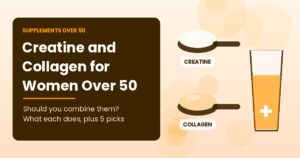
Vital Proteins is still a reasonable add-on if you want collagen for other reasons. This version uses grass-fed bovine collagen and adds vitamin C and hyaluronic acid, which the brand positions for collagen production and skin hydration. It dissolves in hot or cold drinks, contains no dairy or gluten, has 0 grams of sugar, and has more than 215,000 ratings. Stir it into your coffee, but count your real protein from the other picks. Our guide on creatine and collagen for women over 50 covers how the two compare.
How to Choose the Best Protein Powder for Women Over 50
- If you want one daily protein powder, pick Dymatize ISO100. Dairy proteins tested lowest for lead overall.
- If dairy upsets your stomach even as an isolate, or you are vegan, pick Orgain Organic Vegan Protein and keep it to a few servings a week.
- If you skip breakfast because you are not hungry, pick the Premier Protein shake and drink it with or instead of your morning coffee.
- If bone health is your bigger worry, pick Fairlife Core Power and pair it with strength training.
- If you mainly want collagen for skin or joints, add Vital Proteins on top of a complete protein, not instead of one.
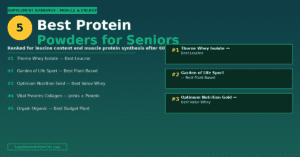
Start with one serving a day at the meal where you fall shortest, and judge it over a month. For a broader look at products for older adults, see our best protein powders for seniors ranking. If you are weighing whey against pea or rice protein for muscle loss, read whey vs plant protein for sarcopenia after 60. And if you take Ozempic or Wegovy, our guide to the best protein powder for seniors on GLP-1 medications covers how to protect muscle while appetite is low.
Who Should Avoid Protein Powder or Ask a Doctor First
- Kidney disease. This is the big one. The PROT-AGE group makes an exception for older adults with severe kidney disease who are not on dialysis, who may need to limit protein. The National Institute of Diabetes and Digestive and Kidney Diseases (NIDDK) says some people with chronic kidney disease need moderate amounts of protein so waste does not build up, while too little can lead to malnutrition, and recommends working with a dietitian. Our article on supplements to avoid with kidney disease has more.
- Milk allergy. Whey isolate and milk shakes are not safe for a true milk allergy, even if lactose is removed.
- Liver disease or a prescribed protein limit. Follow your care team’s target rather than a general guide.
- Diabetes. Check the carbohydrate and sugar per serving, and be aware that some shakes are sweetened and fortified differently by flavor.
- Unexplained weight loss or a sudden drop in appetite. Do not just add shakes. See your doctor to find the cause.
- Several fortified products. If you combine fortified shakes with a multivitamin and calcium pills, add up the totals, and bring your full supplement list to your next appointment.
Frequently Asked Questions
How much protein should a woman over 50 eat per day?
The basic allowance is 0.8 grams per kilogram of body weight, about 54 grams for a 150-pound woman. Experts in the PROT-AGE group recommend at least 1.0 to 1.2 grams per kilogram for healthy older adults, or roughly 68 to 82 grams for the same woman, and more if you are active or ill.
Is whey or plant protein better for women over 50?
Both can work if the plant protein is a complete blend. Whey is the most studied for muscle and, in Consumer Reports testing, dairy proteins generally had much lower lead levels than plant ones. Choose a plant powder if dairy disagrees with you, and use it a few times a week.
Can protein powder help prevent muscle loss after menopause?
It can help if your diet is low in protein, because low protein intake is one of the main modifiable contributors to muscle loss after menopause. It works best combined with strength training. A powder alone, without exercise or enough total calories, will do much less.
Is collagen a good protein powder for women over 50?
Not as your main protein. Collagen lacks the essential amino acid tryptophan and is classified as an incomplete protein. It is fine as an extra for skin or joint goals, but rely on whey, milk protein or a blended plant protein to meet your daily protein needs.
Do protein powders have heavy metals?
Many do. Consumer Reports found that more than two-thirds of 23 products tested exceeded its strict daily level of concern for lead in one serving, with plant-based products averaging about nine times the lead of dairy-based ones. Choose dairy protein for daily use and look for published testing.
Is protein powder bad for your kidneys?
Kidney health is the key question. The PROT-AGE experts make severe kidney disease the exception to their higher protein targets for older adults, and NIDDK says some people with chronic kidney disease need moderate protein. If you have kidney disease, talk to your doctor or a renal dietitian before using any protein powder or shake.
Our Take
For most women over 50, the best protein powder is a plain whey isolate such as Dymatize ISO100, used once a day at the meal that falls short. Choose Orgain if you need dairy-free and keep it to a few servings a week, reach for a Premier Protein or Core Power shake when appetite or time is the problem, and treat collagen as a bonus rather than your protein source. Spread your protein across the day, lift something heavy a few times a week, and check with your doctor first if you have kidney disease.
This article is for informational purposes only and is not medical advice. Talk to your doctor or a registered dietitian before adding a protein supplement, especially if you have kidney or liver disease, diabetes, a milk allergy, or take prescription medications.