How to Read a Supplement Label After 50: Doses, Forms, USP and NSF Seals
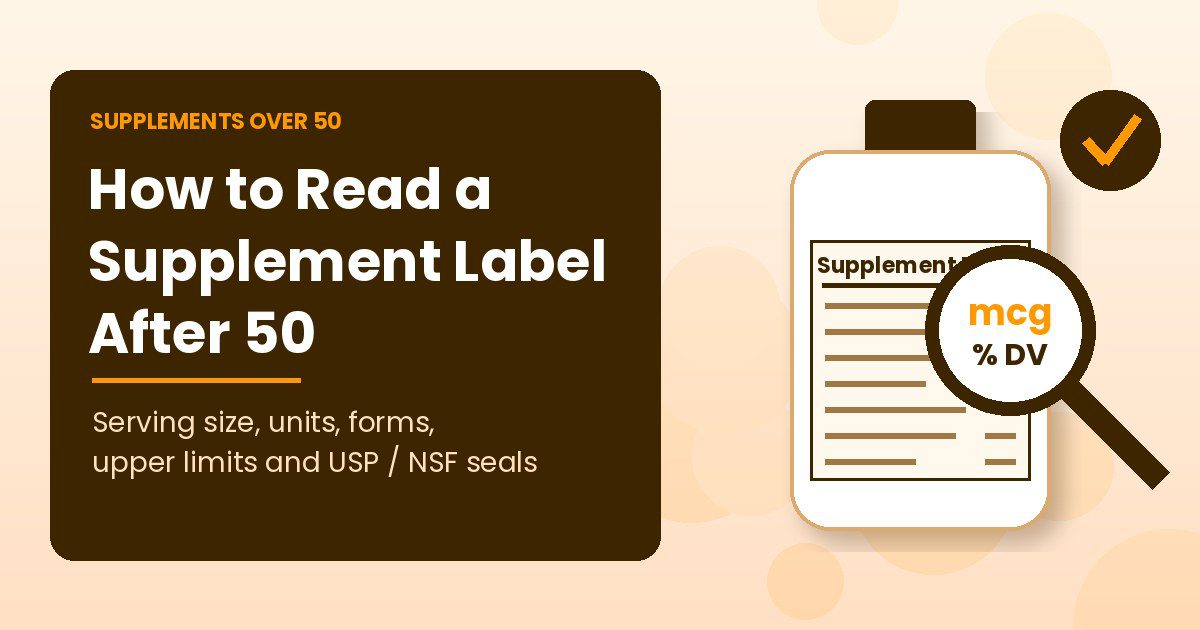
Learning how to read a supplement label is one of the most useful health skills you can pick up after 50. The Supplement Facts panel tells you the dose, the form of each nutrient and what else is in the capsule, but it uses units and abbreviations that confuse almost everyone. Get it wrong and you can end up paying for a form your body handles poorly, doubling up on the same vitamin from three bottles, or drifting above a safe upper limit without noticing.
This guide walks through a label line by line, using what the FDA and the NIH Office of Dietary Supplements actually say. It covers the units that trip people up, the nutrient forms that matter more as you age, what seals like USP Verified and NSF really mean, and the red flags that should make you put a bottle back on the shelf.
Table of Contents
Why Knowing How to Read a Supplement Label Matters After 50
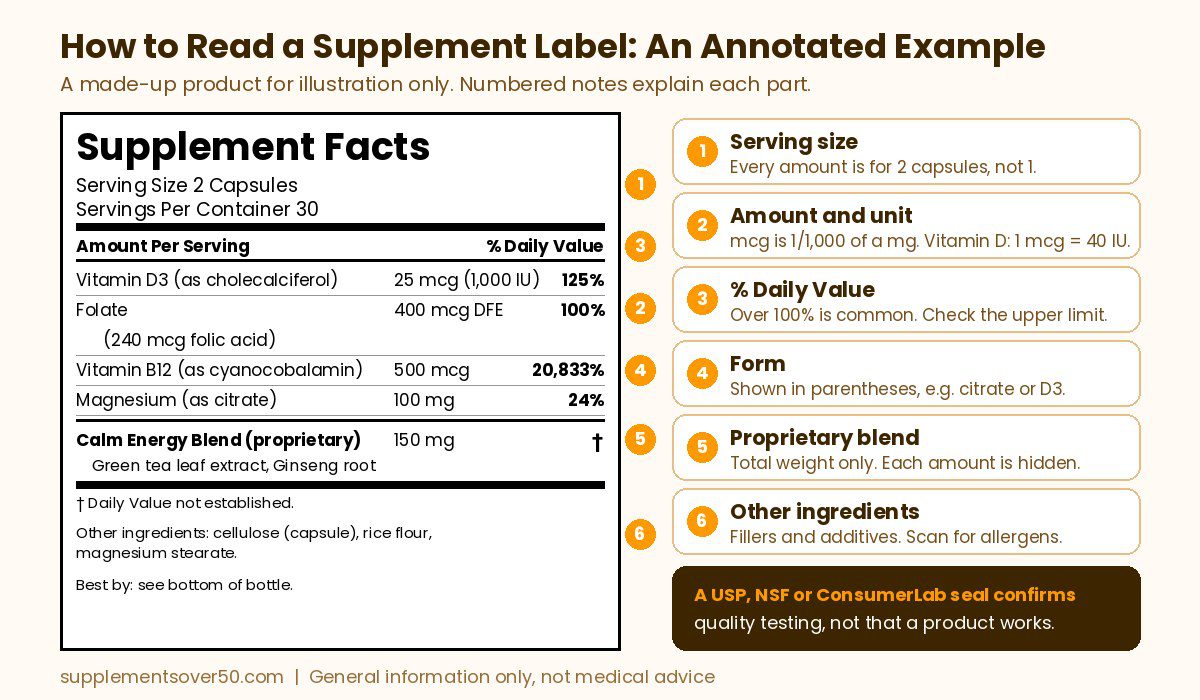
Three things change with age that make the fine print more important.
- Absorption changes. The NIH vitamin B12 fact sheet explains that many older adults do not have enough stomach acid to absorb the vitamin B12 naturally found in food, and recommends that people over 50 get most of their B12 from fortified foods or supplements. The NIH calcium fact sheet says people with low stomach acid, which is most common in older people, absorb calcium citrate more easily than calcium carbonate. The form on the label starts to matter.
- Needs go up for some nutrients. The NIH lists 1,200 mg of calcium a day for women 51 and older and for all adults over 70, and 20 mcg (800 IU) of vitamin D for adults 71 and older, up from 15 mcg (600 IU).
- More bottles, more medicines. The NIH Office of Dietary Supplements guide, Dietary Supplements: What You Need to Know says you are most likely to have side effects if you take supplements at high doses, instead of prescribed medicines, or if you take many different supplements. It also warns that fortified foods can add more of the same nutrients than you realize.
Put together, a multivitamin, a bone formula, a “hair, skin and nails” gummy and a fortified cereal can quietly stack the same vitamins. The label is the only place you can catch that.
What a Supplement Label Can and Can’t Tell You
Start with what the label is not. According to FDA’s questions and answers on dietary supplements, the FDA does not approve dietary supplements before they are sold and does not test them before they reach shelves. Companies are responsible for making sure their products are safe and their claims are truthful, and they must follow good manufacturing practices meant to ensure identity, purity, strength and composition. The FDA steps in mostly after a product is on the market.
Popular Supplement Guides:


The same FDA page sets out what every label must include:
- The product name and the words “dietary supplement” (or a term like “iron supplement”)
- A Supplement Facts panel with the serving size, servings per container, each dietary ingredient and, except for proprietary blends, the amount per serving
- A list of “other ingredients” not shown in the panel
- The net quantity of contents
- The name and place of business of the manufacturer, packer or distributor, plus a domestic address or phone number for reporting serious side effects
Notice what is missing: proof that the product works, and an expiration date. FDA also says there are no laws that limit the serving size of a supplement or how much of an ingredient can be in one serving. That decision is up to the manufacturer. So the label tells you what the company says is inside. Whether that is accurate, and whether it is a sensible dose for you, is something you have to judge.
How to Read a Supplement Label: Quick Reference Table
Use this as a checklist the next time you pick up a bottle. Each row is explained in more detail below.
| Label part | What it tells you | What to check after 50 |
|---|---|---|
| Serving size | How many capsules, tablets or scoops make one dose | Is the dose 1 capsule or 3? All amounts below refer to one serving |
| Amount per serving | The dose of each ingredient, in mg, mcg, mcg DFE or IU | Add it to what you get from other bottles and fortified foods |
| % Daily Value | How one serving compares with the FDA reference amount | Very high %DV is not automatically a problem, but check the upper limit |
| Form (in parentheses) | The compound used, e.g. calcium citrate, cholecalciferol | Some forms suit older stomachs or are better absorbed |
| Proprietary blend | Total weight of a mix; individual amounts hidden | You cannot tell how much of each ingredient you get |
| Other ingredients | Fillers, binders, coatings, sweeteners, colors | Allergens, gelatin, sugar alcohols, sugar in gummies |
| Claims and disclaimer | Structure/function claims such as “supports bone health” | Any claim to treat or cure a disease is a red flag |
| Seal | USP Verified, NSF, ConsumerLab, Informed Sport | Confirms quality testing, not effectiveness |
How to Read a Supplement Label, Line by Line
1. Serving Size and Servings Per Container
This is the line most people skip and the one that matters most. Every number in the panel refers to one serving, and the manufacturer decides what a serving is. A bottle that looks generous may list a serving as two or three capsules, which means the 60-count bottle lasts 20 or 30 days and each single capsule holds a half or a third of the listed dose.
The NIH Office of Dietary Supplements guide, Dietary Supplements: What You Need to Know also points out that the serving size on the label is the manufacturer’s suggestion. Your doctor might decide a different amount is right for you, especially if you have a deficiency or kidney problems.
2. Amount Per Serving and the Units
Units are where most label mistakes happen. A milligram (mg) is 1,000 times larger than a microgram (mcg), so 1,000 mcg of B12 is 1 mg. The FDA’s Daily Value reference page lists the reference amounts in the unit each nutrient uses: for example, 2.4 mcg for vitamin B12, 20 mcg for vitamin D, 15 mg for vitamin E and 420 mg for magnesium.
Three nutrients have their own unit rules worth knowing:
- Vitamin D (mcg and IU). Vitamin D may be listed in mcg, IU or both. The NIH vitamin D fact sheet pairs 15 mcg with 600 IU and 100 mcg with 4,000 IU, so 1 mcg equals 40 IU. A 25 mcg softgel is 1,000 IU; a 125 mcg softgel is 5,000 IU, which is above the adult upper limit of 100 mcg (4,000 IU) unless your doctor has prescribed it for a deficiency.
- Vitamin E (mg and IU). The NIH vitamin E fact sheet says natural vitamin E is usually listed as d-alpha-tocopherol and synthetic as dl-alpha-tocopherol, and the natural form is more potent. When a label uses IU, one IU of natural vitamin E equals 0.67 mg and one IU of synthetic equals 0.45 mg.
- Folate (mcg DFE). Folate is listed as micrograms of dietary folate equivalents because the body absorbs folic acid more easily than food folate. According to FDA’s folate labeling page, if any folate comes from folic acid, that amount appears in mcg in parentheses. The NIH folate fact sheet gives the example that 240 mcg of folic acid equals 400 mcg DFE.
3. Percent Daily Value (%DV)
The %DV shows how much of the FDA’s reference amount one serving provides. FDA guidance for food labels calls 5% DV or less low and 20% DV or more high. On supplements you will often see numbers like 2,000% or more, especially for B12. That is not necessarily dangerous. The B12 fact sheet notes that 500 or 1,000 mcg doses are common, that the body absorbs only a small percentage, and that these doses are considered safe.
Ingredients without a Daily Value, such as herbs, fish oil components or CoQ10, are marked with a symbol (usually a dagger) that points to the footnote “Daily Value not established,” as described in FDA’s dietary supplement labeling guide. For botanicals, the label must also name the part of the plant used, such as root or leaf.
4. The Form of Each Nutrient
The words in parentheses after a nutrient name tell you which compound is in the tablet. This is where reading a label after 50 pays off most.
- Vitamin B12: cyanocobalamin vs methylcobalamin. Many people pay more for methylcobalamin because they have heard it absorbs better. The NIH B12 fact sheet says research has not shown that any form of supplemental B12 is better than the others. The real issue with low stomach acid is B12 bound to protein in food. B12 in supplements is not bound to protein, so it skips that step. People with pernicious anemia lack intrinsic factor and usually need medical treatment. Our guide How Much Vitamin B12 Do Seniors Need Daily covers doses by form.
- Calcium: carbonate vs citrate. The NIH calcium fact sheet says carbonate is absorbed best with food, while citrate is absorbed well with or without food and is easier to absorb with low stomach acid. It also says calcium is absorbed best at 500 mg or less at a time. We compare the two in Calcium Citrate vs Calcium Carbonate for Women Over 60.
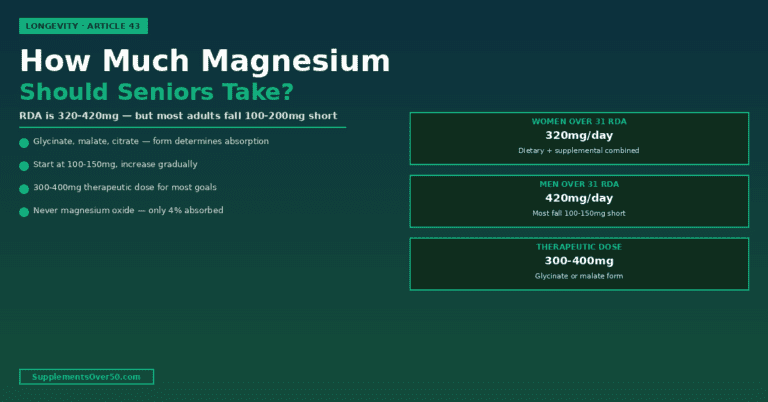
- Magnesium: oxide vs citrate and others. The NIH magnesium fact sheet lists magnesium aspartate, citrate, lactate and chloride as forms that are more easily absorbed. The NIH health professional sheet adds that these tend to have higher bioavailability than magnesium oxide and sulfate. Magnesium glycinate is not on that NIH list either way, though many people choose it; see Magnesium Glycinate vs Citrate: Which Form Is Better for Seniors After 50 for how the two popular forms compare.
- Vitamin D: D3 vs D2. The NIH vitamin D fact sheet says both forms raise blood levels, but D3 (cholecalciferol) might raise them higher and for longer than D2 (ergocalciferol). It also notes that vitamin D is best absorbed with a meal or snack that contains some fat.
- Vitamin E: d- vs dl-alpha-tocopherol. As above, the natural d- form is more potent per mg than the synthetic dl- form.
5. Proprietary Blends
A proprietary blend is a mix of ingredients with one total weight. FDA’s labeling guide says the blend must list its total weight and then its ingredients in descending order by weight, but not the amount of each ingredient. A “Joint Support Matrix, 750 mg” might contain 700 mg of a cheap ingredient and a sprinkle of the one you bought it for, and the label does not have to tell you.
Vitamins and minerals that have Daily Values must still be listed separately with their amounts. Blends show up most in herbal, energy, sleep, menopause and weight loss products. If the ingredient you care about is buried in a blend, you cannot compare its dose with the dose used in research. A product that lists every amount is the easier choice to evaluate.
6. Other Ingredients
Below the panel sits the list of “other ingredients”. FDA’s Q&A says these include fillers, binders, preservatives, sweeteners, flavorings, colors, gelatin and starch, plus sometimes the source of a nutrient. Check this list for allergens, gelatin if you avoid animal products, and sugar or sugar alcohols in gummies and chewables. A short, plain list is not a guarantee of quality, but a long list of colors and sweeteners usually means you are paying for taste rather than nutrients.
7. Claims and the FDA Disclaimer
Phrases like “supports bone health” or “promotes restful sleep” are structure/function claims. The FDA page on structure/function claims explains that these claims are not pre-approved by the FDA. The company must have evidence that the claim is truthful and must notify FDA within 30 days of marketing it. Any label that makes such a claim must also carry the disclaimer: “This statement has not been evaluated by the Food and Drug Administration. This product is not intended to diagnose, treat, cure, or prevent any disease.”
That disclaimer is a normal part of a legal label, not a warning sign by itself. What the law does not allow is a disease claim. FDA says a product sold as a supplement that claims to treat, prevent or cure a specific disease meets the definition of a drug.
8. Warnings and Dates
Iron-containing tablets and capsules must carry a warning that accidental iron overdose is a leading cause of fatal poisoning in children under 6, according to FDA’s labeling guide. If grandchildren visit, store those bottles out of reach.
An expiration or “best by” date is not on FDA’s list of required label elements, so whether one appears is largely up to the company. If a bottle has one, choose a date well in the future, and store supplements away from heat and moisture. A missing date is not proof of a bad product, but a clear date is one more sign of a careful manufacturer.
Upper Limits: Why Megadoses Matter After 50
The Tolerable Upper Intake Level (UL) is the most you can take daily without a likely risk of harm. Some ULs count every source, including food, while others count only supplements. These are the ones from the NIH fact sheets cited in this guide that matter most for adults over 50:
| Nutrient | Adult upper limit | What counts toward it |
|---|---|---|
| Vitamin D | 100 mcg (4,000 IU) per day | All sources: food, drinks and supplements |
| Calcium | 2,000 mg per day for adults 51 and older | All sources |
| Magnesium | 350 mg per day | Supplements and medicines only, not food |
| Folate (folic acid) | 1,000 mcg per day | Supplements and fortified foods |
| Vitamin E | 1,000 mg per day (1,500 IU natural or 1,100 IU synthetic) | Supplements |
Why it matters: the NIH says very high vitamin D levels can cause nausea, confusion and kidney stones, and are almost always caused by supplements. High doses of vitamin E supplements might increase the risk of bleeding. Large amounts of folic acid might hide a vitamin B12 deficiency while the nerve damage continues, which is a real concern at an age when B12 absorption from food often drops. Too much magnesium from supplements can cause diarrhea and cramping. Your doctor may prescribe doses above these limits for a while to treat a deficiency, and that is different from choosing a megadose off the shelf.
Third-Party Seals: What They Do and Don’t Mean
Because FDA does not test supplements before sale, independent seals fill part of the gap. The NIH Office of Dietary Supplements guide, Dietary Supplements: What You Need to Know names ConsumerLab, NSF International and U.S. Pharmacopeia as organizations that offer quality testing, and says their seals indicate a product was properly manufactured, contains the ingredients listed on the label, and does not contain harmful levels of contaminants. It also says plainly that these seals do not guarantee that a product is safe or effective.
- USP Verified. According to USP’s own explanation of the Verified Mark, it means the product has been tested to confirm it contains the listed ingredients in the declared amounts, does not contain harmful levels of specified contaminants such as heavy metals and pesticides, was made following FDA good manufacturing practices, and will break down and dissolve within a set time. USP also says it pulls products off store shelves each year for follow-up testing.
- NSF Certified for Sport. NSF Certified for Sport is designed for athletes and screens products for more than 280 substances banned in sport. It is mainly aimed at athletes, but the extra screening can be reassuring for anyone.
- Informed Sport. Informed Sport tests every batch of certified products for substances banned in sport. Like NSF Certified for Sport, its focus is contamination with prohibited compounds.
- ConsumerLab. ConsumerLab publishes independent test results for members and offers a seal of approval; it says products carrying the seal must be retested every 12 months using a sample bought on the open market.
Two cautions. First, a seal applies to a specific product, not to everything a brand sells, so check the certifier’s own product finder. Second, many good products have no seal at all, because testing programs are voluntary and cost money. Our comparison Thorne vs Life Extension vs Pure Encapsulations looks at how three well-known practitioner brands handle quality testing.
Red Flags on a Supplement Label
- Cure or disease claims. “Reverses arthritis”, “cures diabetes” or “replaces your blood pressure pills”. Supplements cannot legally make these claims.
- “Clinically proven” with nothing to back it. If the label or website does not say which study, in whom and at what dose, treat it as marketing.
- Big proprietary blends in products for energy, weight loss, sleep or sexual performance, where you cannot see doses.
- Hidden or stacked stimulants. Energy and weight loss products may combine several sources of caffeine, such as green tea extract, guarana and yerba mate, under different names. USP notes that FDA has warned about products sold as supplements for male sexual enhancement that contained drug ingredients not listed on the label.
- “Natural” as a safety promise. The NIH says natural doesn’t always mean safe, and names comfrey and kava as botanicals that can harm the liver.
- Doses far above the upper limit with no reason given, or the same nutrient in several of your bottles.
- No company name or contact details, which every legal label must include.
How to Choose a Quality Supplement After 50
- If you have low stomach acid or take an acid reducer, pick calcium citrate over carbonate and do not count on food alone for B12.
- If you want vitamin D, choose D3, check the mcg against the 100 mcg (4,000 IU) upper limit, and take it with a meal.
- If you want magnesium, choose a form NIH lists as well absorbed, and keep supplement magnesium at or below 350 mg unless your doctor says otherwise.
- If a product lists a proprietary blend, choose one that shows each ingredient’s amount instead.
- If two products look similar, choose the one with a USP, NSF or ConsumerLab seal for that exact product.
- If you already take a multivitamin, add up each nutrient across all your bottles before buying another.
For specific nutrients, our detailed guides go further: Calcium Citrate vs Calcium Carbonate for Women Over 60, Magnesium Glycinate vs Citrate: Which Form Is Better for Seniors After 50, How Much Vitamin B12 Do Seniors Need Daily and Thorne vs Life Extension vs Pure Encapsulations.
When to See a Doctor
Bring your bottles, or clear photos of every label, to your doctor or pharmacist before starting something new. FDA’s questions and answers on dietary supplements advises talking to a health care professional before deciding to use a supplement, partly because some interact with medicines. The NIH fact sheets give examples that are common after 50: levothyroxine is not absorbed well when taken within 4 hours of calcium carbonate, magnesium can interfere with bisphosphonates for osteoporosis and some antibiotics, vitamin E can raise bleeding risk with warfarin, and metformin and acid reducers can lower B12.
Talk to your doctor promptly if you have kidney disease, are scheduled for surgery, take a blood thinner, or notice new symptoms after starting a supplement. If you think a supplement made you sick, see your health care provider first; you can also report it to the FDA through its Safety Reporting Portal and to the company using the contact details on the label.
Frequently Asked Questions
What is the first thing to look at on a supplement label?
Start with the serving size. Every amount in the Supplement Facts panel refers to one serving, and the manufacturer decides what that is. If a serving is two or three capsules, one capsule only gives you half or a third of the listed dose.
Is 1,000 mcg of vitamin B12 too much for someone over 50?
The NIH says doses like 500 or 1,000 mcg are common, that your body absorbs only a small percentage, and that these doses are considered safe. B12 has not been shown to cause harm even at high doses. Ask your doctor about testing if you take metformin or an acid reducer.
Is methylcobalamin better than cyanocobalamin?
According to the NIH Office of Dietary Supplements, research has not shown that any form of supplemental B12 is better than the others. Cyanocobalamin is the form most B12 supplements use.
How many IU are in 50 mcg of vitamin D?
50 mcg of vitamin D equals 2,000 IU. The NIH lists 15 mcg as 600 IU and 100 mcg as 4,000 IU, so each microgram is 40 IU. The adult upper limit is 100 mcg (4,000 IU) a day from all sources unless your doctor advises more.
Does USP Verified mean a supplement works?
No. USP Verified means the product was tested to confirm it contains the listed ingredients in the declared amounts, is free of harmful levels of specified contaminants, was made under good manufacturing practices and dissolves properly. The NIH notes that seals do not guarantee a product is safe or effective.
Are proprietary blends bad?
Not always, but they hide how much of each ingredient you get. The label only has to show the blend’s total weight and list ingredients from most to least by weight. When you can choose, a product that lists every amount is easier to judge and compare with research doses.
Our Take
Once you know how to read a supplement label, you can size up most bottles in under a minute. Check the serving size, read each amount in its proper unit, look at the form in parentheses, be wary of proprietary blends, and add up what you already take before you buy more. Use a USP, NSF or ConsumerLab seal as a quality check, not as proof that a product works. After 50, the label is less about finding the strongest product and more about finding the right form at a sensible dose, so take it to your pharmacist when in doubt.
This article is for informational purposes only and is not medical advice. Nutrient needs, safe doses and drug interactions vary from person to person. Talk to your doctor or pharmacist before starting, stopping or changing any supplement.