This guide contains affiliate links. If you buy through them, we may earn a small commission at no extra cost to you.
⚡ Quick Answer
Beetroot works through dietary nitrate, which your body turns into nitric oxide. Trials show modest drops in blood pressure, mostly with concentrated beet juice, and most powders and capsules do not say how much nitrate they contain. Our 5 picks: (1) BEET IT Sport Pro-Elite Shot, best measured nitrate dose; (2) HumanN SuperBeets Heart Chews, most popular; (3) HumanN SuperBeets Heart Powder, best drink mix; (4) Rosabella Organic Beet Root Capsules, best-selling capsule; (5) Nature’s Way Beet Root Capsules, best simple beet root powder. Ask your doctor first if you take blood pressure pills, nitrate heart medicines or erectile dysfunction drugs, or have had kidney stones.
If you are looking for the best beetroot supplement, you have probably seen beet chews, red powders and capsules promising better circulation, healthy blood pressure and more energy. Beetroot is one of the few supplement ingredients with a clear, well-understood mechanism and dozens of human trials behind it.
The problem is that most of those trials used concentrated beet juice with a known amount of nitrate, while most products on the shelf do not tell you how much nitrate you are getting. This guide explains how beetroot works, what the research shows for adults over 50, why the label matters so much, who should be careful, and five well-reviewed beetroot supplements worth a look.
Table of Contents
Why Beetroot Matters More After 50
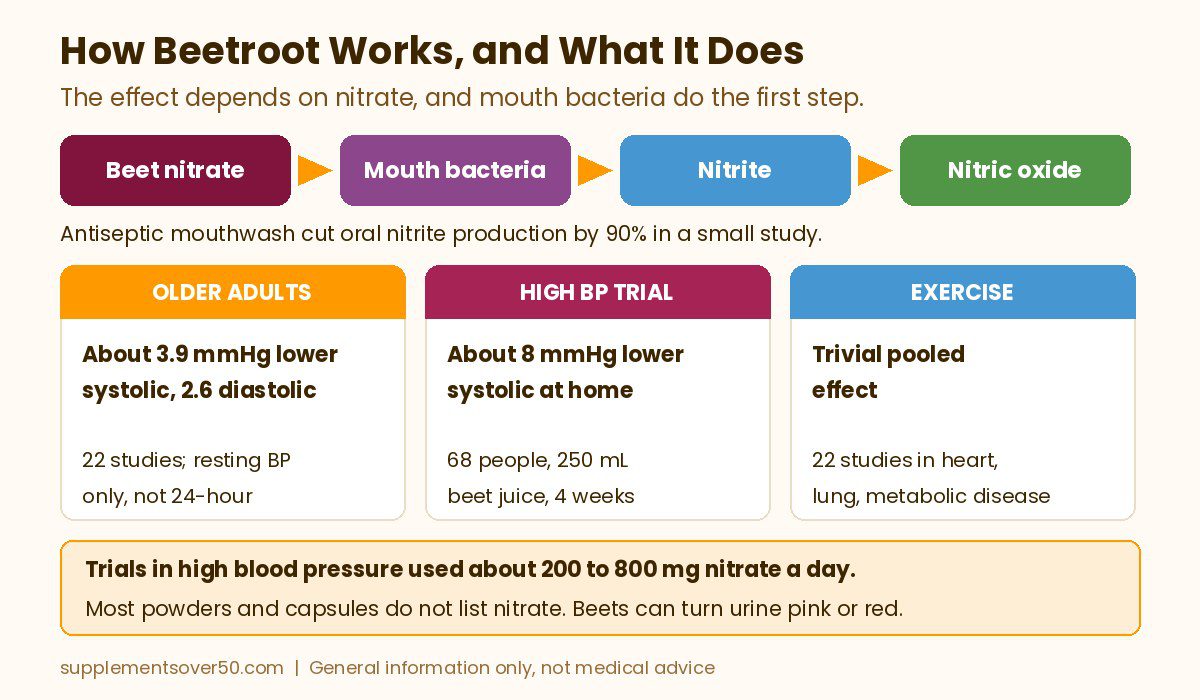
Beets are rich in dietary nitrate. After you eat or drink them, nitrate is absorbed and then concentrated in your saliva, where bacteria in your mouth convert it into nitrite. Your body then turns nitrite into nitric oxide, a molecule that helps relax and widen blood vessels. A small study of 19 healthy volunteers describes this pathway and shows how much it depends on those mouth bacteria.
Nitric oxide matters more as we age because blood vessels tend to stiffen and high blood pressure becomes much more common after 50. That is why beetroot is studied for blood pressure, blood vessel function and exercise tolerance in older adults.
There is a twist, though. Researchers have suggested that aging itself may blunt the response. An individual participant analysis of 4 trials in 85 adults aged 55 to 76 found no significant pooled effect of beetroot juice on 24-hour blood pressure, and the authors proposed that vascular aging may reduce how well the body converts nitrate. So the effect varies from person to person, and older adults should not expect dramatic results.
Does a Beetroot Supplement Actually Work?
Blood pressure: modest drops, mostly at rest
The most relevant evidence for our readers is a meta-analysis of 22 studies in older adults, published in Nitric Oxide. Overall, inorganic nitrate lowered systolic blood pressure by about 3.9 mmHg and diastolic by about 2.6 mmHg compared with control. The drop was significant in people aged 65 and over, in people with a BMI over 30 and in people with prehypertension. However, participants who already had high blood pressure at the start did not show a significant change, and only resting blood pressure readings improved, not 24-hour or home monitoring.
Other studies of people with hypertension are more encouraging. In a 4-week trial in 68 people with high blood pressure aged 18 to 85, a daily 250 mL glass of nitrate-rich beetroot juice lowered clinic blood pressure by 7.7/2.4 mmHg and home blood pressure by 8.1/3.8 mmHg compared with nitrate-free beet juice, with no sign of the effect fading over the 4 weeks. A newer meta-analysis of 11 trials in people with high blood pressure (349 patients) found clinic systolic pressure fell by about 5.3 mmHg with 200 to 800 mg of nitrate a day from beet juice, but rated the certainty of evidence as low and found no clear effect on diastolic or 24-hour readings.
An earlier meta-analysis of 16 short trials (254 people, interventions of 2 hours to 15 days) found a 4.4 mmHg average drop in systolic pressure and linked bigger doses of nitrate to bigger drops. That dose link is the main reason we care so much about labels that state nitrate content.
Exercise and energy: weaker in older and clinical groups
Beet juice became popular with athletes because nitrate can make muscles use oxygen more efficiently. In older adults with health conditions the picture is weaker. A meta-analysis of 22 studies in people with heart, lung and metabolic diseases found that 46% of individual studies reported a benefit, but the pooled effect on aerobic exercise performance was trivial. If you hope a beet supplement will give you more stamina on walks or at the gym, treat it as a maybe, not a promise.
Your mouthwash may cancel it out
Because mouth bacteria do the first step of the conversion, antibacterial mouthwash can blunt the effect. In the small study of 19 healthy volunteers, a week of chlorhexidine mouthwash cut oral nitrite production by 90% and plasma nitrite by 25%, and blood pressure rose by about 2 to 3.5 mmHg. If you use an antiseptic mouthwash daily, ask your dentist whether you need it, and avoid using it right around the time you take beet juice.
What to Look for in a Beetroot Supplement
Stated nitrate per serving. This is the single most useful number. Trials in people with hypertension used roughly 200 to 800 mg of nitrate a day. Very few powders, chews or capsules list it.
Juice versus whole root powder. Most trials used concentrated beet juice. Capsules filled with dried beet root powder are a different product, and the amount of beet powder alone does not tell you the nitrate dose.
Other active ingredients. Some popular beet chews and capsules lean on grape seed extract for their blood pressure claims, not beet nitrate. That is fine, but know what you are paying for.
Sugar and sweeteners. Chews and juice shots can contain added or natural sugars. Check the label if you have diabetes.
Quality checks such as third-party testing or a sports certification. Our guide on how to read a supplement label explains what each seal means.
Realistic claims. A beet product can support healthy blood pressure as part of a plan. It cannot replace blood pressure medicine.
Best Beetroot Supplement for Seniors: Quick Comparison
Product
Best for
Key details
Daily dose
BEET IT Sport Pro-Elite Shot
Measured nitrate
400 mg dietary nitrate per 2.4 oz shot; 100% natural juice; Informed-Sport certified
Label: 1 shot, 1 to 3 hours before exercise
HumanN SuperBeets Heart Chews
Most popular
500 mg beetroot powder + 150 mg French grape seed extract per serving; individually wrapped
Label: 2 chews daily
HumanN SuperBeets Heart Powder
Drink mix
Non-GMO beetroot powder (incl. fermented); black cherry flavor; 30 servings
1,000 mg beet root per 2-capsule serving; vegan; 100 capsules
Label: 2 capsules 3 times daily
Top Picks for the Best Beetroot Supplement for Seniors
1. BEET IT Sport Pro-Elite Shot (Best Measured Nitrate Dose)
If you want something close to what researchers actually test, this is it. Each 2.4 oz shot of 100% natural beet juice provides 400 mg of dietary nitrate, which sits inside the 200 to 800 mg daily range used in the hypertension trials above. The listing explains the same nitrate to nitrite to nitric oxide pathway, says the shots are free from preservatives and artificial ingredients, and notes that they are Informed-Sport certified. BEET IT also says most independent research on beet juice products has used its products.
The shots are marketed to athletes and the label suggests one shot 1 to 3 hours before a workout, but the measured dose is what makes them useful for anyone. The taste is strong, and juice contains natural sugars, so check with your doctor if you have diabetes. It has more than 1,800 ratings with a 4.4 rating.
🧃 Best Measured Nitrate Dose
BEET IT Sport Pro-Elite Shot, 15 Shots
400 mg dietary nitrate per 2.4 oz shot. 100% natural beet juice, Informed-Sport certified.
SuperBeets Heart Chews are by far the most reviewed beet product in our search, with more than 75,800 ratings and a 4.5 rating. Each serving combines 500 mg of non-GMO beetroot powder with 150 mg of French grape seed extract from the Loire Valley, and the chews are individually wrapped in a pomegranate berry flavor. The label directions are 2 chews daily.
Be clear on what you are buying. The listing credits the grape seed extract for its blood pressure support claim, and it does not state a nitrate amount, so these are not the same as the beet juice used in trials. The ingredient list on this version includes tapioca syrup and raw cane sugar, and HumanN also sells a separate zero sugar version. If chewable is the only way you will take a supplement every day, this is a convenient choice.
The original SuperBeets powder is a beet crystal drink mix in a black cherry flavor. The directions are one teaspoon a day mixed into 4 to 6 ounces of water, juice or a smoothie, and each canister holds 30 servings. Ingredients include non-GMO beetroot powder and fermented beetroot powder, natural flavor, malic acid, magnesium ascorbate and stevia leaf extract.
HumanN says its formula uses patented nitric oxide technology and that its beets are selected for their natural nitrate content, but the bullets do not give a nitrate number per scoop. It is caffeine free and the flavor hides the earthy beet taste, which many older adults appreciate. It has more than 28,000 ratings with a 4.2 rating.
Rosabella showed a Best Seller badge in our beetroot supplement search and has more than 18,800 ratings with a 4.4 rating. Each 2-capsule serving contains 1,300 mg of organic beet root powder made from non-GMO red beets, and the capsules are free from gluten, dairy and soy. One bottle holds 60 capsules, a 30-day supply.
Capsules are tasteless and easy to fit into a morning routine, which is the main appeal. Keep expectations in check: the listing talks about circulation and vitality but does not state nitrate content, and dried beet root powder is a different product from the concentrated juice used in most blood pressure trials.
Nature’s Way keeps things simple: 1,000 mg of beet root per 2-capsule serving in vegan capsules, with no artificial colors, flavors or preservatives. The label suggests 2 capsules 3 times daily, preferably with food, and each bottle has 100 capsules. It has more than 3,300 ratings with a 4.6 rating, the highest in our list.
Notice how Nature’s Way positions it: as a traditional herb for antioxidant support, not as a blood pressure or nitric oxide product. That is an honest framing. If you like beets as a food-based supplement and do not want flavors, sweeteners or added extracts, it is a clean option, but it is not the product to choose if you want a trial-like nitrate dose.
🌱 Best Simple Beet Root
Nature’s Way Beet Root Capsules
1,000 mg beet root per 2-capsule serving. Vegan, no artificial colors or flavors. 100 capsules.
How to Choose the Best Beetroot Supplement for You
If you want the dose used in research, choose BEET IT Sport Pro-Elite Shot, the only pick here that states its nitrate content.
If you will only stick with a chewable, HumanN SuperBeets Heart Chews are the most popular, but know that grape seed extract drives the blood pressure claim.
If you prefer a drink, SuperBeets Heart Powder mixes into water or juice once a day.
If you want a tasteless capsule, Rosabella is the best seller and Nature’s Way is the simplest formula.
If you have diabetes, check sugar on juice shots and chews and consider capsules.
If you take blood pressure medicine, talk to your doctor first and check your readings at home after you start.
Who Should Avoid a Beetroot Supplement or Ask a Doctor First
For most people, beetroot is a food-based supplement with few side effects. A common surprise is beeturia, pink or red urine after eating beets, which is usually not a concern on its own. MedlinePlus lists beets as one cause of pink or red urine, alongside other causes that do need a doctor. If the color persists when you have not had beets, or you see blood, call your doctor. Talk to your doctor before starting a beet product if any of these apply:
You take blood pressure medicine. Beet nitrate can add to the effect of your pills. Check your readings at home and report dizziness or lightheadedness.
You already have low blood pressure or get dizzy when you stand up.
You take nitrate heart medicines or erectile dysfunction drugs. The sildenafil drug information page warns that sildenafil should not be combined with nitrate medicines for chest pain such as nitroglycerin. Dietary nitrate from beets is not the same as these drugs, but because both work through nitric oxide, ask your cardiologist before adding a concentrated nitrate product.
You have had kidney stones. The National Kidney Foundation lists beets among very high oxalate foods that people with high urine oxalate may need to limit, and warns about superfood supplements that can raise oxalate.
You have chronic kidney disease. Ask your nephrologist before taking concentrated plant supplements, and see our guide to supplements to avoid with kidney disease.
You have diabetes. Juice shots and some chews contain sugars, so count them in your daily carbohydrates.
Never stop or reduce a blood pressure medicine because you started beetroot. If your home readings drop well below your usual range, or you feel faint, contact your doctor.
Frequently Asked Questions
Does beetroot really lower blood pressure in older adults?
Modestly, in many studies. A meta-analysis of 22 studies in older adults found inorganic nitrate lowered systolic blood pressure by about 3.9 mmHg and diastolic by about 2.6 mmHg on average, but people who already had high blood pressure at the start did not show a significant change in that analysis. Results vary from person to person.
How much nitrate do I need?
Trials in people with high blood pressure mostly used about 200 to 800 mg of nitrate a day from beet juice. Most beet powders and capsules do not state their nitrate content, so it is hard to know how they compare.
Are beet capsules as good as beet juice?
Not necessarily. Most research used concentrated beet juice with a measured nitrate dose. Capsules filled with dried beet root powder rarely list nitrate, so the amount you get may be much lower or simply unknown.
Is red urine after beets dangerous?
Usually not. MedlinePlus lists beets as one of the causes of pink or red urine. If the color does not go away after you stop beets, or you think you see blood, call your doctor.
Can I take beetroot with blood pressure medication?
Possibly, but only with your doctor’s approval. Beet nitrate may add to the effect of your pills, so check your blood pressure at home after starting and never change your medicine on your own.
Does mouthwash affect beetroot supplements?
It can. Mouth bacteria start the conversion of nitrate to nitric oxide. In a small study, a week of antiseptic mouthwash cut oral nitrite production by 90% and nudged blood pressure up. Ask your dentist whether you need a daily antiseptic rinse.
Our Take
The best beetroot supplement for seniors is one that tells you how much nitrate you are getting. Beet nitrate has a real mechanism and human trials showing modest blood pressure drops, but older adults respond less predictably, and most powders, chews and capsules do not list nitrate at all. BEET IT Sport Pro-Elite Shot is our top pick for a measured, trial-like dose. HumanN SuperBeets Heart Chews are the most popular choice if you want a chewable, and Nature’s Way is a clean, simple beet root capsule. Skip antiseptic mouthwash around your dose, keep checking your blood pressure, and talk to your doctor first if you take blood pressure, nitrate or erectile dysfunction medicines, or have had kidney stones.
This article is for informational purposes only and is not medical advice. Talk to your doctor before taking a beetroot supplement, especially if you take prescription medicines or have heart or kidney disease.
Magnesium is one of the most widespread deficiencies in older adults, and it is also one of the most underappreciated. The mineral is involved in over…
Menopause symptoms (hot flashes, sleep disruption): Shatavari and ashwagandha both have 2025 clinical trial evidence for symptom relief without hormone…