This guide contains affiliate links. If you buy through them, we may earn a small commission at no extra cost to you.
⚡ Quick Answer
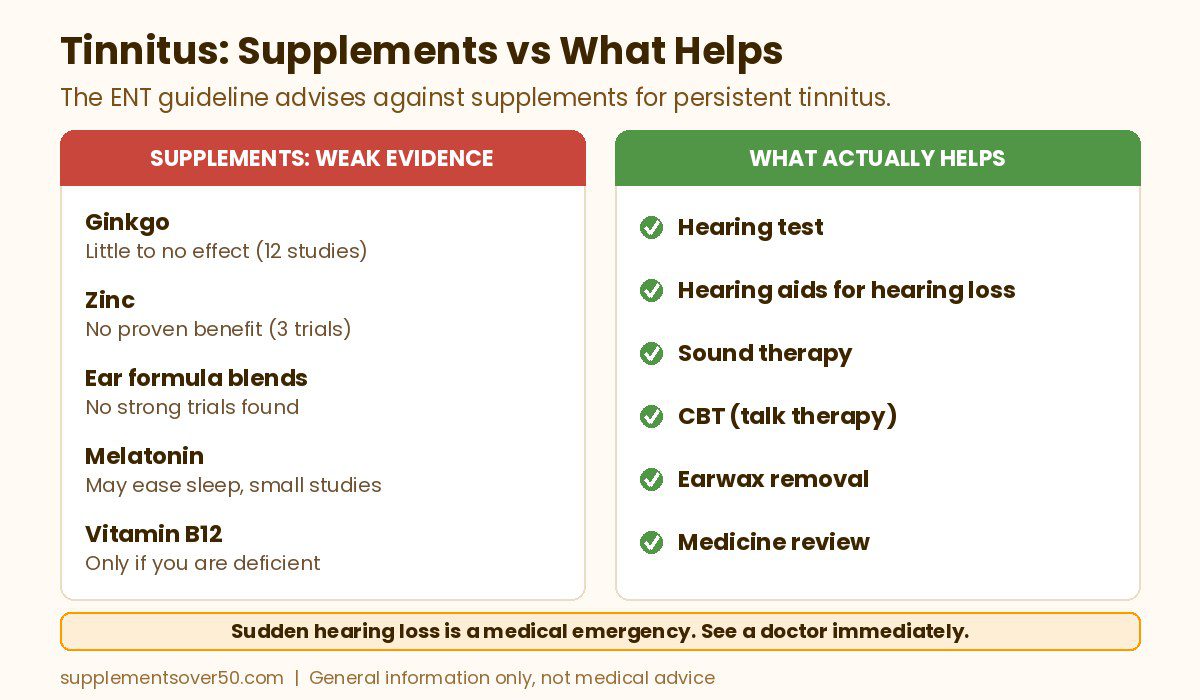
No supplement has been shown to cure or reliably quiet tinnitus. The main US ear, nose and throat guideline recommends against ginkgo, melatonin, zinc and other dietary supplements for persistent tinnitus, and Cochrane reviews found little to no benefit for ginkgo or zinc. What helps more: a hearing test, hearing aids if you have hearing loss, sound therapy, CBT, removing earwax and reviewing your medicines. A supplement only makes sense for a specific reason: (1) Nature Made Vitamin B12 1000 mcg is best if a blood test shows low B12, (2) Thorne Zinc Picolinate 15 mg is best for a modest top-up if your doctor finds low zinc, and (3) Natrol Melatonin 1 mg is best as a short-term, low-dose sleep aid when tinnitus keeps you awake.
If you have searched for tinnitus supplements, you have probably seen bottles promising to stop the ringing in weeks. It is easy to see why they sell. Tinnitus can be maddening, especially at night, and many people are told there is little a doctor can do. A pill feels like something you can control.
The honest picture is less exciting but more useful. Most tinnitus supplements have weak or negative evidence, and the main ear specialist guideline in the US advises against them. A few nutrients may matter in narrow situations, such as a real vitamin B12 deficiency or poor sleep. Below we cover what the research shows, what actually helps, the warning signs that need a doctor quickly, and the only three products we would consider.
Table of Contents
Why Tinnitus Becomes More Common After 50
Tinnitus is the sense of hearing a sound, such as ringing, buzzing, hissing or roaring, that has no outside source. The National Institute on Deafness and Other Communication Disorders (NIDCD) estimates that 10 to 25% of adults have it, and when it lasts three months or longer it is considered chronic. According to Mayo Clinic, it is more common in older adults, and it is a symptom of many different conditions rather than a disease on its own.
Hearing loss is the biggest link. The NIDCD says most people with tinnitus have some degree of hearing loss, and Mayo Clinic explains that age and years of loud noise can bend or break the tiny hair cells in the inner ear. Those damaged cells can send random signals to the brain, which the brain hears as sound. Mayo also notes that the nerve fibers in the ear tend to work less well with age.
Other common triggers become more likely as we get older: earwax blockage, ear infections, high blood pressure and hardened arteries, jaw joint problems, and medicines that can affect the ear. That is why the first step for new tinnitus is finding the cause, not buying a bottle.
Do Tinnitus Supplements Work? What the Evidence Says
Here is how the most popular ingredients stack up in the research we reviewed:
Supplement
What the research found
Our read
Ginkgo biloba
Cochrane: 12 studies, 1,915 people; may have little to no effect on tinnitus severity, very uncertain evidence
Not recommended for tinnitus
Zinc
Cochrane: 3 trials, 209 people; very low quality evidence, no proof it improves symptoms
Only to correct a known deficiency
Melatonin
Small studies suggest less tinnitus distress, often alongside better sleep; guideline still advises against it as a tinnitus treatment
Possible short-term sleep help
Vitamin B12
One small pilot trial of injections found improvement only in people who were deficient
Test first; treat a real deficiency
Lipoflavonoid and blended ear formulas
Covered by the guideline’s advice against dietary supplements; we found no strong trials
Not recommended
Ginkgo Biloba
Ginkgo is the most studied herb for tinnitus. The Cochrane review of Ginkgo biloba for tinnitus pooled 12 studies with 1,915 participants. Where results could be combined, ginkgo may have little to no effect compared with placebo, and the authors were not confident in the evidence. Serious side effects were not reported, but the studies did not look at what happens when ginkgo is taken with other drugs, which matters if you take a blood thinner.
Zinc
The Cochrane review of zinc for tinnitus found only three trials with 209 adults. The one trial that used a validated tinnitus questionnaire, which enrolled only elderly patients, found no significant difference between zinc and placebo. The reviewers rated the evidence as very low quality and found no evidence that oral zinc improves tinnitus.
Where There Is a Small Signal
Vitamin B12 deficiency. In a randomized, double-blind pilot study published in Noise and Health, 40 people with chronic tinnitus received weekly B12 injections or placebo for six weeks. Seventeen of them (42.5%) were B12 deficient, and only the deficient patients who got B12 showed improvement in tinnitus scores. This was a tiny study using injections, not pills, so it suggests one thing: if you are low, correcting it is reasonable. It does not show that B12 helps people with normal levels.
Melatonin and sleep. A 2024 meta-analysis in Acta Biomedica pooled six studies with 176 patients and found lower tinnitus handicap scores after melatonin, though results varied widely between studies. An earlier small open-label study of 24 people taking 3 mg a night for four weeks found tinnitus and sleep both improved, and the improvement in sleep was linked to the improvement in tinnitus in the first month. Neither design proves melatonin treats tinnitus. The most realistic use is helping you sleep while you work on the bigger fixes.
A full hearing test. The guideline recommends a prompt audiology exam if tinnitus is in one ear, lasts six months or more, or comes with hearing trouble. It also lets clinicians offer one to anyone with tinnitus.
Hearing aids if you have hearing loss. The NIDCD calls them one of the main treatments for people with tinnitus and hearing loss, because they amplify outside sound and make tinnitus less noticeable. The guideline recommends a hearing aid evaluation in this group.
Sound therapy. Bedside sound machines, fans, phone apps, wearable sound generators and combination hearing aids can mask the noise or help your brain get used to it.
Cognitive behavioral therapy (CBT). The guideline recommends CBT for persistent, bothersome tinnitus, and the NIDCD notes studies show it can improve well-being.
Treating earwax or infection. The NIDCD says a primary care doctor should first check for earwax or fluid, since removing a blockage can greatly reduce symptoms.
A medicine review. The NIDCD lists NSAIDs such as ibuprofen, naproxen and aspirin, especially at high doses, plus certain antibiotics, cancer drugs, antimalarials and antidepressants. Mayo Clinic adds water pills (diuretics) and some herbal supplements. Never stop a prescribed medicine yourself, but do ask your doctor or pharmacist whether one could be playing a role.
Everyday habits. Mayo Clinic suggests protecting your ears from loud noise, keeping headphone volume down, caring for heart health, and limiting alcohol, caffeine and nicotine.
What to Look for in Tinnitus Supplements
If you do take a supplement for a specific reason, use these rules:
A reason you can name. A low B12 or zinc result on a blood test, or tinnitus-related insomnia. “Ear health” is not a reason.
Single ingredients. One nutrient at a known dose is easier to judge and stop than a blend with a dozen herbs.
Sensible doses. The NIH zinc fact sheet sets the adult upper limit for zinc at 40 mg a day from all sources. For melatonin, start low.
Third-party testing. Look for USP Verified or another independent certification. NCCIH warns that some melatonin products may not contain what the label says.
No cure claims. Be wary of any product that promises to stop ringing. No supplement has been proven to do that.
Your medicine list. Check interactions with a pharmacist, especially if you take blood thinners, antibiotics or sleep medicines. Our guide to reading a supplement label after 50 explains what to check.
Tinnitus Supplements: Quick Comparison
Product
Best for
Key details
Daily dose
Nature Made Vitamin B12 1000 mcg
Low B12 on a blood test
Softgel, USP Verified, gluten free, no added color
1 softgel daily with a meal
Thorne Zinc Picolinate 15 mg
A modest zinc top-up if you are low
15 mg zinc picolinate per capsule, third-party certified
Follow the label or your doctor
Natrol Melatonin 1 mg Fast Dissolve
Short-term sleep help
Low 1 mg dose, strawberry tablet that dissolves without water, vegetarian
1 tablet at bedtime, per label
Top Picks If You Have a Real Reason to Supplement
We kept this list to three on purpose. None of these treats tinnitus. Each one fits a situation where research or common sense gives a reason to supplement: correcting a deficiency or getting through bad nights. All three are long-standing, widely reviewed products on Amazon.
1. Nature Made Vitamin B12 1000 mcg (Best If You Are Low in B12)
B12 is the one nutrient with a plausible tinnitus link in people who are deficient, and deficiency is common later in life. The NIH Office of Dietary Supplements vitamin B12 fact sheet says it affects between 3% and 43% of older adults, partly because many have too little stomach acid to absorb B12 from food. It also notes that acid-reducing drugs and metformin can lower B12 levels. The NIH advises people over 50 to get most of their B12 from fortified foods or supplements.
Nature Made’s softgel provides 1000 mcg per serving, one a day with water and a meal. It is USP Verified, gluten free, and has no added color or artificial flavors. Ask for a B12 blood test before you start, since the pilot study only found benefit in deficient patients. People with pernicious anemia may need injections instead, so follow your doctor’s plan.
🏆 Best If You Are Low in B12
Nature Made Vitamin B12 1000 mcg Softgels
1000 mcg per softgel, USP Verified, gluten free, no added color. Take 1 softgel daily with a meal.
Zinc did not beat placebo for tinnitus in the Cochrane review, so we only suggest it when you have a reason, such as a low zinc result or a diet low in meat, seafood and other zinc-rich foods. The NIH recommends 11 mg a day for adult men and 8 mg for adult women. A 15 mg capsule is a modest dose that stays well below the 40 mg upper limit.
Thorne’s capsule provides 15 mg of zinc as zinc picolinate, and the brand says the product is third-party tested and certified so the contents match the label. The NIH zinc fact sheet warns that too much zinc can cause nausea, dizziness and headaches, and over time can lower copper levels and immunity. It can also interfere with quinolone and tetracycline antibiotics, so space them apart as your pharmacist advises.
💊 Best Modest Zinc Top-Up
Thorne Zinc Picolinate 15 mg
15 mg zinc picolinate per capsule, third-party tested and certified. Stay under 40 mg a day from all sources.
If tinnitus keeps you awake, better sleep can make the noise easier to live with. The studies above used about 3 mg, but for older adults we prefer to start lower. NCCIH notes that melatonin may stay active longer in older people and cause daytime drowsiness, and that short-term use appears safe for most people while long-term safety is less clear.
Natrol’s tablet is a low 1 mg dose that dissolves on the tongue without water, with a strawberry flavor. The brand describes it as drug free, non-habit forming and vegetarian. Use it for a few weeks while you pursue sound therapy or CBT, take it close to bedtime, and skip it if you have dementia, since NCCIH notes sleep medicine guidelines advise against melatonin in that group. Our guide to melatonin for seniors covers dosing in more detail.
🌙 Best Short-Term Sleep Help
Natrol Melatonin 1 mg Fast Dissolve Tablets
Low 1 mg dose, strawberry tablet that dissolves without water, vegetarian. Take at bedtime as directed.
Lipoflavonoid. It is heavily marketed for ringing ears, but the guideline advises against dietary supplements for persistent tinnitus, and we did not find strong trials that change that.
Arches style tinnitus blends and other proprietary formulas. Blends like these often mix several herbs and vitamins, which makes the dose of each hard to judge. Mayo Clinic even lists some herbal supplements as possible causes of tinnitus.
Ginkgo on its own. The Cochrane review found little to no effect, and it may be a concern with blood thinners. See our guide to supplements to avoid with blood thinners.
High-dose zinc. More zinc did not help in trials, and long-term high doses can cause copper problems.
Magnesium and CoQ10. They are often promoted for ear health, but we did not find strong human evidence for tinnitus. They fall under the guideline’s advice against supplements as a tinnitus treatment.
How to Choose Tinnitus Supplements Wisely
New tinnitus, no tests yet? Skip supplements for now. See your doctor to check for earwax, infection and medicine side effects, then get a hearing test.
Hearing loss on your test? Ask about hearing aids before anything else. That is where the evidence is strongest.
Low B12 on a blood test? Nature Made B12 1000 mcg, or the treatment your doctor prescribes.
Low zinc or a low-zinc diet? Thorne Zinc Picolinate 15 mg for a set period, then recheck.
Tinnitus wrecking your sleep? Use a bedside sound machine, try Natrol Melatonin 1 mg short term, and ask about CBT.
On a blood thinner? Avoid ginkgo and blended formulas unless your doctor approves.
Most tinnitus is not dangerous, but some patterns need prompt attention. The guideline highlights tinnitus in one ear, pulsing tinnitus, and tinnitus with uneven hearing loss or nerve symptoms as reasons for a closer workup.
Sudden hearing loss, with or without ringing. The NIDCD page on sudden hearing loss says to treat it as a medical emergency and see a doctor immediately. Delaying diagnosis can make treatment less effective.
Tinnitus in only one ear, or hearing that is worse on one side.
Pulsatile tinnitus, a whooshing or beating sound in time with your heartbeat. Mayo Clinic says it is usually linked to blood vessel conditions, and doctors may order imaging.
Dizziness, vertigo, facial numbness or weakness along with tinnitus. Mayo Clinic advises seeing a professional as soon as possible.
Tinnitus after a head injury or car accident. Mayo Clinic says to seek emergency care.
Tinnitus that makes you anxious, depressed or unable to sleep. Help is available, and CBT has good support.
Ringing that started after a new medicine or a higher dose. Talk to your prescriber before changing anything.
Frequently Asked Questions
Do any supplements actually help tinnitus?
Not reliably. The main US ear, nose and throat guideline recommends against ginkgo, melatonin, zinc and other dietary supplements for persistent tinnitus, and the NIDCD says none has been proven effective. Correcting a true vitamin B12 deficiency, and using melatonin short term for sleep, are the most reasonable exceptions.
Does Lipoflavonoid work for ringing in the ears?
We did not find strong evidence that it does. It falls under the guideline’s advice against dietary supplements for persistent tinnitus. If you want to try it, tell your doctor and stop if you notice no change after a set period.
Can low vitamin B12 cause tinnitus?
It may play a role in some people. A small pilot trial found that B12 injections improved tinnitus scores only in patients who were deficient. Ask your doctor for a blood test, especially if you take metformin or acid reducers, which can lower B12.
Is ginkgo biloba safe to take for tinnitus?
A Cochrane review found ginkgo may have little to no effect on tinnitus. Trials did not report serious side effects, but they did not study interactions with other drugs. If you take a blood thinner, ask your doctor before using it.
What is the best thing to do for tinnitus at night?
Play low background sound, such as a fan, a sound machine or an app, so the ringing stands out less. Keep a regular sleep routine, limit alcohol and caffeine, and ask about CBT. A low dose of melatonin may help for a short time.
When is tinnitus an emergency?
See a doctor immediately if you have sudden hearing loss, and seek emergency care if tinnitus follows a head injury. Ringing in one ear only, a pulsing sound with your heartbeat, or tinnitus with dizziness, numbness or weakness should be checked promptly.
Our Take
Most tinnitus supplements are not worth your money. The best evidence and the main ear specialist guideline point away from ginkgo, zinc, melatonin and blended ear formulas as treatments, and no product has been shown to stop the ringing. Your time is better spent on a hearing test, hearing aids if you need them, sound therapy, CBT and a review of your medicines. If a blood test shows low B12 or zinc, correcting it is sensible, and a low dose of melatonin can help you sleep through a rough patch. Just think of these as support for your health, not a fix for tinnitus.
This article is for informational purposes only and is not medical advice. Talk to your doctor before starting any supplement, especially if you take prescription medicines, and get sudden hearing loss checked right away.
The best supplements for men over 50, nutrient by nutrient: vitamin D, B12, omega-3, magnesium and creatine, with 5 budget picks and who should check with a doctor.
Dehydration is one of the leading causes of hospitalization among older adults, and it is not just a matter of not drinking enough water. After 60, the…
Phosphatidylserine (PS) holds an FDA Qualified Health Claim for cognitive support in older adults. This evidence-based guide covers the 300mg/day protocol, cortisol-blunting benefits, sunflower vs soy PS, and the best supplements for seniors.