Best Dry Eye Supplements for Seniors: What the Trials Show and 5 Picks
This guide contains affiliate links. If you buy through them, we may earn a small commission at no extra cost to you.
If gritty, burning or tired eyes have you shopping for the best dry eye supplements, you are in good company. Dry eye becomes much more common after 50, and the supplement aisle is full of softgels that promise moisture from within. Most of them are built around omega-3 fish oil, and the research on that is more mixed than the labels suggest.
This guide walks through why dry eye shows up after 50, what the biggest trials actually found, what to look for on a label, and five well-reviewed products worth a look. It also covers the treatments that do most of the work, the medicines that can quietly dry your eyes out, and the warning signs that mean you should skip the supplement aisle and see an eye doctor.
Table of Contents
Why Dry Eye Gets Worse After 50
Your tear film has three layers: an oily outer layer, a watery middle layer and a mucus layer that helps tears stick to the eye. Problems with any of them can cause dry eye. The National Eye Institute says people aged 50 and older are more likely to get it because the body has to work harder to make tears with age, and hormone changes during menopause make it harder for women in particular.
Two common patterns explain most cases. In one, the eyes simply do not make enough watery tears. In the other, tears evaporate too fast because the small oil glands along the eyelid edge, called meibomian glands, become clogged or inflamed. Mayo Clinic lists posterior blepharitis (meibomian gland dysfunction) as a common cause of fast evaporation, and notes that blocked glands are more common in people with rosacea.
Popular Supplement Guides:

Medicines that can dry your eyes
This is the piece many older adults miss. The National Eye Institute lists medicines for colds and allergies, depression and high blood pressure as possible causes of dry eye. Mayo Clinic adds decongestants, hormone replacement therapy and medicines for acne and Parkinson’s disease. If your eyes got worse after a new prescription, ask your doctor or pharmacist whether it could be the cause. Never stop a medicine on your own, but there may be an alternative.
Screens, reading and blinking
You blink less when you concentrate on a screen, a book or the road, and every missed blink lets tears evaporate. Mayo Clinic suggests taking eye breaks during long tasks, closing your eyes for a few minutes or blinking repeatedly to spread tears, and placing your computer screen below eye level so your eyes do not open as wide. A humidifier, wraparound sunglasses outdoors, and keeping heater and fan vents away from your face also help.
Do Dry Eye Supplements Actually Work?
Honestly, the evidence is weaker than the marketing. Here is what the most important studies found.
The DREAM trial: fish oil no better than olive oil
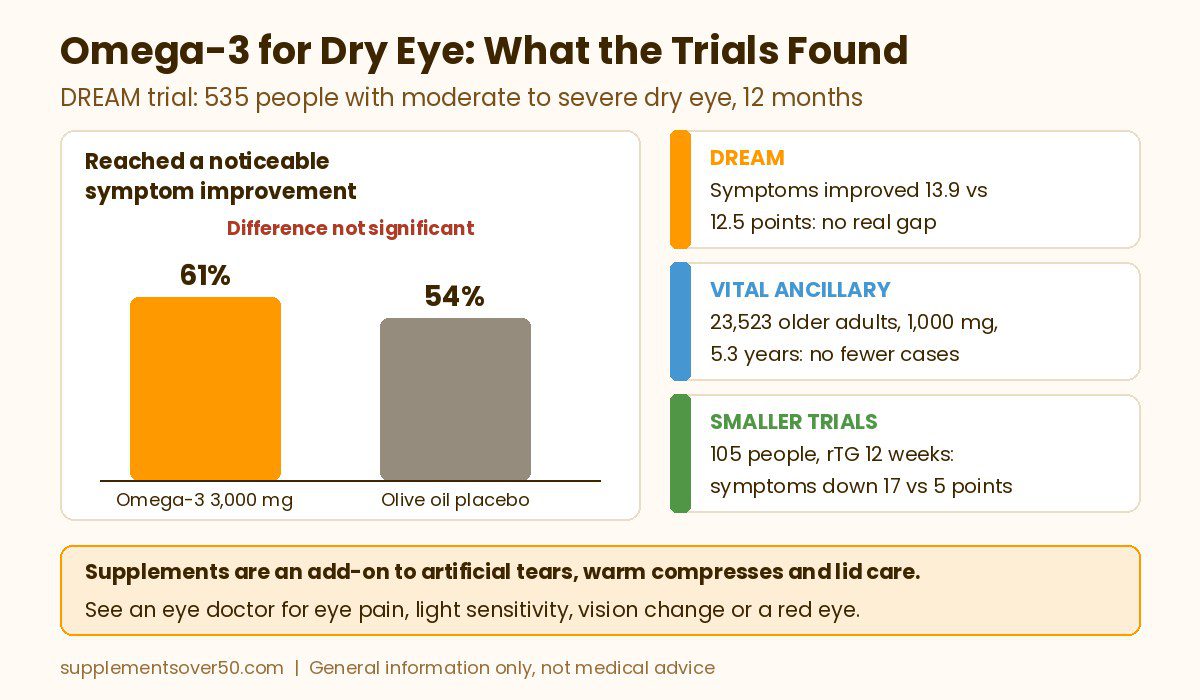
The National Eye Institute funded the DREAM trial, published in the New England Journal of Medicine. It enrolled 535 people at 27 centers who had moderate to severe dry eye for at least six months. For a year, 349 of them took 3,000 mg of omega-3 a day (2,000 mg EPA plus 1,000 mg DHA), the highest dose ever tested for dry eye, while 186 took capsules with 5 grams of olive oil.
Both groups improved. Symptom scores fell by 13.9 points with omega-3 and 12.5 points with olive oil, and 61% versus 54% reached a noticeable 10-point improvement, but the difference was not statistically significant. Signs of dry eye on eye exams did not differ either. Participants kept using their usual treatments, such as artificial tears and prescription anti-inflammatory drops, so the trial tested omega-3 as an add-on in real-world conditions. The study chair concluded that the results do not support omega-3 supplements for moderate to severe dry eye.
A second large study points the same way. The NIH Office of Dietary Supplements describes an ancillary study of the VITAL trial in which 23,523 older adults took 1,000 mg of omega-3 or a placebo for a median of 5.3 years, with no significant effect on new cases of diagnosed dry eye or severe symptoms. The ODS sums up the evidence as showing no consistent relationship between omega-3s and dry eye disease.
Smaller trials that were more positive
So why do eye doctors still recommend omega-3? Several smaller, shorter trials found benefits. In a 12-week trial in 105 people with dry eye and meibomian gland dysfunction, 4 softgels a day providing 1,680 mg EPA and 560 mg DHA in re-esterified triglyceride (rTG) form improved tear osmolarity, tear break-up time and symptom scores compared with a linoleic acid control. Symptom scores fell by 17 points with omega-3 versus 5 points in the control group.
A 6-month trial in 38 postmenopausal women with moderate to severe dry eye tested a combination of gamma-linolenic acid (GLA) and omega-3. Symptom scores were significantly better than placebo at 24 weeks and the corneal surface stayed smoother, but tear production, tear break-up time and eye staining did not change. With small groups and different placebos, these results cannot outweigh DREAM, but they explain why some people still feel a difference.
Vitamin D: early but interesting
Low vitamin D has been linked with dry eye in several studies. A meta-analysis of 8 studies with 439 patients found that vitamin D supplementation improved tear production, tear stability and symptom scores. Most included studies compared patients before and after treatment, and the authors called vitamin D a possible future add-on treatment that needs more research on dose. If a blood test shows you are low, correcting it makes sense for many reasons. Taking extra just for your eyes is less proven.
What to Look for in Dry Eye Supplements
- A stated EPA and DHA amount. Total fish oil is not the same as omega-3. Look for the milligrams of EPA and DHA per daily serving.
- The form. Re-esterified triglyceride (rTG) and natural triglyceride forms are what many eye-focused brands use. Ethyl ester fish oil is cheaper and also common.
- A realistic daily dose. Eye formulas often call for 3 or 4 softgels a day. If you will not take that many, a simpler product you actually take may be better.
- Other ingredients. Some formulas add GLA from plant seed oils, vitamin D, vitamin E or flaxseed. Know what each one is there for.
- Purity and testing seals. Our guide on how to read a supplement label explains what NSF, USP and other seals mean.
- Honest claims. A supplement can support comfort as part of a plan. It should not promise to replace eye drops or treat an eye disease.
Best Dry Eye Supplements for Seniors: Quick Comparison
| Product | Best for | Key details | Daily dose |
|---|---|---|---|
| PRN De3 rTG Omega-3 | Best overall | 1,680 mg EPA + 560 mg DHA in rTG form, plus vitamin D3; NSF Contents Certified | Label: 3 softgels with a meal |
| HydroEye | GLA + omega-3 | GLA from black currant seed oil plus EPA and DHA; 120 softgels, 30-day supply | Label: 4 softgels daily |
| TheraTears Omega 3 | Fish + flaxseed blend | 450 mg EPA, 300 mg DHA, 450 mg ALA per serving; triglyceride fish oil, organic flaxseed oil, vitamin E | Check label for serving |
| Nordic Naturals Ultimate Omega | Everyday fish oil | 1,280 mg omega-3 per serving; triglyceride form; lemon flavor; 45 servings | Label: 2 softgels per serving |
| Blink NutriTears | No fish oil | Lutein, zeaxanthin, curcumin and vitamin D; softgels | Check label for serving |
Top Picks for the Best Dry Eye Supplements for Seniors
1. PRN De3 rTG Omega-3 (Best Overall)
PRN’s De3 formula is built specifically for dry eyes, and its numbers stand out. The listing gives 1,680 mg EPA and 560 mg DHA per daily serving in re-esterified triglyceride form, a 3:1 EPA to DHA ratio, plus vitamin D3. Those are the same EPA and DHA amounts used in the 105-person rTG trial above. The label calls for 3 softgels a day with a meal, and the product is NSF Contents Certified and made under Good Manufacturing Practice requirements.
PRN says its rTG form is up to 3 times more absorbable than common store-bought omega-3s, which is a brand claim, and it notes there is no fishy aftertaste. Remember that DREAM tested an even higher dose without a clear benefit, so treat this as a reasonable trial, not a guarantee. It has more than 1,900 ratings with a 4.6 rating.
2. HydroEye (Best GLA Plus Omega-3 Formula)
HydroEye is the most reviewed dedicated dry eye supplement in our search, with more than 7,200 ratings and a 4.6 rating. It combines GLA from black currant seed oil with omega-3 EPA and DHA, an approach the brand says supports all three layers of the tear film. The label calls for 4 softgels daily, and the brand suggests giving it 30 to 60 days of consistent use.
The company says HydroEye was tested in a peer-reviewed clinical trial published in the journal Cornea. The GLA and omega-3 study we describe above, also in Cornea, found better symptom scores but no change in tear production. That fits the cautious picture: it may help comfort for some people, especially women after menopause, but it is not a cure.
3. TheraTears Omega 3 (Best Fish and Flaxseed Blend)
TheraTears is a familiar eye drop brand, and its omega-3 softgel blends triglyceride fish oil with organic flaxseed oil and vitamin E. Each serving lists 450 mg EPA, 300 mg DHA and 450 mg ALA, for 1,200 mg of omega-3 in total. The listing says the blend has been clinically tested and notes that purchases may be FSA or HSA eligible.
The EPA and DHA dose is more modest than PRN, which some people tolerate better, and flaxseed adds plant-based ALA. Check the label for how many softgels make up one serving. It has more than 6,700 ratings with a 4.6 rating.
4. Nordic Naturals Ultimate Omega (Best Everyday Fish Oil)
If you want one fish oil that covers your heart and brain goals as well as your eyes, Nordic Naturals Ultimate Omega is the most popular choice by a wide margin, with more than 60,600 ratings and a 4.7 rating. Each 2-softgel serving provides 1,280 mg of omega-3 in the triglyceride form found naturally in fish, and the brand says its concentrate has no fishy burps thanks to the lemon flavor.
This is not an eye-specific formula, and the bullets do not break out EPA and DHA per serving, so check the label. It is a strong pick if you already planned to take fish oil and want to see whether your eyes feel better too. For a deeper look at forms, see our guide to the best fish oil for seniors.
5. Blink NutriTears (Best Fish-Oil-Free Option)
Not everyone can or wants to take fish oil. Blink NutriTears skips it and uses lutein, zeaxanthin, curcumin and vitamin D. The brand says it promotes healthy tear production and that eyes stayed hydrated 33% longer on day 28 of a clinical study. That figure comes from the company, and we could not review the study itself.
It is a sensible option if fishy burps, a fish allergy or a pill count of 3 or 4 softgels a day rules out the others. Check the label for the daily serving. It has more than 4,800 ratings with a 4.3 rating, the lowest in our list.
How to Choose the Best Dry Eye Supplements for You
- If you want the dose closest to the positive trials, pick PRN De3.
- If you are a woman past menopause with irritated eyes, HydroEye uses the GLA plus omega-3 approach that was tested in that group.
- If you prefer a moderate dose, TheraTears Omega 3 has less EPA and DHA and adds flaxseed.
- If you already take fish oil for your heart, Nordic Naturals Ultimate Omega lets one product do double duty.
- If you cannot take fish oil, Blink NutriTears is the fish-free option.
- If you take a blood thinner, talk to your doctor before any of the fish oil picks.
Give any supplement 2 to 3 months, and judge it honestly: in DREAM, more than half of the people on olive oil also felt better. Keep using your eye drops and lid care the whole time. For the bigger eye picture, see our best eye health supplements for seniors and our guide to the AREDS2 supplement for macular degeneration. Women can also read our best omega-3 for women over 60, and if you are low in vitamin D, see the best vitamin D supplements for seniors.
What Helps Dry Eye More Than Supplements
Supplements are adjuncts. These are the treatments eye doctors usually lean on first, according to Mayo Clinic’s treatment overview and the National Eye Institute:
- Artificial tears. The most common treatment for mild dry eye. Mayo Clinic suggests using them regularly if your dry eye is chronic, even when your eyes feel fine. Preservative-free drops are worth asking about if you use them often, since preservatives in eye drops are a listed cause of dry eye.
- Warm compresses and lid hygiene. Daily warm compresses or heated eye masks can help clear blocked oil glands, and regular eyelid washing helps keep the lid edge clean.
- Treating blepharitis or meibomian gland dysfunction. Your eye doctor may prescribe antibiotics or other treatments to calm eyelid inflammation.
- Prescription drops. Cyclosporine (Restasis) or lifitegrast (Xiidra) can help the eyes make more tears in more serious cases.
- Punctal plugs. Tiny plugs in the tear ducts help keep tears on the eye longer.
- Daily habits. Screen breaks, a humidifier, wraparound sunglasses and avoiding smoke all reduce evaporation.
Who Should Avoid Dry Eye Supplements or Ask a Doctor First
Omega-3 is generally safe at normal doses, but older adults are more likely to have the conditions and medicines where it matters. The NIH Office of Dietary Supplements notes that the FDA considers up to 5 g a day of EPA and DHA from supplements safe when used as recommended. Talk to your doctor first if any of these apply:
- You take a blood thinner such as warfarin, or an antiplatelet drug. The ODS says high-dose fish oil has antiplatelet effects and might raise INR with warfarin, although most research at 3 to 6 g a day found no significant effect. Your doctor should still know. Our guide to supplements to avoid with blood thinners has more detail.
- You have atrial fibrillation or heart disease. According to the ODS, two large trials found that 4 g a day of omega-3 for several years slightly raised the risk of atrial fibrillation in people with or at high risk of cardiovascular disease.
- You have a fish or shellfish allergy. Ask your doctor, or choose the fish-free option.
The most common side effects are mild: an unpleasant taste, bad breath, heartburn, nausea, stomach upset, diarrhea and headache. Taking softgels with a meal often helps with fishy burps.
Red flags: see an eye doctor promptly
Dry eye is uncomfortable but usually not urgent. Some symptoms are different. MedlinePlus advises calling your provider right away for severe eye pain, and seeking care if eye pain lasts more than 2 days, comes with decreased vision, or comes with redness, swelling, discharge or pressure. Do not try a supplement first if you have:
- Eye pain, especially if it is severe or getting worse
- New sensitivity to light
- Any change in vision, such as blurring that does not clear when you blink
- A red eye, particularly in one eye only or with discharge
- Dry eyes along with dry mouth or joint pain, which can point to Sjögren syndrome or another autoimmune condition
Mayo Clinic notes that untreated severe dry eye can lead to eye infections, corneal ulcers and vision loss, so persistent symptoms deserve an eye exam.
Frequently Asked Questions
Does fish oil really help dry eyes?
The evidence is mixed. The large NIH-funded DREAM trial found that 3,000 mg of omega-3 a day worked no better than an olive oil placebo for moderate to severe dry eye over a year. Some smaller trials found benefits, so it may be worth a 2 to 3 month trial alongside eye drops.
How much omega-3 should I take for dry eyes?
There is no agreed dose. Trials have used about 1,000 to 3,000 mg of EPA plus DHA a day. Follow the product label and ask your doctor before going high, especially if you take a blood thinner or have heart rhythm problems.
How long do dry eye supplements take to work?
Most trials ran from 12 weeks to a year, and HydroEye suggests allowing 30 to 60 days. If you notice no change after about 3 months, the supplement is probably not worth continuing.
Can my medications cause dry eyes?
Yes. The National Eye Institute lists medicines for colds and allergies, depression and high blood pressure as possible causes, and Mayo Clinic adds decongestants and hormone therapy. Ask your doctor or pharmacist before changing anything.
Is fish oil safe if I take a blood thinner?
Ask your doctor first. High-dose fish oil can have antiplatelet effects and might raise INR with warfarin, although most studies at 3 to 6 grams a day found no significant change. Your doctor may want to monitor you.
What is the best thing to do for dry eyes besides supplements?
Use artificial tears regularly, apply warm compresses, keep your eyelids clean, take screen breaks and run a humidifier. If that is not enough, an eye doctor can treat blepharitis and prescribe drops such as cyclosporine or lifitegrast.
Our Take
The best dry eye supplements for seniors are a modest add-on, not a replacement for good eye care. The biggest trial found high-dose fish oil no better than olive oil, while smaller studies were more encouraging. If you want to try one, PRN De3 matches the dose used in a positive rTG trial, HydroEye uses the GLA plus omega-3 approach tested in postmenopausal women, and Blink NutriTears is there if fish oil is off the table. Keep up artificial tears, warm compresses and lid care, review your medicines with your pharmacist, and check with your doctor first if you take a blood thinner or have atrial fibrillation. See an eye doctor right away for pain, light sensitivity or vision changes.
This article is for informational purposes only and is not medical advice. Talk to your doctor or eye care professional before taking a dry eye supplement, especially if you take prescription medicines or have a heart condition.