Phosphatidylserine for Seniors — Brain Cell Membrane Support, Memory and Cortisol Evidence
| ⚕️ Medical Disclosure Phosphatidylserine for Seniors supplements are generally well-tolerated, but PS has mild anticoagulant properties that are relevant for seniors on warfarin, clopidogrel (Plavix), or aspirin regimens. Anyone on anticoagulant therapy should consult their physician before starting PS and, if on warfarin, have an INR check at 4–6 weeks. Discontinue PS at least 2 weeks before any scheduled surgery. People with autoimmune conditions should discuss PS with their physician as it has mild immune-modulatory activity. The cognitive benefit evidence is strongest in adults with mild memory complaints — PS is not an established treatment for Alzheimer’s disease or moderate-to-severe dementia. This article does not constitute medical advice. |
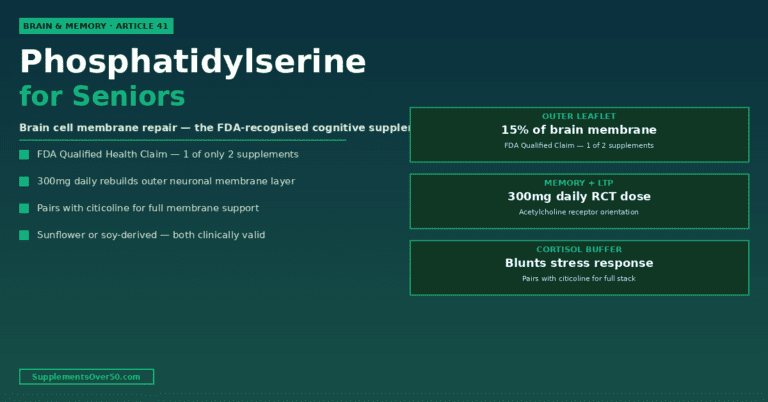
| ⚡ Quick Answer Phosphatidylserine (PS) is a structural phospholipid making up approximately 15% of all neuronal membrane phospholipids. It holds an FDA Qualified Health Claim for reducing the risk of cognitive dysfunction in the elderly — one of only a handful of supplements to receive this designation. At 300mg/day in three divided doses, PS has demonstrated significant improvements in memory, learning speed, and cognitive function in multiple double-blind RCTs in older adults with memory complaints, confirmed in a 2015 systematic review of 9 trials. A separate and clinically important benefit — cortisol blunting — is less well-publicised outside sports science. PS at 400–800mg significantly reduces ACTH and cortisol response to both physical and psychological stress (Monteleone et al. 2000), making it uniquely relevant for post-menopausal women managing HPA axis dysregulation and for seniors engaged in resistance training. Form matters: sunflower-derived PS is the preferred option for most seniors — confirmed bioequivalent to soy PS, soy-free, non-GMO, and without phytoestrogen concerns. The complete evidence-based PS protocol costs approximately $0.60–$1.10/day at 300mg. Stacked with omega-3 DHA, this becomes the most comprehensively supported neuronal membrane supplement combination available without prescription. |
Best Phosphatidylserine Supplements for Seniors: Top Picks
These are the four phosphatidylserine supplements that best meet the clinical criteria: sunflower-derived Sharp-PS, minimum 100mg per capsule, third-party tested, and priced for daily 300mg use.
What Phosphatidylserine for Seniors is and Why It Matters After 60
Most cognitive supplements work by stimulating neurotransmitter activity — increasing acetylcholine, dopamine, or serotonin acutely. Phosphatidylserine takes a categorically different approach. Rather than stimulating the brain, it maintains the physical structure of neuronal membranes that all neurotransmission depends on. It is not a stimulant in any sense — it is a structural building block that the aging brain progressively loses and that can be at least partially replenished through supplementation.
PS is a phospholipid — a fat molecule with a phosphate group. In the brain it is preferentially concentrated at the inner leaflet of neuronal cell membranes, where it performs multiple simultaneous functions: maintaining the precise membrane fluidity that synaptic vesicles require to fuse and release neurotransmitters; providing the structural environment that acetylcholine receptors need to maintain their correct three-dimensional conformation; activating protein kinase C (PKC), the enzyme that is essential for long-term potentiation, which is the molecular basis of memory formation and storage; and participating in the apoptosis-signalling cascade that prevents accumulation of damaged neurons.
The age-related decline in neuronal PS concentration begins in the late fourth decade and accelerates after 60. This is not a disease process — it is normal aging biochemistry. But as membrane PS levels fall, all four of these functional systems degrade simultaneously. The result is the slower word retrieval, reduced new-information acquisition speed, shorter attention span, and less reliable working memory that most people attribute to unavoidable cognitive aging. The evidence suggests at least a portion of this decline is addressable through PS replenishment at therapeutic doses.
Understanding this mechanism is important for setting realistic expectations. Because PS works by rebuilding membrane structure rather than stimulating the brain chemically, it does not produce the acute subjective sensation of mental sharpness that caffeine or acetylcholine precursors generate. People who start PS expecting an immediate noticeable effect frequently discontinue before the 8–12 week window over which structural membrane restoration produces measurable cognitive improvement. The parallel from pharmacology is statins — nobody feels statins working, but the structural biochemical effect is real, measurable, and clinically meaningful.
Popular Supplement Guides:

The FDA Qualified Health Claim — What It Actually Means
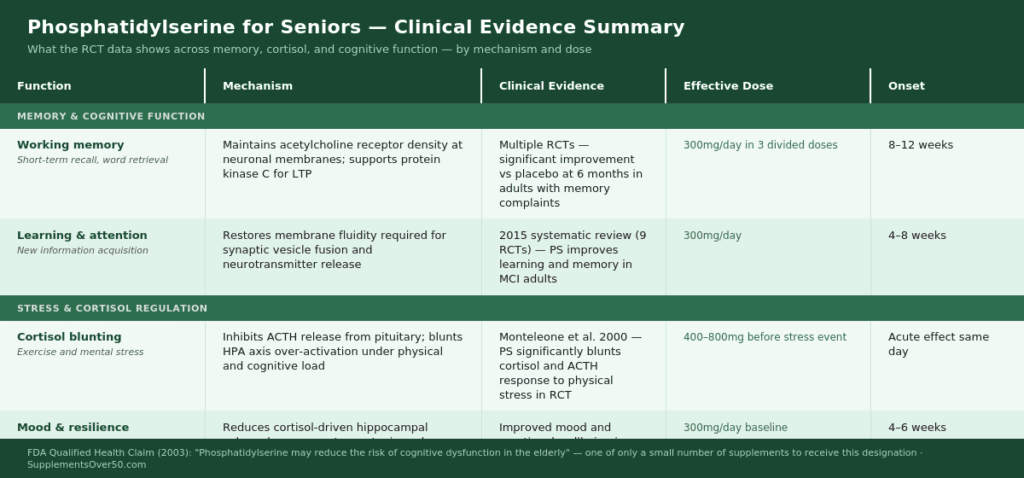
In 2003, the FDA granted a Qualified Health Claim to phosphatidylserine: ‘Consumption of phosphatidylserine may reduce the risk of dementia and cognitive dysfunction in the elderly.’ The precise regulatory language — ‘may reduce’ — reflects the FDA’s standard of evidence for a qualified claim rather than a full authorised claim, but the underlying implication is significant. Very few supplements have cleared even this threshold. The claim acknowledges a credible body of clinical evidence specifically in the elderly population.
A Qualified Health Claim requires the FDA to find at least credible scientific evidence supporting the claim while falling short of the higher standard required for an authorised health claim. For cognitive supplements — where the evidence bar is high and FDA scepticism is considerable — this designation is meaningful. Omega-3 DHA has a similar qualified claim for brain development; PS has one specifically targeting cognitive decline in older adults.
The Memory and Cognitive Function Evidence
What the RCT Data Shows
The core clinical evidence base for PS and cognitive function in older adults consists of multiple double-blind, placebo-controlled trials with 3–6 month follow-up periods. The target population across most of these trials is older adults (typically 60–75) with subjective memory complaints or measurable mild cognitive impairment — not diagnosed Alzheimer’s disease, but the clinically recognised pre-dementia zone that affects a large proportion of people over 60.
A landmark 2010 double-blind RCT examined PS 300mg daily for 6 months in older adults with memory complaints. Memory and learning scores improved significantly versus placebo, with the largest effect sizes in participants showing the most pronounced baseline deficits — consistent with the structural mechanism, where more membrane degradation means more room for structural restoration to produce measurable benefit.
The 2015 systematic review and meta-analysis covering 9 RCTs confirmed this pattern across different study populations and designs: PS supplementation consistently and significantly improves memory and cognitive function in older adults with mild cognitive impairment. The review found the evidence base sufficient to recommend PS as a supplement option for adults with mild-to-moderate cognitive complaints, a conclusion that aligns with the FDA Qualified Health Claim.
The specific cognitive domains showing the most consistent improvement in the RCT literature are: verbal memory (word recall and recognition), working memory (short-term holding and manipulation of information), learning rate for new material, and executive function measures related to mental processing speed. Spatial memory and visuospatial processing show less consistent benefit, possibly reflecting the acetylcholine-mediated verbal memory circuits being particularly PS-sensitive.
How Long Realistically Before Results
This is the most common point of confusion and premature discontinuation. PS onset timelines vary by the cognitive function being targeted:
- Working memory and verbal recall: first measurable improvements typically appear at 4–8 weeks of consistent 300mg/day dosing in most trial participants. Subjective awareness of improvement often lags objective test improvement by 2–4 additional weeks.
- Learning speed and new-information acquisition: 8–12 weeks for consistent improvement, consistent across multiple trials.
- Attention and mental processing speed: 8–16 weeks depending on baseline deficit severity.
- Full cognitive effect accumulation: 16–24 weeks — several long-term trials show continued improvement between 12 and 24 weeks, suggesting the structural membrane restoration continues to build over this window.
The cortisol-blunting effect has a completely different onset profile — it is acute. A single dose of 400–800mg produces measurable cortisol and ACTH reduction within 3–4 hours on the day of dosing, confirmed in the Monteleone protocol. Daily PS supplementation for cortisol regulation does not require weeks of loading.
The practical recommendation: commit to 300mg/day for 12 weeks minimum before evaluating cognitive effect. Track specific objective metrics where possible — time taken to recall names in familiar contexts, ability to retain content from reading, word-retrieval failures in conversation. Subjective global ratings of ‘feeling sharper’ correlate poorly with objective improvement and are not reliable evaluation measures.
The Cortisol-Blunting Effect — The Underappreciated Benefit
Phosphatidylserine’s cortisol-blunting mechanism is supported by a separate body of research from the cognitive literature, emerging primarily from sports science investigation of exercise-induced cortisol spikes. It is less well-known in the general supplement market but represents some of the most practically important evidence for the typical senior supplement user — particularly post-menopausal women and seniors who exercise regularly.
The Mechanism — HPA Axis Modulation
Cortisol is released through the HPA (hypothalamic-pituitary-adrenal) axis: the hypothalamus releases CRH, the pituitary releases ACTH in response, and ACTH triggers cortisol synthesis and release from the adrenal glands. PS appears to modulate this cascade at the pituitary level — specifically reducing ACTH release in response to stressor signals, which consequently reduces the cortisol that ACTH would trigger.
This is not cortisol suppression in the sense of blocking the stress response entirely. PS blunts the magnitude of the cortisol response without eliminating it — the body still responds to acute stress, but with a smaller and shorter cortisol spike. This is physiologically appropriate and desirable: the harm from cortisol comes from chronically elevated or repeatedly over-triggered responses, not from normal acute stress responses.
The landmark study is Monteleone et al. 2000 (PubMed 10839220): a double-blind crossover RCT testing PS 400mg and 800mg against placebo on neuroendocrine responses to physical exercise. Both doses significantly blunted ACTH and cortisol responses to the exercise stressor, with the 800mg dose producing a larger blunting effect. The effect was specific to ACTH and cortisol — other stress hormones including growth hormone and prolactin were not significantly affected, supporting the pituitary-level mechanism hypothesis.
Why Cortisol Regulation Matters Specifically for Seniors
Cortisol’s effects on the aging brain are among the most well-documented neurotoxic mechanisms in gerontological research. The hippocampus — the primary structure for memory consolidation and retrieval — has the highest glucocorticoid receptor density of any brain region, making it both maximally responsive to cortisol and maximally vulnerable to cortisol-induced damage.
Chronic or repeatedly elevated cortisol produces three converging harms in the hippocampus: reduced neurogenesis (production of new neurons in the dentate gyrus), dendritic retraction in CA3 pyramidal neurons (physically shrinking the synaptic tree), and accelerated neuron loss through glucocorticoid-induced excitotoxicity. Longitudinal human studies show that higher lifetime cortisol exposure correlates with smaller hippocampal volume and worse memory performance in older adults — a structural-cognitive pathway that PS’s cortisol-blunting effect can partially interrupt.
Post-menopausal women are a particularly relevant subgroup. Oestrogen had been buffering HPA axis reactivity — reducing the speed and magnitude of cortisol responses to stressors and providing some neuroprotection against cortisol’s hippocampal effects. Its withdrawal at menopause removes this buffer, producing the characteristic hyperreactive stress response, sleep disruption, and mood instability of the post-menopausal transition. PS provides cortisol attenuation through a mechanism independent of oestrogen — making it a meaningful non-hormonal option for HPA axis support in this population.
Seniors engaged in resistance training face a specific cortisol challenge: at equivalent training loads, older adults produce larger and more prolonged cortisol responses than younger adults. Cortisol is acutely catabolic — it promotes muscle protein breakdown to release amino acids as energy substrate. Elevated post-exercise cortisol in seniors directly counteracts the anabolic benefit of resistance training at a time when muscle preservation is a primary health priority. PS at 400mg before training blunts this catabolic cortisol spike, improving the anabolic-to-catabolic hormone balance post-workout.
PS combines with ashwagandha KSM-66 for dual-pathway HPA axis regulation: PS targets the pituitary ACTH pathway; ashwagandha targets the adrenal cortisol synthesis pathway through withanolide-mediated mechanisms. For the full ashwagandha evidence in post-menopausal women: Ashwagandha for Women Over 50 — Sleep, Anxiety and Menopause Evidence
Sunflower vs Soy Phosphatidylserine — Why Source Matters
The clinical trial literature on PS spans two decades and used primarily soy-derived PS. For most of the period when the evidence base was being built, soy lecithin was the only commercially available PS source. This creates a practical problem for several groups of seniors who should be avoiding soy: those with soy allergies (estimated at 0.4% of the adult population, with higher prevalence in people with other food allergies), post-menopausal women or men with hormone-sensitive conditions concerned about phytoestrogen content in high-dose soy products, and anyone seeking non-GMO sourcing — the overwhelming majority of commercial soy is genetically modified.
Sunflower-derived PS resolves all three concerns simultaneously. The critical question is whether the clinical trial results from soy PS studies transfer to sunflower PS — and a 2019 bioequivalence study answered this definitively. Sunflower PS produces equivalent serum phospholipid levels to soy-derived PS at matched doses. The body’s handling of PS is identical regardless of source; the source matters only for the concerns listed above, not for clinical efficacy.
For practical label reading: look for ‘sunflower lecithin’ listed as the source on the supplement facts panel, with PS standardised to a specific percentage of the lecithin content. Sharp-PS Green is the most widely studied branded sunflower PS, appearing in clinical trials. A 500mg capsule from a 20%-standardised sunflower lecithin delivers 100mg of PS — so three capsules provide the 300mg daily target. Products listing simply ‘phosphatidylserine’ without specifying source are typically soy-derived.
What to Look for on Labels
- Sunflower lecithin listed as source for soy-free formulas — not just ‘non-GMO’ designation on soy-derived products
- PS percentage standardisation: 20% or higher means meaningful PS content per capsule
- Sharp-PS or Sharp-PS Green for the most-studied branded sunflower options
- Third-party testing certification (NSF, USP, or Informed Sport) for quality assurance
- No unnecessary additives — PS is effective as a simple capsule or softgel; proprietary blends diluting PS concentration are common in the mass-market women’s brain health supplement category
The soy-derived options remain effective and appropriate for most seniors without the specific concerns above. The cost difference between soy and sunflower PS is modest at the mainstream brand level — typically 15–30% premium for sunflower-sourced products.
Product Recommendations — 2026 Pricing Guide
The following products represent reliable options across different price points and formulation preferences. All pricing is approximate based on standard retail channels (Amazon, iHerb, direct) at the time of writing and will vary.
| Product | PS per Serving | Source | Price/Day (300mg) | Best For |
| NOW Supplements Phosphatidyl Serine | 100mg per softgel (3/day) | Soy-derived | ~$0.50–$0.65 | Budget-conscious seniors; widely available at Costco and Amazon |
| Jarrow Formulas PS-100 | 100mg per softgel | Soy-derived | ~$0.55–$0.70 | Trusted brand; softgel form absorbs well with meals |
| Life Extension Cognitex PS with Sharp-PS Green | 150mg per capsule (2/day) | Sunflower (Sharp-PS) | ~$0.85–$1.10 | Soy-free; sunflower PS; combined with DHA and GPC |
| Swanson Sunflower Phosphatidylserine | 100mg per capsule (3/day) | Sunflower | ~$0.60–$0.80 | Soy-free at moderate price; verified sunflower source |
| Double Wood Supplements PS + CDP-Choline | 100mg PS + 300mg CDP-Choline | Soy-derived | ~$0.90–$1.20 | Combined PS + citicoline — best value for the combination stack |
The highest-value purchasing decision for most seniors is the combined PS + citicoline product if both supplements are on the protocol — it eliminates one capsule count and costs less than purchasing separately. For seniors prioritising soy-free, the Life Extension Cognitex PS with Sharp-PS Green is the best-evidenced option despite the higher per-day cost.
Dosing by Situation — Complete Reference
| Situation | Recommended Dose | Timing | Clinical Basis and Notes |
| Memory and cognitive support (60+) | 300mg/day in 3 doses | 100mg with each meal | Standard dose from multiple RCTs; take with food for best absorption — PS is fat-soluble |
| Cortisol blunting — exercise | 400–800mg | 30–60 min before training | Monteleone et al. 2000 dose range; blunts ACTH and cortisol response to physical stress |
| Cognitive decline prevention | 300mg/day | Consistent daily dosing | Slow-acting structural supplement — evaluate at 12 weeks minimum; do not discontinue early |
| PS + DHA combination stack | PS 300mg + DHA 1,000mg | With largest fat-containing meal | Additive neuronal membrane benefit confirmed in trials; strongest nootropic base stack |
| Starting dose (GI-sensitive) | 100mg/day week 1–2, then 200mg, then 300mg | With food | Gradual titration eliminates early GI discomfort for most people |
| Post-menopausal cortisol support | 400mg/day in 2 doses | 200mg morning + 200mg evening with food | Combines with ashwagandha KSM-66 for dual-pathway HPA axis regulation |
| Athletes / resistance training seniors | 400mg before workout + 300mg daily baseline | Pre-workout + ongoing | Pre-workout blunts cortisol spike; daily dose supports muscle recovery and anabolic balance |
| Cognitive stress (exams, demanding work) | 400–800mg on stressor days | 30–60 min before the stressor | Acute single-dose cortisol blunting; can be used episodically without daily dosing |
PS vs Other Cognitive Supplements — When to Choose Each
PS is commonly discussed alongside citicoline, lion’s mane, and bacopa monnieri as the evidence-supported cognitive supplement options for older adults. These are not competing choices — they address different mechanisms and the most effective protocols typically combine them. Understanding when each is the right priority helps seniors allocate limited supplement budget and capsule counts most effectively.
| Phosphatidylserine | Citicoline (CDP-Choline) | Lion’s Mane Mushroom | Bacopa Monnieri | |
| Primary mechanism | Neuronal membrane structure; ACh receptor density; PKC activation for LTP | Choline donor + uridine for membrane synthesis; acetylcholine precursor | NGF (nerve growth factor) stimulation — promotes new neuron growth and synaptic connectivity | Synaptic plasticity through BDNF upregulation; reduces anxiogenic compounds at GABA-A |
| FDA qualified claim | Yes — cognitive dysfunction reduction in elderly (2003) | No | No | No |
| RCT evidence quality | Multiple double-blind RCTs; systematic review of 9 trials confirms benefit | Strong RCT evidence particularly for attention and verbal memory | Growing RCT base; strongest evidence in MCI populations | Multiple RCTs; strongest evidence in anxiety-related cognitive impairment |
| Cortisol blunting | Yes — RCT-confirmed at 400–800mg (Monteleone 2000) | No direct evidence | No direct evidence | Mild adaptogenic effect via GABAergic mechanisms |
| Onset for memory benefit | 8–12 weeks (structural — rebuilds membrane) | 4–8 weeks (faster via neurotransmitter support) | 8–16 weeks (NGF pathway is slow) | 12–16 weeks (synaptic structural changes) |
| Best form for seniors | Sunflower PS — soy-free, non-GMO, bioequivalent | Cognizin branded citicoline — highest purity, most-studied | Fruiting body extract, not mycelium; minimum 20% beta-glucan | Bacognize or Synapsa branded; standardised bacosides |
| Typical daily cost | ~$0.60–$1.10 at 300mg | ~$0.50–$1.00 at 500mg | ~$0.40–$0.80 at 500mg extract | ~$0.30–$0.60 at 300mg |
| Combines well with | DHA omega-3, citicoline | PS, uridine, DHA | PS, bacopa | Lion’s mane, PS |
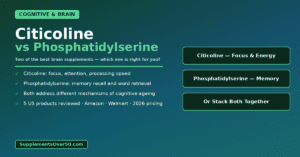
For the full mechanism and dosing comparison between PS and citicoline specifically: Citicoline vs Phosphatidylserine — Which Brain Supplement Does What
The key priority question for each supplement is: what aspect of cognitive decline most concerns you? For structural membrane integrity and the broadest clinical evidence base with FDA backing — PS. For faster-acting cholinergic support and acetylcholine precursor loading — citicoline. For neurogenesis and new synaptic connection formation over the long term — lion’s mane. For anxiety-related cognitive impairment and synaptic plasticity through BDNF — bacopa. Running PS and citicoline together addresses the most mechanistically important and best-evidenced combination for memory-specific concerns in older adults.
The PS + DHA Stack — Why These Two Work Together
The combination of phosphatidylserine and omega-3 DHA addresses neuronal membrane health from two complementary angles and represents the strongest evidence-based nootropic foundation available for older adults.
PS provides the phospholipid structure and receptor environment of the membrane — maintaining the molecular scaffold within which neurotransmitter release and memory consolidation occur. DHA (docosahexaenoic acid), the long-chain omega-3 that constitutes approximately 40% of the polyunsaturated fatty acids in brain grey matter, provides the specific fatty acid composition that gives those membranes their required fluidity, flexibility, and signalling responsiveness.
Neurons running on PS-supported membranes depleted in DHA are structurally coherent but functionally suboptimal — like a well-designed building constructed with inferior materials. Multiple trials examining the PS + DHA combination have found additive cognitive benefits exceeding either supplement alone. The mechanism is straightforward: PS maintains the membrane architecture while DHA optimises the fatty acid environment within that architecture. Both are depleted with age and both require supplementation for most seniors who are not eating fatty fish 3–4 times weekly.
The practical stack: 300mg PS daily with 1,000–2,000mg DHA from a quality triglyceride-form fish oil, both taken with the largest fat-containing meal. For the full omega-3 brain evidence in seniors: Omega-3 for Brain Health in Seniors — The DHA Evidence Explained
For seniors already taking fish oil for cardiovascular reasons — which is most of the people this site addresses — adding 300mg PS requires no change to existing supplement timing and adds meaningful structural cognitive support at modest cost. The cardiovascular and cognitive benefits of DHA operate through the same membrane-based mechanism, making this the most physiologically coherent supplement pairing available.
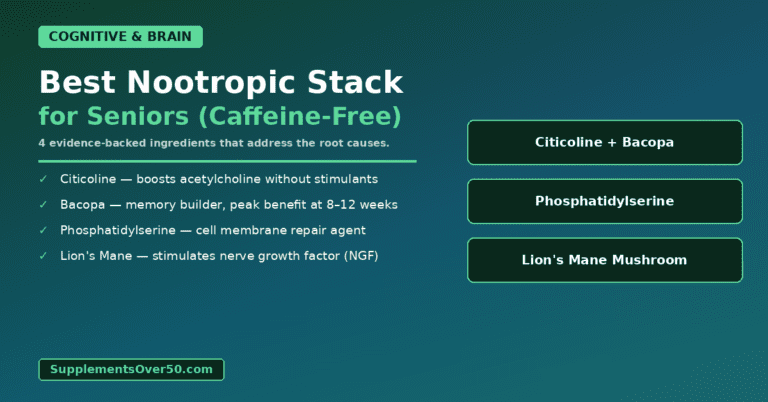
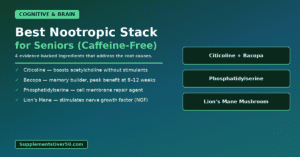
For the complete evidence-ranked cognitive supplement stack including PS, DHA, citicoline, and lion’s mane in a structured protocol: Best Nootropic Stack for Seniors — Focus Without Caffeine
Who Benefits Most — Clinical Profile of the Ideal PS User
The clinical trial literature defines the population most likely to benefit from PS clearly. Understanding this profile helps seniors decide whether PS is a priority versus other supplements competing for budget and capsule count.
Strongest Benefit Profile
- Adults 60+ with subjective memory complaints — the population showing the largest effect sizes in RCTs. Specifically: noticeable decline in name recall, needing repeated exposure to retain new information, word-retrieval difficulties in conversation, or reduced reading retention compared to earlier in life.
- Post-menopausal women experiencing cognitive fog, anxiety, or sleep disruption — PS’s cortisol-blunting effect addresses the HPA axis dysregulation that oestrogen withdrawal creates, in addition to the direct cognitive membrane support.
- Seniors doing regular resistance training — pre-workout cortisol blunting at 400mg improves anabolic-to-catabolic hormone balance and supports muscle protein synthesis outcomes from training.
- Adults managing chronic stress — caregivers, people navigating significant life transitions, those managing multiple health conditions — where chronic HPA axis over-activation is accelerating hippocampal decline independently of age-related PS depletion.
Lower Priority Situations
- Adults with no subjective cognitive concerns and no significant stress exposure — PS’s benefits are most pronounced in the presence of deficit. Healthy adults with excellent cognitive function and low cortisol burden are unlikely to notice meaningful subjective improvement, though the structural maintenance benefit still applies.
- Moderate-to-severe Alzheimer’s disease — the RCT evidence does not support PS as a treatment for established dementia. The cognition benefits are in the mild-to-moderate complaint and MCI range.
- Seniors whose primary cognitive concern is energy and focus rather than memory — citicoline or lion’s mane may be higher priority supplements for this profile than PS.
| ⚠️ Safety, Side Effects and Drug Interactions PS has a well-characterised safety profile with no serious adverse events reported in clinical trials at 300mg/day for periods up to 6 months. The most common side effects are mild and transient. Anticoagulant interaction (important): PS has mild anticoagulant properties. Seniors on warfarin (Coumadin), clopidogrel (Plavix), ticagrelor, or daily aspirin regimens should consult their physician before starting PS. If on warfarin, have INR checked at 4–6 weeks after starting. The interaction is mild but warrants monitoring given the narrow therapeutic index of warfarin. Surgery: Discontinue PS at least 2 weeks before scheduled surgery due to the mild anticoagulant effect. Inform your surgical team if you have been taking PS. GI effects: Mild gastric discomfort in the first week is the most common reported side effect, affecting approximately 10–15% of users. Starting at 100mg/day for 1–2 weeks before increasing to 200mg, then 300mg, eliminates this for most people. Taking PS with food (not on an empty stomach) also reduces GI effects significantly. Soy allergy: Use sunflower-derived PS exclusively — confirmed bioequivalent and completely soy-free. Standard soy-derived PS products are not appropriate for people with clinically confirmed soy allergy. Thyroid medication: PS does not directly affect thyroid hormone production or metabolism. However, significant cortisol reduction in people on levothyroxine or similar medications can secondarily affect thyroid hormone conversion — thyroid levels are worth checking at 3 months if starting high-dose PS alongside thyroid medication. Statins, ACE inhibitors, beta-blockers, calcium channel blockers: No clinically significant interactions identified in the literature. Inform your pharmacist when adding any new supplement, but PS has a substantially better interaction profile than many commonly used supplements. |
Related Articles on SupplementsOver50.com
• Citicoline vs Phosphatidylserine — Which Brain Supplement Does What
• Best Nootropic Stack for Seniors — Focus Without Caffeine
• Lion’s Mane Mushroom for Cognitive Health After 60
• Omega-3 for Brain Health in Seniors — The DHA Evidence Explained
• The 5 Essentials — Supplements Every Adult Over 60 Should Know
• Best Supplements for Adults Over 60 — Ranked by Evidence
• Ashwagandha for Women Over 50 — Sleep, Anxiety and Menopause Evidence
References
3. FDA 2003 Qualified Health Claim: Phosphatidylserine and cognitive dysfunction in the elderly
Frequently Asked Questions
What does phosphatidylserine actually do for the brain?
PS is a structural phospholipid making up approximately 15% of all neuronal membrane phospholipids — the highest concentration of any single phospholipid in brain cell membranes. It maintains the precise membrane environment required for acetylcholine receptors to hold their correct three-dimensional conformation, activates protein kinase C (the enzyme essential for long-term potentiation and memory consolidation), and maintains membrane fluidity required for synaptic vesicle fusion during neurotransmitter release. When PS levels decline with age, all three functions degrade simultaneously — producing the slower word retrieval, reduced new-learning speed, and less reliable working memory characteristic of normal cognitive aging after 60. At 300mg/day, supplementation has demonstrated significant restoration of memory and learning function in multiple RCTs in adults with mild memory complaints.
How long does phosphatidylserine take to work for memory?
PS is a slow-acting structural supplement because it works by rebuilding neuronal membrane composition, not by acutely stimulating neurotransmitter release. Clinical trials use 12–24 week follow-up periods to measure cognitive outcomes. Earliest measurable improvements typically appear at 4–8 weeks of consistent 300mg/day dosing; the cognitive effect continues building through 16–24 weeks in longer trials. The cortisol-blunting effect is completely different — it is acute, producing measurable ACTH and cortisol reduction on the same day at 400–800mg. Set a 12-week minimum evaluation window for cognitive benefits and track specific objective measures (name recall frequency, reading retention, word-retrieval difficulties) rather than relying on subjective global ‘feeling sharper’ assessments.
What is the difference between sunflower and soy phosphatidylserine?
The source affects allergen profile, phytoestrogen content, and GMO status — but not biological activity or clinical efficacy. A 2019 bioequivalence study confirmed that sunflower PS produces equivalent serum phospholipid levels to soy-derived PS at matched doses. The clinical trial data from soy PS studies applies equally to sunflower PS. Sunflower PS is preferred for people with soy allergies, post-menopausal women or men avoiding phytoestrogens, and those seeking non-GMO sourcing. Look for ‘sunflower lecithin’ specified on the label and a PS standardisation of 20% or higher. Sharp-PS Green is the most-studied branded sunflower PS. For most seniors without specific soy concerns, both forms are equally effective — the sunflower form carries a modest premium of typically 15–30%.
Can phosphatidylserine be taken with citicoline?
Yes — this is the preferred combination and produces additive benefit because the two supplements target the same neuronal membrane through complementary mechanisms. Citicoline provides CDP-choline as a precursor for phospholipid membrane synthesis and acetylcholine production; PS directly maintains the structural integrity and acetylcholine receptor environment of that membrane. Multiple practitioners recommend the combination over either alone for memory-focused protocols. Citicoline acts faster (4–8 weeks) through acute neurotransmitter support; PS acts more slowly but addresses the underlying structural deficit. No interaction between the two supplements has been identified. A combined PS + CDP-choline product (such as Double Wood Supplements) can simplify the protocol and reduce cost relative to purchasing separately.
Does phosphatidylserine help with cortisol and stress in post-menopausal women?
Yes — and this is one of PS’s most practically useful effects for this population. Oestrogen had been buffering HPA axis reactivity, reducing the magnitude of cortisol stress responses. Its withdrawal at menopause creates the characteristic hyperreactive stress response, disrupted sleep, abdominal fat accumulation, and mood instability that reflects chronic HPA axis over-activation. PS at 400–800mg blunts both ACTH and cortisol stress responses through a mechanism independent of oestrogen — the pituitary-level ACTH pathway modulation confirmed in the Monteleone RCT. For post-menopausal women, combining PS with ashwagandha KSM-66 (which targets adrenal cortisol synthesis through withanolide mechanisms) provides dual-pathway HPA axis regulation that addresses both the speed and magnitude of the cortisol stress response. The two supplements do not interact and work through independent mechanisms.
Is phosphatidylserine safe with warfarin or aspirin?
PS has mild anticoagulant properties and requires attention — though not necessarily avoidance — in seniors on anticoagulant therapy. For warfarin users: PS can mildly enhance warfarin’s anticoagulant effect, so a baseline INR check before starting and a follow-up at 4–6 weeks is recommended. If INR is stable within target range, PS can typically be continued with quarterly monitoring. For aspirin and clopidogrel: the interaction is mild and generally manageable, but informing the prescribing physician is appropriate. Discontinue PS at least 2 weeks before any scheduled surgery. PS has no significant interactions with statins, ACE inhibitors, beta-blockers, calcium channel blockers, or most other common cardiovascular medications. Inform your pharmacist when adding any supplement — they have access to interaction screening tools that provide a personalised assessment based on your complete medication list.
| 📋 The Bottom Line Phosphatidylserine at 300mg/day is among the best-evidenced cognitive supplements for older adults, with both a body of rigorous RCT data and an FDA Qualified Health Claim. Its mechanism — maintaining neuronal membrane structure and the functional environment for acetylcholine receptor activity and long-term potentiation — addresses the physical basis of age-related memory decline rather than compensating for it acutely. For memory and cognitive function: 300mg/day in three divided doses with meals. Use sunflower-derived PS if soy is a concern. Evaluate at 12 weeks with objective metrics — not subjective global impression. Continue through 16–24 weeks for full effect accumulation. For cortisol blunting: 400–800mg taken 30–60 minutes before anticipated stressors or exercise. This is an acute effect, not requiring daily loading. Particularly valuable for post-menopausal women and seniors engaged in resistance training. Stack with DHA omega-3 (1,000–2,000mg) for the most comprehensively supported neuronal membrane combination. Add citicoline 250–500mg for the highest-evidence three-supplement cognitive stack. All three can be taken together with no interactions. Publishing priority note: The citicoline/PS comparison article on this site has reached 180 impressions at position 12.74 in Search Console — it is approaching page 1 ranking. This standalone PS article is the essential companion piece and should be cross-linked from the citicoline/PS page immediately on publication. |
For the complete PS vs citicoline comparison: Citicoline vs Phosphatidylserine — Which Brain Supplement Does What
For the full evidence-ranked nootropic stack guide: Best Nootropic Stack for Seniors — Focus Without Caffeine