This guide contains affiliate links. If you buy through them, we may earn a small commission at no extra cost to you.
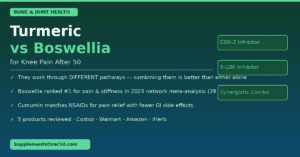
Choosing the best joint supplement stack for seniors matters more than chasing a single ingredient. Single-ingredient joint supplements get sold hard, but the evidence increasingly favors a stacked approach. Joint degeneration involves multiple mechanisms simultaneously: cartilage breakdown, synovial fluid thinning, chronic low-grade inflammation, and oxidative damage to joint tissue. No single compound addresses all of these. Glucosamine targets cartilage synthesis. Chondroitin inhibits cartilage-degrading enzymes. MSM provides sulfur for joint tissue and reduces inflammatory markers. Boswellia blocks the 5-LOX inflammatory enzyme directly. Stack them, and you’re hitting the problem from multiple angles at once.
This guide covers the science behind joint supplement stacking, what each key ingredient actually does, how to evaluate products, and which formulas combine them well. We focused specifically on seniors, where joint concerns are more advanced and the need for a systematic approach matters more.
One expectation to set upfront: joint supplements are not pain relievers. They don’t provide the rapid relief of NSAIDs. They work over weeks and months to support tissue health and reduce chronic inflammation. Patience is part of the protocol.
Table of Contents
Why a Stack Beats a Single Ingredient for Senior Joint Health
Osteoarthritis in seniors is rarely a single-pathway problem. Cartilage thins because the balance between breakdown (driven by enzymes like MMP-13) and repair (driven by chondrocytes) tips toward degradation. Inflammation accelerates this process, particularly through the 5-LOX pathway that produces leukotrienes, which are different from the COX pathway that NSAIDs target. Synovial fluid decreases, reducing the cushioning and lubrication between bones. Each of these mechanisms calls for a different intervention.
Glucosamine provides building blocks for glycosaminoglycans, which are key components of cartilage matrix. Chondroitin sulfate inhibits cartilage-degrading enzymes and contributes to water retention in cartilage (which is what gives it its shock-absorbing properties). MSM provides sulfur, which is needed for collagen cross-linking and has demonstrated reduction in inflammatory markers in clinical trials. Boswellia, specifically the AprèsFlex or 5-LOXIN extract, consistently shows reductions in joint pain and stiffness in trials, often within two weeks, faster than glucosamine alone.
Hyaluronic acid is the component of synovial fluid responsible for viscosity and joint lubrication. Oral supplementation has a smaller evidence base than intra-articular injection, but some studies show benefit for mild-to-moderate joint issues. UC-II undenatured collagen works through immune tolerance: a small 40mg dose triggers regulatory T-cells to protect joint cartilage from immune-driven breakdown. This is a completely different mechanism from collagen peptides, which are broken down in the gut and don’t work the same way.
The point of stacking is to address as many of these mechanisms simultaneously as practical, within budget and pill burden. Most senior-focused joint stacks combine three to four of these compounds, which is generally sufficient to see meaningful results over 90 days.
What to Look for in a Joint Stack
Glucosamine HCl versus glucosamine sulfate is a longstanding debate. Most large trials used glucosamine sulfate (specifically, the crystalline form). Glucosamine HCl has more glucosamine by weight and some evidence of equivalent efficacy. Either form at a 1,500mg daily dose is the standard. Be wary of products providing much less than this under a “proprietary blend” label.
For boswellia, the extract form matters enormously. Standard boswellia contains a mix of boswellic acids. The 5-LOXIN and AprèsFlex extracts are enriched for AKBA (acetyl-11-keto-beta-boswellic acid), the most active form, at around 30% concentration. Generic “boswellia extract” can be highly variable. If a label specifies 5-LOXIN or AprèsFlex, it’s a quality indicator.
Third-party testing matters for joint supplements because the industry has a history of underfilling products. The GRAS notice and general supplement label rules don’t require verification. NSF, USP, or Informed Sport testing provides assurance that what’s on the label is actually present in the dose stated.
Timeline expectations: most practitioners recommend a minimum 8 to 12 week commitment before assessing results. Some people see improvement at 4 to 6 weeks, particularly with boswellia. Others need 4 to 6 months. This is a long-term intervention, not a quick fix, and the evidence supports sustained use for ongoing benefit.
Top Picks for the Best Joint Supplement Stack for Seniors
Doctor’s Best Glucosamine Chondroitin MSM
Doctor’s Best delivers the classic three-ingredient joint stack at a price that makes daily long-term use realistic. Glucosamine HCl at 1,500mg, chondroitin sulfate at 1,200mg, and MSM at 1,000mg hit the doses studied in clinical research. Third-party tested, and Doctor’s Best has a strong track record for label accuracy. This is the starting point for most people building a joint stack.
What it lacks is boswellia or hyaluronic acid. If you want the full anti-inflammatory coverage, you’d need to add boswellia separately. But as a foundational stack, the dosing is right and the price (under $25 per month) makes sustained use practical.
🏆 Best Joint Stack Supplement for Seniors
Doctor’s Best Glucosamine Chondroitin MSM
Glucosamine HCl + chondroitin sulfate + MSM in one formula, the classic joint health trio, third-party tested
Thorne’s joint formula adds boswellia and quercetin to the glucosamine/chondroitin base, creating a broader anti-inflammatory stack with NSF Certification behind it. Quercetin is a flavonoid with antioxidant and anti-inflammatory properties that complements boswellia’s 5-LOX inhibition. The result is a formula covering cartilage synthesis, enzymatic breakdown inhibition, and inflammation from multiple angles.
At $48 per month, it’s priced at the premium end. But Thorne’s NSF Certification and manufacturing quality make it the formula most appropriate for seniors on multiple medications where ingredient purity is important. The four-ingredient approach covering distinct mechanisms justifies the cost for those who want one product rather than a multi-product stack.
NOW Foods adds hyaluronic acid to the glucosamine, chondroitin, and MSM base, which is a useful addition for seniors concerned about synovial fluid and joint lubrication. GMP certified with NOW’s strong quality track record, priced around $20. This is the best value four-ingredient stack on the market.
NOW Foods is a family-owned company with over 50 years in the supplement industry, and their quality standards are consistently above what the price suggests. If you’re managing costs but want a more comprehensive formula than the three-ingredient options, this is where to look.
🔬 Best Value Joint Supplement Stack
NOW Foods Joint Support
Glucosamine, chondroitin, MSM, and hyaluronic acid, comprehensive joint stack at an accessible price, GMP certified
Life Extension takes a different angle with ArthroMax by combining glucosamine with AprèsFlex boswellia extract and UC-II undenatured collagen. UC-II is the most interesting ingredient here: at just 40mg of undenatured Type II collagen, it works through a completely different mechanism than collagen peptides, triggering immune tolerance that reduces autoimmune attack on joint cartilage. The AprèsFlex boswellia is the standardized high-AKBA extract, not generic boswellia powder.
UC-II works very differently from the hydrolyzed collagen peptides sold for skin. Our guide to the best collagen supplement for joint health compares the two in detail.
This formula is particularly well-suited for seniors with significant cartilage loss where the immune system may be contributing to ongoing breakdown. The science behind UC-II is different enough from standard glucosamine/chondroitin that it fills a unique role in a serious joint protocol.
Jarrow’s Glucosamine, Chondroitin & MSM provides 1,500mg glucosamine sulfate, 1,200mg chondroitin sulfate and 300mg MSM per serving, with vitamin C and manganese. These are the doses most often used in joint research. Jarrow has been trusted by practitioners and supplement-savvy consumers for decades, and the formula is non-GMO, gluten-free, soy-free and dairy-free.
The three main ingredients address cartilage building blocks (glucosamine), cartilage structure (chondroitin) and sulfur for connective tissue (MSM). For seniors who want the classic joint trio in one product without paying Thorne prices, Jarrow is a strong value pick.
💰 Best Joint Mobility Stack
Jarrow Glucosamine, Chondroitin & MSM
1,500 mg glucosamine sulfate, 1,200 mg chondroitin and 300 mg MSM per serving
How to Choose the Best Joint Supplement Stack for Seniors
If you’re just starting with joint supplements, begin with a three-ingredient formula (glucosamine, chondroitin, MSM) and add boswellia separately or choose a product that includes it. The minimum effective commitment is 90 days. If you’re dealing with significant inflammatory pain in addition to stiffness, prioritize a formula with quality boswellia extract. If budget is the primary constraint, Doctor’s Best and NOW Foods both deliver adequate doses at accessible prices.
For seniors with more advanced joint degeneration or those who have already tried the standard glucosamine/chondroitin approach without results, Life Extension ArthroMax with its UC-II collagen is worth trying as a distinct mechanism. Always check with your physician if you’re on blood thinners or anti-inflammatory medications before starting a stack.
Frequently Asked Questions
What joint supplements actually work for seniors?
Glucosamine and chondroitin have mixed but supportive evidence for slowing cartilage breakdown over the long term. MSM reduces inflammatory markers in multiple studies. Boswellia, specifically the 5-LOXIN or AprèsFlex extract, has consistent evidence for reducing joint pain and stiffness. UC-II undenatured collagen is showing promising results for cartilage support through a novel immune mechanism. None of these replace medical treatment for severe arthritis, but all have meaningful evidence for mild-to-moderate joint concerns.
Should you take glucosamine and chondroitin together?
Yes. They work through complementary mechanisms. Glucosamine supports cartilage matrix production while chondroitin inhibits enzymes that break down cartilage and helps retain water in cartilage tissue. The combination has more evidence than either alone, and most clinical trials used them together. Separating them doesn’t offer additional benefit and complicates your supplement regimen.
How long before joint supplements help?
Expect at least 8 to 12 weeks before evaluating results. Joint supplements work slowly, supporting tissue repair and reducing chronic inflammation rather than providing immediate pain relief. Boswellia sometimes shows noticeable effects within two weeks. Glucosamine and chondroitin typically take longer. Commit to a minimum 3-month trial before deciding whether a formula is working.
Is boswellia better than glucosamine?
They target different mechanisms and are best used together. Boswellia blocks the 5-LOX enzyme, reducing leukotriene-driven inflammation and often producing faster noticeable relief. Glucosamine works on cartilage matrix repair over a longer timeframe. If you had to choose one for immediate pain reduction, boswellia typically shows faster results. But for long-term joint health, the combination is more valuable than either alone.
Can you take a joint stack with NSAIDs?
Generally yes, but discuss it with your physician. Boswellia and MSM have anti-inflammatory activity that may allow some people to reduce NSAID use over time, which is beneficial given the long-term GI and cardiovascular risks of chronic NSAID use in seniors. Don’t stop a prescription anti-inflammatory without medical guidance, but a joint stack can work alongside short-term NSAID use during flares.
A joint supplement stack won’t reverse arthritis or regrow severely damaged cartilage. What it can do, when used consistently over months, is slow the progression of breakdown, reduce daily inflammation, and support the joint tissue that remains. For seniors managing mild-to-moderate joint concerns, that’s meaningful. Choose a formula with clinical doses, commit to a 90-day trial, and combine it with movement practices that support joint health.
Find the best probiotic for women over 50. Compare 5 top picks for vaginal pH, odor, UTI and gut support after menopause, plus what the research shows.
Most seniors know they need calcium and vitamin D for bone health. What doesn’t come up nearly enough in that conversation is vitamin K2, the nutrient…
The best energy supplements for women over 50 fix real gaps like low B12 or iron. Check these fatigue causes first, then compare 5 non-stimulant picks.
Red yeast rice benefits and side effects explained for adults over 50: how monacolin K mirrors lovastatin, what the LDL research shows, citrinin risk and who should avoid it.
Astaxanthin is the pigment that turns salmon pink and flamingos red. More relevant to your health is what it does at the cellular level: it is the most…