
Best Digestive Enzymes for Seniors
This guide contains affiliate links. If you buy through them, we may earn a small commission at no extra cost to you.
The best digestive enzymes for seniors match the kind of digestion problem you actually have, whether that is fats, proteins, or low stomach acid. Bloating after meals, feeling uncomfortably full hours after eating, irregular digestion, or noticing undigested food in the stool — these are all signs that your digestive system isn’t breaking down food as efficiently as it used to. For seniors, this is extremely common and rarely discussed. The good news: digestive enzyme supplements directly address the underlying mechanics, and the right formula can make a significant difference in how you feel after every meal. Here’s what you need to know before choosing one.
Table of Contents
Top Picks for the Best Digestive Enzymes for Seniors
Quick Comparison
| Product | Best for | Key fact |
|---|---|---|
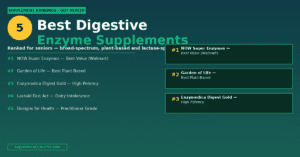
| Garden of Life Raw Enzymes 50+ | Best overall | Whole food enzyme blend with probiotics and prebiotics |
| Enzymedica Digest Gold | Best high potency | Breaks down fats, proteins, carbs and fiber |
| NOW Foods Super Enzymes | Best budget | Bromelain, ox bile, pancreatin, papain |
| Thorne Bio-Gest | Best practitioner grade | Betaine HCl + pepsin + pancreatin + bile salts |
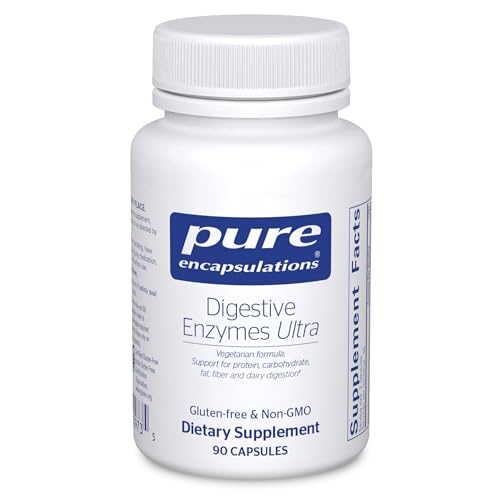
| Pure Encapsulations Digestive Enzymes Ultra | Best hypoallergenic | Broad-spectrum blend, no fillers |
Why Digestion Slows After 60
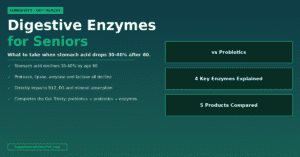
Stomach acid production naturally declines with age, a condition called hypochlorhydria. This is a bigger deal than most people realize. Adequate stomach acid is needed to activate pepsin (which breaks down protein), to signal the pancreas to release enzymes, and to kill pathogens in food. When stomach acid drops, the entire digestive cascade is compromised from the very first step.
Pancreatic enzyme output also decreases with age, and the gut lining becomes less efficient at absorbing nutrients even after they’ve been broken down. Medications common in seniors, particularly proton pump inhibitors (PPIs) and metformin, compound the problem by further reducing stomach acid or interfering with B12 absorption. The result is that many seniors are eating adequate diets but still experiencing nutritional deficiencies because they can’t properly digest and absorb what they eat.
 ✓ In stock
For background on common digestive symptoms and when to see a doctor, see MedlinePlus on Indigestion. If gut bacteria or regularity is your bigger concern, read Best Probiotic for Men Over 60 and Metamucil vs Benefiber vs Citrucel.
Popular Supplement Guides:



Proteases, Lipases, and Amylases: What Each One Does
Digestive enzymes are categorized by what they break down. Proteases break down protein into amino acids. Lipases break down dietary fat into fatty acids and glycerol. Amylases break down starches and complex carbohydrates into simpler sugars. A comprehensive digestive enzyme supplement should include all three classes, ideally with additional enzymes like cellulase (for plant fiber), lactase (for dairy), and alpha-galactosidase (for legumes and cruciferous vegetables).
The potency of enzyme supplements is measured in activity units, not milligrams. Labels will list things like “10,000 HUT” (for proteases) or “1,500 FIP” (for lipases). Higher activity units generally mean a more potent formula, though matching the enzyme profile to your specific digestive issues matters more than chasing the highest numbers on every metric. If fat digestion is your main problem, prioritize lipase activity. If you’re primarily struggling with protein-heavy meals, protease levels matter most.
Some formulas include ox bile extract alongside enzymes. Bile is produced by the liver and stored in the gallbladder, and it’s essential for fat emulsification before lipases can do their job. Seniors who’ve had their gallbladder removed often find that adding ox bile extract dramatically improves fat digestion.
 ✓ In stock
Signs You May Need Digestive Enzymes
The clearest signs are digestive symptoms that consistently follow meals: bloating, gas, cramping, belching, or the sensation that food is sitting heavily in your stomach for hours. If you notice that certain food categories — fatty meals, high-protein meals, dairy, or beans and cruciferous vegetables — are particularly problematic, that points to deficiencies in specific enzyme classes. Fatty food intolerance is often a lipase or bile issue. Gas and bloating from vegetables often responds to cellulase and alpha-galactosidase.
Nutritional deficiencies despite a reasonable diet are another red flag. If your bloodwork shows low iron, B12, or other nutrients even though you eat a varied diet, poor absorption is a likely culprit. Digestive enzyme supplementation can meaningfully improve nutrient extraction from food, often producing measurable improvements in lab values over a few months.
 ✓ In stock
Betaine HCl vs Plant Enzymes vs Pancreatic Enzymes
Betaine HCl is not an enzyme, but it belongs in any honest discussion of digestive support for seniors. It’s a supplement form of hydrochloric acid that directly replenishes the stomach acid that seniors are often lacking. When stomach acid is the primary bottleneck, Betaine HCl often works better than enzyme supplements alone because it restores the very first step in digestion. It should be taken with protein-containing meals and avoided by anyone with ulcers or gastritis.
Plant-based enzymes (from sources like bromelain from pineapple, papain from papaya, and fungal-derived enzymes) are active across a wider pH range than pancreatic enzymes. This matters because they stay active in the variable pH environment of the stomach and small intestine, whereas pancreatic enzymes are optimally active only in the more alkaline small intestine. Pancreatic enzymes (pancreatin) are extracted from animal sources and contain the full range of proteases, lipases, and amylases in highly concentrated form — they’re particularly useful when pancreatic insufficiency is suspected.
 ✓ In stock
How to Take Digestive Enzymes for Best Results
Timing is everything with digestive enzymes. They need to be present in the gut when food arrives, so the standard recommendation is to take them right at the start of a meal or within the first few bites. Taking them 20 minutes before eating or after you’ve finished eating significantly reduces their effectiveness. The enzymes need to mix with food as it’s being digested, not wait around for food that’s already moved through.
Start with a lower dose and adjust based on response. Some people find that one capsule with each meal is enough, while others need two or three for larger or heavier meals. Digestive enzymes are generally very safe for long-term use because they work entirely within the gut and are not systemically absorbed. There’s no evidence that taking exogenous enzymes causes the body to produce fewer of its own, a common worry that has not been borne out in research.
 ✓ In stock
How to Choose the Best Digestive Enzymes for Seniors
Garden of Life Raw Enzymes 50+ is purpose-built for this demographic and adds probiotics and prebiotics that support overall gut health alongside enzyme activity. Enzymedica Digest Gold is the go-to for people who want maximum enzyme potency and fast-acting relief from heavy meals. NOW Super Enzymes delivers excellent coverage at a fraction of the cost and includes ox bile, making it particularly good for anyone with fat digestion issues. Thorne Bio-Gest is the right call when low stomach acid is the suspected root cause, thanks to its Betaine HCl and pepsin combination. Pure Encapsulations Digestive Enzymes Ultra is the best option for seniors with multiple food sensitivities or allergies, given its clean, minimal-filler formulation and rigorous third-party testing standards.
Frequently Asked Questions
Should seniors take digestive enzymes?
Not everyone needs them, but anyone experiencing persistent bloating, uncomfortable fullness, gas after meals, or digestive symptoms that have worsened with age is a reasonable candidate. They’re worth trying for 4–6 weeks to see whether symptoms improve. The risk profile is very low.
When is the best time to take digestive enzymes?
Take them at the start of a meal or with the first few bites of food. This ensures they’re actively present when digestion begins. Taking them after a meal or on an empty stomach reduces their effectiveness substantially.
Are digestive enzymes safe for long-term use?
Yes, for the vast majority of seniors. They act locally in the gut and are not absorbed into the bloodstream. Long-term use does not appear to suppress the body’s own enzyme production. People with pancreatitis or inflammatory bowel disease should check with their doctor first.
Can digestive enzymes help with IBS?
They can reduce some IBS symptoms, particularly bloating and gas, but they’re not a treatment for IBS itself. Specific enzymes like alpha-galactosidase (which breaks down the oligosaccharides in beans and vegetables) can dramatically reduce gas production from high-FODMAP foods, which is relevant for IBS sufferers who want to eat a broader diet.
Digestive discomfort is so normalized in older adults that many seniors assume it’s just part of aging. Often it isn’t. The underlying mechanism is usually addressable with the right enzyme formula, and the quality-of-life improvement from eating without bloating and discomfort is significant. Start with the product that best matches your specific symptoms and adjust from there.
Related Articles
- Urolithin A Supplement for Seniors: Does It Work?
- Best Probiotic for Women Over 60: Strains, Dosing & Top Picks (2026)
- Digestive Enzymes for Seniors: What to Take When Stomach Acid Drops After 60
- 5 Best Probiotics for Seniors — Ranked by Strain and CFU Count
- 5 Best Gut Health Supplements for Seniors — Probiotics, Prebiotics and More (2026)