This guide contains affiliate links. If you buy through them, we may earn a small commission at no extra cost to you.
We have not tested these devices ourselves. This guide compiles each brand’s published specs and plan terms, CDC and NCOA guidance, and patterns in verified buyer reviews.
⚡ Quick Answer
Life Alert does not publish its prices. Reviewers who called for quotes report a higher monthly rate than most competitors, a one-time setup fee, a three-year contract and no fall detection. Cheaper alternatives we would compare first:
LifeFone: best overall value, with no activation or equipment fees and cancel any time.
Bay Alarm Medical: best for in-home coverage and a smartwatch option.
MedicalAlert: best for language support and a simple caregiver app.
ADT Health: best for existing ADT customers who want a month-to-month plan.
Life alert cost is one of the most searched questions in senior safety, and for a simple reason: Life Alert will not tell you online. Its website has a page titled “Life Alert Cost,” but instead of prices it lists plan types and asks you to call for a free quote. That leaves families guessing, and it puts you on a sales call before you know whether the service fits your budget.
We pulled together what Life Alert itself says, plus the prices that three independent review sites were quoted on recent sales calls, so you can walk into that call informed. You will find the reported monthly rates, the one-time fee, the contract terms, whether Life Alert has fall detection, and how the total compares with cheaper alternatives such as LifeFone, Bay Alarm Medical, MedicalAlert and ADT. Every figure is attributed to the page it came from.
Table of Contents
How Much Does Life Alert Cost? Reported Prices
Because Life Alert quotes by phone, the numbers below come from review sites that called and published what they were told. They are close but not identical, which tells you prices vary by package and by sales rep. Treat them as a starting point and get your own written quote.
Putting those reports together, a realistic Life Alert cost is about $70 a month for a basic in-home setup and about $90 a month once you add a wearable upgrade or the mobile GPS device, plus a one-time fee in the $95 to $248 range. SafeHome noted that while pricing technically starts at $49.95, Life Alert required at least one device on top of the base system, so its effective starting price was $69.95. The Senior List reported that paying a year up front earned one free month, bringing its $89.95 plan down to about $82.36 a month, which matches the “1 month free” offer on Life Alert’s homepage for members who pay one year in advance.
How Much Is Life Alert per Month?
If you just want the monthly number: expect roughly $70 to $90 a month based on the three reports above, depending on which devices you choose. That is well above the $25 to $40 range most competitors advertise for comparable in-home service. Life Alert says its pricing stays the same for the life of your membership (it calls this a Price Lock Guarantee), so whatever monthly rate you agree to is the rate you should expect to keep paying.
What Life Alert Itself Says About Cost
Life Alert’s own cost page does not list a single dollar figure. What it does promise, at the time of writing:
No hidden fees and a complete cost breakdown from its care specialists on the phone.
Free use of equipment, including installation and ongoing technical support. (Reviewers were still quoted a one-time equipment, activation or membership fee, so ask exactly what that fee covers.)
A Price Lock Guarantee, meaning your rate does not rise during your membership.
Free ground shipping, a free gift with purchase, and one month free when you pay a year in advance.
A veteran discount for U.S. veterans, active duty service members and eligible family members, per its veterans page. The amount is not published; you have to call.
What You Get for the Money
Life Alert keeps its lineup small. According to its website, the system is built around four pieces of equipment:
Main unit: the in-home base station, with a range of up to 1,000 feet so you are covered in the house and yard. Life Alert also offers landline options for rural areas with weak cell coverage.
Micro Voice Pendant: a waterproof wearable with two-way voice, worn around the neck or on the wrist, so you can talk to the dispatcher from the pendant itself.
Wristband Button: a wrist-worn help button that connects to the main unit.
HELP Button: a wall-mounted button for rooms where falls are common, such as the bathroom. SafeWise and SafeHome both report it is waterproof and has two-way talk.
HELP On-the-Go + GPS: a small mobile button that works anywhere with AT&T cellular coverage in the U.S., shares your location with the dispatcher, and, per Life Alert’s GPS device page, never needs charging and is fully waterproof.
Two genuine strengths stand out. First, battery life: Life Alert says its devices never need charging, and reviewers report a battery life of up to 10 years with batteries replaced by Life Alert. Most mobile medical alerts need charging every few days. Second, Life Alert runs its own U.S.-based dispatch centers and says dispatchers stay on the line until help arrives. If your parent cannot speak, Life Alert says it will still send help to the home address on file for the in-home devices, though GPS activations require verbal confirmation.
What you do not get is just as important. Life Alert has no caregiver app (its FAQ says apps rely on a charged phone and a user who can operate it in an emergency), and caregivers cannot see the mobile device’s location. And, as the next section explains, there is no fall detection.
Does Life Alert Have Fall Detection?
No. Life Alert does not offer automatic fall detection on any of its devices. We searched every Life Alert product, cost and FAQ page we opened and found no mention of fall detection, and all three review sites we checked state it plainly: SafeWise lists “No fall detection” as a con, SafeHome says Life Alert “still doesn’t offer fall detection,” and The Senior List notes you must press the button to trigger a call.
That matters for a brand famous for the line “I’ve fallen and I can’t get up.” If a fall leaves your parent unconscious, disoriented or unable to reach the button, a Life Alert system cannot send an alert on its own. Fall detection is not perfect on any brand (ADT and MedicalAlert both state theirs does not detect 100% of falls), but the alternatives below offer it for about $5 to $11 extra a month. For a deeper look at how automatic detection works, see our guide to the best fall detection devices for seniors.
Why the Total Cost Matters After 50
A medical alert is a long-term expense, so the monthly rate is only half the story. Falls are the reason most families shop for one. The CDC’s Facts About Older Adult Falls page says more than one in four adults 65 and older falls each year, less than half tell their doctor, and falling once doubles the chance of falling again. CDC counts about 4.5 million emergency department visits a year from older adult falls, with 1.4 million hospitalizations.
Those numbers make a monitored button worth having. They also mean you will probably keep paying for it for years. That is why the contract term and the one-time fee affect the true Life Alert cost more than a $10 difference in the monthly rate.
Life Alert Contract: The Three-Year Commitment
This is the part of the Life Alert cost that surprises people most. All three review sites report that Life Alert requires a three-year contract:
SafeWise says Life Alert requires a three-year minimum contract, offers no trial period or early cancellation, and lets you cancel only if the user needs 24/7 care, moves to an assisted living facility or nursing home, or passes away.
SafeHome says all plans lock you into a three-year contract.
The Senior List describes the contract as practically unbreakable unless you pass away or need round-the-clock care or a care facility.
Life Alert’s own FAQ is consistent with that, in softer language. It says that if you need to cancel, its Customer Care team will walk you through “the process and requirements depending on your circumstance,” that specific documentation may be required, and that calling in “does not always result in being released from your Life Alert Service Agreement.” Its online Terms and Conditions page was blank when we checked, so ask for the full service agreement in writing before you agree to anything.
What Three Years of Life Alert Really Costs
Here is the math on a three-year term, using the reported figures. A basic home system at about $69.95 a month comes to about $2,518 in monitoring over 36 months, or roughly $2,716 with a $198 fee. A pendant or mobile package at about $89.95 a month is about $3,238 in monitoring, or roughly $3,486 with the $248 fee SafeWise was quoted. SafeWise put its own floor at “at least $2,700” for the first three years. Paying annually can shave off a month a year, but it does not change the commitment.
Compare that with the alternatives below. Because they let you cancel at any time, you never owe more than the months you actually use, which matters if your parent moves in with family, goes into the hospital for a long stay, or simply stops wearing the device.
Life Alert Cost vs Cheaper Alternatives
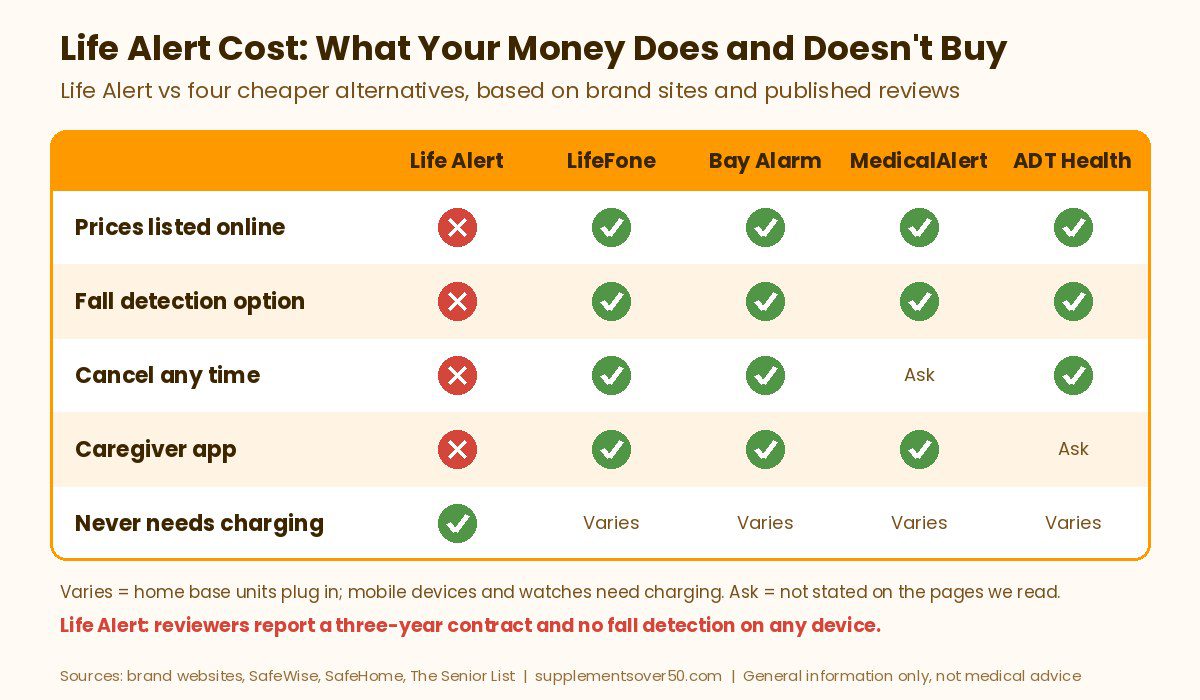
Here is how the Life Alert cost stacks up against four brands that publish their prices online, using each brand’s own site at the time of writing. Starting rates usually depend on billing term and connection type, so check current pricing before you buy.
Brand
Starting monthly rate
Fall detection
Upfront costs
Contract terms (per brand)
Life Alert (reported)
About $69.95 to $89.95
Not offered
About $95 to $248 one-time fee
Three-year contract, per reviewers
LifeFone
From about $24.95 (at-home landline, annual plan); about $30.95 cellular; about $37.95 VIP Active mobile
+$5/mo
No activation or equipment fees
Cancel any time, pay only for time used; 30-day money-back guarantee
Bay Alarm Medical
From about $27.95 (home landline); about $34.95 home cellular or mobile; about $39.95 smartwatch
Home cellular about $44.95 with a $30 fall button fee; mobile versions extra
Home consoles leased free; mobile device purchase about $149, smartwatch about $199 (often discounted)
No long-term contract, cancel any time without cancellation fees; 15-day risk-free trial
MedicalAlert
From about $29.95
Optional add-on
Ask for a full quote
Ask for the subscriber agreement; we could not find minimum terms online
ADT Health
About $37.99 (Medical Alert Plus) to $39.99 (On-The-Go) with quarterly or annual billing
+$11/mo
Activation $99, waived with quarterly or annual billing under ADT’s current promo
Month-to-month, no termination fees, per ADT’s terms
Even the most expensive alternative here, ADT, comes in well below the reported Life Alert starting price, and every one of them offers fall detection. Over three years, a LifeFone at-home landline plan with fall detection added (about $29.95 a month) works out to roughly $1,078, less than half of the cheapest Life Alert scenario above.
Best Cheaper Alternatives to Life Alert
1. LifeFone (Best Overall Value)
LifeFone is the alternative we would price first. Its at-home landline plan starts at about $24.95 a month on an annual plan, at-home cellular at about $30.95, and the VIP Active mobile pendant at about $37.95, according to its product pages. Automatic fall detection is just $5 more per month. The homepage lists no activation or equipment fees, a 30-day money-back guarantee, a lifetime subscriber price and equipment guarantee, free protection for a spouse on basic service, and cancellation at any time with payment only for the time used.
That last point is the clearest contrast with Life Alert’s reported three-year contract. LifeFone matches Life Alert’s price lock promise while letting you walk away whenever you want, and it adds fall detection that Life Alert does not offer at all.
BEST OVERALL VALUE
LifeFone
At-home landline and cellular systems plus mobile GPS pendants, with optional fall detection, no activation or equipment fees, and a 30-day money-back guarantee, per LifeFone.
2. Bay Alarm Medical (Best for Home Coverage and Smartwatch)
Bay Alarm Medical lists its prices openly on its pricing page: about $27.95 a month for the landline SOS Home, about $34.95 for home cellular, about $34.95 for mobile devices such as the SOS All-In-One 2 and SOS Micro, and about $39.95 for the SOS Smartwatch. Home consoles are leased free of charge and returned on cancellation; the mobile devices and smartwatch require a device purchase, which its pricing page lists at about $149 and $199 before discounts.
Fall detection is available on home cellular for about $44.95 a month, which includes an extra fall detection button with a $30 device fee, and on the mobile devices for an added monthly charge. Bay Alarm offers a 15-day risk-free trial, and its FAQ says it does not require a long-term contract and you may cancel at any time without cancellation fees; its cancellation page adds that in-home accounts close once the leased console is returned and inspected. If your parent would rather wear a watch than a pendant, Bay Alarm is one of the few brands with a true medical alert smartwatch.
BEST FOR HOME COVERAGE AND SMARTWATCH
Bay Alarm Medical
Landline and cellular home systems, GPS mobile devices and an SOS smartwatch, with optional fall detection and a 15-day risk-free trial, per Bay Alarm Medical.
MedicalAlert says its systems start at about $29.95 a month, with a cellular home system covering up to 800 feet and mobile systems and a smartwatch that include GPS. Fall detection is available on all of its systems, and its Medical Alert Connect app sends loved ones real-time notifications of emergencies, something Life Alert does not offer.
Its FAQ says response center operators can use a language line for real-time translation in 140 languages, and its help buttons are waterproof up to one meter for 30 minutes. MedicalAlert does not publish a subscriber agreement on its site that we could find, so ask about minimum terms and return fees before you order.
BEST FOR LANGUAGE SUPPORT
MedicalAlert
Cellular home, mobile GPS and smartwatch systems with optional fall detection, a caregiver alert app and real-time translation in 140 languages, per MedicalAlert.
ADT Health sells two medical alert packages online: Medical Alert Plus for the home and the On-The-Go mobile device. With quarterly or annual billing, Plus is about $37.99 a month and On-The-Go about $39.99, and ADT’s current promotion waives the $99 activation fee and shipping. Fall detection adds about $11 a month, and the On-The-Go device offers integrated fall detection with no separate pendant.
ADT’s terms describe month-to-month service with no termination fees, though quarterly or annual billing means you pay those months up front. Its pendants and wristbands are rated waterproof up to 3 feet for 30 minutes, and its FAQ mentions loyalty discounts for existing ADT security customers. It costs more than LifeFone or Bay Alarm, but it is still well below the reported Life Alert price.
BEST FOR EXISTING ADT CUSTOMERS
ADT Health Medical Alert
In-home and mobile medical alerts with optional fall detection, 24/7 monitoring and a premium protection plan included, on month-to-month terms, per ADT.
How to Choose: Life Alert or a Cheaper Alternative
If you never want to charge anything and you are fine with a long contract, Life Alert’s no-charge devices and own dispatch centers are its real selling points. Get the quote and the full service agreement in writing first.
If fall detection matters, skip Life Alert. LifeFone adds it for about $5 a month, ADT for about $11.
If you want the lowest total cost, start with LifeFone’s at-home plan, which has no setup fees and no contract.
If your parent would rather wear a watch, look at Bay Alarm Medical’s SOS Smartwatch or MedicalAlert’s smartwatch.
If family wants alerts on their phones, choose a brand with a caregiver app, such as MedicalAlert or Bay Alarm Medical. Life Alert has none.
If your parent is a veteran, ask Life Alert about its veteran discount, and also ask the VA whether a medical alert benefit applies.
Whichever company you call, ask the same questions: the total due on day one, the monthly rate after any promotion, the fall detection price, the minimum term, and exactly when you can cancel. If your parent also manages several prescriptions, our roundup of the best medication reminders for seniors pairs well with a medical alert, and our list of thoughtful gifts for aging parents has more safety ideas. For keeping an eye on heart health at home, see our guide to choosing a home blood pressure monitor.
Does Medicare Cover Life Alert Cost?
Usually not. According to the National Council on Aging, Original Medicare (Parts A and B) does not pay for medical alert systems. Some Medicare Advantage plans cover part or all of the cost, most state Medicaid programs do not (though it is worth asking yours), and the VA offers medical alert benefits to qualified veterans. Long-term care insurance and HSA or FSA funds may also help. If you have a Medicare Advantage plan, call the plan and ask which medical alert providers it works with; it may not include Life Alert.
Who Life Alert Is Not Right For
Anyone at high risk of falls who may not be able to press a button. Without fall detection, Life Alert depends on the user activating it.
Families on a tight budget. The reported monthly rate is roughly double most competitors, and the three-year term multiplies that gap.
People whose living situation may change soon. If a move in with family or a short-term rehab stay is possible, a cancel-anytime plan is safer.
Caregivers who want to track location or device status. Life Alert has no app.
Anyone who dislikes high-pressure sales calls. You cannot buy or price Life Alert online, and SafeWise reported multiple follow-up calls and texts after its quote.
A medical alert summons help; it does not prevent falls. Strength and balance work, a medication review with a doctor and removing tripping hazards at home still matter most. If your parent has a fall, tell their doctor, even if they feel fine; CDC notes that less than half of older adults who fall do.
Frequently Asked Questions
How much does Life Alert cost per month?
Life Alert does not publish prices. Review sites that called for quotes report about $69.95 a month for a basic in-home system and about $89.85 to $89.95 for packages with a pendant upgrade or the mobile GPS device. Get your own written quote, since prices vary by package.
Does Life Alert have fall detection?
No. None of Life Alert’s devices offer automatic fall detection, according to SafeWise, SafeHome and The Senior List, and Life Alert’s own product pages do not mention it. You must press the button to call for help.
Is there a Life Alert contract?
Yes. Reviewers report a three-year contract on all plans, with cancellation generally allowed only if the user needs 24/7 care, moves into a care facility or passes away. Life Alert’s FAQ says calling in does not always release you from the service agreement.
Are there setup fees on top of the monthly Life Alert cost?
Reviewers were quoted a one-time fee of about $95 to $248, described as an equipment, activation or membership fee. Life Alert advertises free use of equipment and free shipping, so ask exactly what the one-time fee covers.
Does Medicare pay for Life Alert?
Original Medicare does not cover medical alert systems, according to the National Council on Aging. Some Medicare Advantage plans cover part of the cost, and the VA offers medical alert benefits to qualified veterans. Life Alert also advertises a veteran discount.
What is a cheaper alternative to Life Alert?
LifeFone starts at about $24.95 a month on an annual plan with no activation or equipment fees, fall detection for $5 more, and cancel any time. Bay Alarm Medical, MedicalAlert and ADT Health also cost less and offer fall detection. Check current pricing.
Our Take
The Life Alert cost is high for what you get. Based on the quotes three review sites published, you are looking at about $70 to $90 a month, a one-time fee of up to about $248, and a three-year contract that is hard to leave, all for a system without fall detection or a caregiver app. Its no-charge devices and long track record are real advantages, and some families will value them. For most people, though, LifeFone, Bay Alarm Medical, MedicalAlert or ADT will deliver the same 24/7 monitoring plus fall detection for far less over three years, with the freedom to cancel. Get two or three quotes, compare the full three-year total, and choose the device your parent will actually wear.
This article is for general information only and is not medical or financial advice. Life Alert prices are as reported by third-party review sites from their own sales calls; other brands’ prices and terms were taken from their websites at the time of writing. All may change. Fall detection does not detect every fall. Call 911 in an emergency.
The best hearing aid for small ear canals is usually a receiver-in-canal or slim behind-the-ear model with small domes. See 5 fit-first picks and sizing tips.
Looking for the best cheap hearing aid Amazon sells? 5 budget OTC hearing aids worth buying, how to spot amplifiers, and what “FDA registered” really means.
Jabra Enhance hearing aids reviewed: Select M1, M2 and M3 vs Pro 30 and Plus, OTC vs prescription, remote audiology, trial, warranty, pricing and where to buy.
Medical alert systems for seniors with no monthly fee: 5 smartwatch, autodial and pager picks, what you give up without monitoring, and when to pay for 24/7 help.
The best medical alert systems for seniors compared: Bay Alarm Medical, Medical Guardian, LifeFone, MedicalAlert and 2 Amazon options, with fall detection and contract terms.