This guide contains affiliate links. If you buy through them, we may earn a small commission at no extra cost to you.
Finding the best calcium supplement for men over 50 starts with a fact most men never hear. Bone loss in men gets far less attention than it does in women, but the physiology is real. Men begin losing bone density in their mid-thirties, and the rate accelerates after 50 as testosterone declines. By age 70, roughly one in four men has osteoporosis, yet most have never had a bone density scan and have never been told they need to protect their skeletal health with the same seriousness applied to heart health or prostate health.
Calcium is the most abundant mineral in bone and the most widely discussed nutrient for bone health, but the story is more complex than simply swallowing more calcium. How much you absorb, what form of calcium you use, when you take it, and whether you have adequate vitamin D3 and K2 to make that calcium do the right thing all matter significantly. Getting these details wrong explains why some calcium supplementers see benefits and others see soft-tissue calcification concerns.
This guide covers the full picture and identifies the products that get the details right.
Table of Contents
Why Calcium Matters for Men After 50
Bone is living tissue that undergoes continuous remodeling. Osteoblasts build new bone while osteoclasts break down old bone. In younger men, this cycle stays roughly in balance. After 50, the balance shifts toward more breakdown than formation. Testosterone plays a role in maintaining osteoblast activity, and declining testosterone levels after 50 contribute directly to accelerated bone loss in men.
Calcium is the primary mineral substrate for bone matrix. If you are not consuming enough daily, your body draws calcium from your bones to maintain blood calcium levels, which the body treats as a higher priority than skeletal density. Consistent low calcium intake over years produces measurable bone density loss that does not announce itself until a fracture occurs.
The fracture risk from osteoporosis in men is significant. Hip fractures in men carry a higher mortality rate than in women, partly because they are diagnosed at more advanced stages and partly because older men have less physiological reserve. This is not an abstract statistical concern; it is a direct threat to mobility and independence in later decades.
Dietary calcium comes first, and most men should evaluate their actual intake honestly before supplementing. Dairy products are the densest source, but sardines with bones, fortified plant milks, tofu made with calcium sulfate, and dark leafy greens also contribute meaningfully. A man getting 800mg from diet may only need a 200-400mg supplement to close the gap rather than the 1000mg tablets that are often defaulted to.
The form of calcium is the most consequential purchasing decision. Calcium citrate and calcium carbonate are the two dominant forms. Calcium carbonate is cheaper and provides more elemental calcium per pill, but it requires adequate stomach acid to dissolve and absorb effectively. Men over 50 have naturally declining gastric acid production, and men on proton pump inhibitors for acid reflux have profoundly reduced stomach acid. For these groups, calcium carbonate is poorly absorbed. Calcium citrate absorbs at reasonable levels with or without food and without dependence on stomach acid, making it the better choice for most men in this age group.
Absorption limit per dose: research consistently shows that the body absorbs no more than 500mg of elemental calcium at a single time. Anything above that passes through largely unabsorbed. This means a single 1000mg calcium carbonate tablet is not delivering 1000mg of absorbed calcium. If your total supplemental dose is above 500mg, split it into two separate doses taken at different meals.
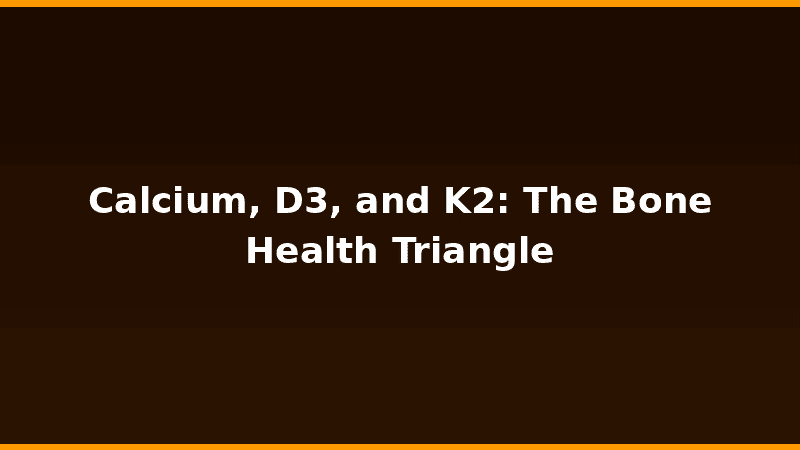
Vitamin K2 is the critical co-factor that is often missing from calcium supplements. K2 as MK-7 activates matrix Gla protein, which prevents calcium from depositing in arteries and soft tissue. Without adequate K2, supplemental calcium can contribute to arterial calcification. Without adequate D3, calcium absorption from the gut is reduced by 60-80%. Look for calcium products that include D3 and K2, or plan to take them alongside your calcium supplement.
Top Picks for the Best Calcium Supplement for Men Over 50
Thorne Calcium-Magnesium Malate
Thorne’s Calcium-Magnesium Malate is the practitioner-grade pick for men who want calcium and magnesium together. It uses Albion mineral malates rather than carbonate, and the product is third-party contents certified, which verifies that what is in the bottle matches the label. Like citrate, chelated malate forms do not rely on stomach acid the way carbonate does.
Magnesium is often overlooked in bone health discussions, but roughly 60% of the body’s magnesium is stored in bone, and magnesium deficiency impairs both calcium absorption and vitamin D metabolism. Getting both minerals in one formula at the right ratio addresses that gap directly. Add a K2-MK7 supplement to complete the bone health triangle.
🏆 Best Calcium Supplement for Men Over 50
Thorne Calcium-Magnesium Malate
Calcium and magnesium as Albion mineral malates, third-party contents certified
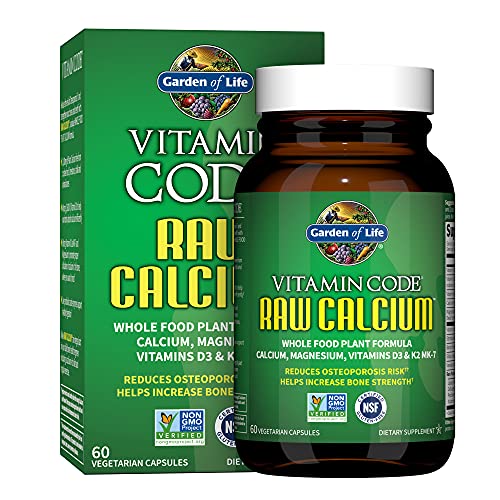
Garden of Life’s whole-food approach to calcium uses AlgaeCal RAW, a plant-based calcium from algae that naturally comes with trace minerals. Four capsules provide 1,100mg of AlgaeCal along with magnesium, boron and silica, and the formula includes D3 and K2, addressing the full routing and absorption stack in one product.
The food-matrix calcium from algae is claimed to absorb more effectively than isolated calcium salts, though the clinical evidence for this specific claim is less robust than for calcium citrate versus carbonate. For men who prefer whole-food sourced nutrition and want D3 and K2 built into the calcium formula, this is the most complete single-product option on the list.
⚡ Best Whole-Food Calcium for Men
Garden of Life Vitamin Code Raw Calcium
Plant-based AlgaeCal calcium with magnesium and vitamins D3 and K2, Non-GMO Project Verified
Solgar’s calcium-magnesium-D3 formula uses a blend of calcium carbonate and citrate, hitting a middle ground on cost and absorption. At 200IU D3 per serving, it provides some vitamin D contribution though most men will want to supplement D3 more aggressively. The magnesium addition makes this more complete than a simple calcium supplement, and Solgar’s quality standards are reliably high across their catalog.
With over 15,000 reviews, this is one of the most widely used calcium formulas on the market, and consistent strong ratings suggest the formula works well for a broad population. Best suited for men with normal gastric acid production who can maximize carbonate absorption by taking it with meals.
🔬 Best Calcium-Magnesium-D3 Stack
Solgar Calcium Magnesium with Vitamin D3
Calcium carbonate and citrate blend with magnesium and 200IU D3, balanced bone support formula, non-GMO, kosher
Life Extension’s calcium citrate product delivers 300mg of elemental calcium per serving with D3, using the citrate form exclusively. At roughly twelve dollars a bottle, it is the best value entry to citrate-based calcium from a brand with pharmaceutical manufacturing standards. The lower per-serving dose of 300mg makes it easy to take twice daily to reach 600mg supplemental calcium without exceeding the per-dose absorption limit.
For men who want citrate’s absorption advantages but prefer a more gradual supplementation approach, this 300mg format is well-designed. Add a separate K2 supplement to complete the protocol.
🌿 Best Value Calcium Citrate
Life Extension Calcium Citrate with Vitamin D
Calcium citrate 300mg per serving with vitamin D3, the better-absorbed form of calcium, no carbonate, affordable Life Extension quality
NOW Foods provides the most affordable calcium citrate formula on this list while including magnesium, zinc, and vitamin D3 in the same tablet. GMP certified, with a formula that covers several co-factors that calcium supplementation requires without making you buy them separately. The zinc addition is worth noting for men specifically, as zinc plays roles in bone matrix protein production alongside its better-known hormonal functions.
With nearly 18,000 reviews at 4.6 stars, this is a proven formula at a budget price. If cost is a primary consideration and you want citrate form with multiple co-factors included, NOW Foods is the clear winner.
💰 Best Budget Calcium Citrate
NOW Foods Calcium Citrate
Calcium citrate with magnesium, zinc, and vitamin D3, GMP certified, budget-friendly without sacrificing the better-absorbed citrate form
How to Choose the Best Calcium Supplement for Men Over 50
Men on acid-suppressing medications should avoid calcium carbonate. NOW Foods Calcium Citrate is the most affordable citrate option with good co-factors; Thorne Calcium-Magnesium Malate is a chelated, non-carbonate alternative if budget allows. Men with healthy digestion who take calcium with meals can consider Solgar’s citrate-carbonate blend at a lower cost. For a complete all-in-one formula with K2 included, Garden of Life is the most convenient but also most expensive option.
Whatever product you choose, remember the 500mg absorption ceiling. Do not take more than 500mg of elemental calcium at a single sitting. Split your daily supplement dose, and count your dietary calcium first so you are not supplementing past what you actually need. More is not better with calcium; the goal is adequacy, not excess.
Frequently Asked Questions
Do men need calcium supplements after 50?
Men lose bone density after 50, though more gradually than women do post-menopause. Osteoporosis in men is underdiagnosed and undertreated because of the perception that it is primarily a women’s condition. Men who do not consistently get 1000-1200mg of calcium daily through diet are reasonable candidates for supplementation, particularly those with low dairy intake, sedentary lifestyles, or family history of osteoporosis.
How much calcium should men over 50 take?
The recommended dietary allowance for men over 50 is 1000mg per day, rising to 1200mg after age 70. Supplement doses above 500mg at a time are poorly absorbed, so if you’re supplementing more than that, split it into two doses taken several hours apart. Count dietary calcium first; most men get 500-700mg from food, meaning a supplement gap of 300-500mg is common.
Is calcium carbonate or citrate better for men?
Calcium citrate is better absorbed regardless of stomach acid levels and can be taken with or without food. Calcium carbonate requires stomach acid for dissolution, which makes it less effective for men with reduced gastric acid production, a common condition after 50. Men taking proton pump inhibitors or H2 blockers for acid reflux should specifically use citrate. For healthy men with normal digestion, carbonate taken with food is an acceptable option at lower cost.
Does calcium cause heart problems?
The concern about calcium and cardiovascular risk arose from observational studies suggesting supplemental calcium without vitamin K2 may increase arterial calcification. Vitamin K2 as MK-7 activates matrix Gla protein, which prevents calcium from depositing in arterial walls and directs it to bone instead. Taking calcium with K2 addresses the routing problem. The evidence against calcium supplementation at recommended doses in people with adequate K2 is not compelling.
Should men take calcium with K2?
Yes, strongly so. K2 as MK-7 activates the proteins that route calcium to bone tissue rather than soft tissue and arteries. Many calcium supplements now include K2; if yours does not, add a separate K2 supplement at 100-200mcg MK-7 daily, the range used in research. D3 is equally important for calcium absorption, so the practical stack is calcium plus D3 plus K2.
Calcium supplementation for men over 50 works when you get the fundamentals right: use citrate form if there is any question about your gastric acid, respect the 500mg per-dose absorption ceiling, and do not take calcium in isolation from D3 and K2. The bone health triangle of calcium, D3, and K2 is where the evidence converges. Choose a product that addresses at least two of those three, add what is missing separately, and commit to consistency. Bone remodeling is a slow process, and the benefits of protecting it compound over years rather than weeks.
Discover the best joint supplement stack for seniors to reduce stiffness, improve mobility, and support healthy cartilage. Boost your active lifestyle today!
Sea moss has attracted remarkable attention, fueled largely by social media claims about its mineral content and the cultural popularity of Dr. Sebi’s…
Looking for the best quercetin supplement? We compare 5 picks for seniors and explain phytosome absorption, senolytic hype, blood pressure data and interactions.