Supplements for Dry Winter Skin Over 50: What Helps From the Inside
This guide contains affiliate links. If you buy through them, we may earn a small commission at no extra cost to you.
If your skin feels tight, rough and itchy every winter, you are not imagining it. Dry winter skin is one of the most common complaints after 50. Cold outdoor air holds little moisture, indoor heating dries it out further and aging skin is less able to hold on to water than it used to be. The result is the flaky shins, cracked knuckles and itchy back that send many people looking for something to take from the inside.
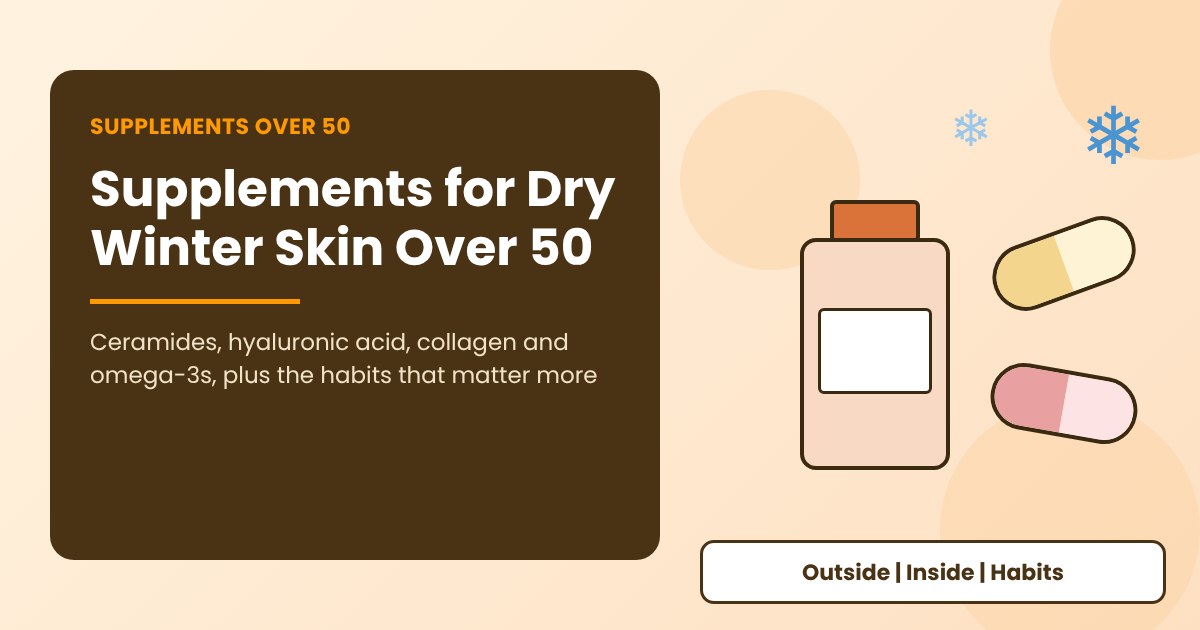
Supplements for dry winter skin can play a supporting role, but the evidence is modest, and they work best alongside the basics: a good moisturizer, shorter, cooler showers and a humidifier. This guide explains why skin gets drier with age, what the research says about ceramides, hyaluronic acid, collagen and omega-3s, and which products we would choose. Product details come from the Amazon listings.
Table of Contents
Supplements for Dry Winter Skin: Quick Comparison
| Product | Type | Best for | Evidence |
|---|---|---|---|
| Sports Research Phytoceramides (top supplement pick) | Oral ceramides | Skin hydration from the inside | Small trials, promising |
| Life Extension Skin Restoring Ceramides | Oral ceramides | Alternative ceramide source | Small trials, promising |
| NOW Hyaluronic Acid 100 mg | Oral hyaluronic acid | Skin hydration | Small trials, promising |
| NeoCell Super Collagen +C | Collagen peptides | Skin elasticity and hydration | Several trials, mostly industry-funded |
| Nordic Naturals Ultimate Omega | Omega-3 fish oil | Overall health, possible skin support | Limited for dry skin |
| CeraVe Moisturizing Cream | Topical moisturizer | Everyone with dry skin | Strong, first-line care |
| Levoit Cool Mist Humidifier | Bedroom humidity | Dry indoor air | Practical, widely recommended |
Why Skin Gets Drier After 50
Healthy skin keeps water in with a thin barrier made of fats, including ceramides, cholesterol and fatty acids. With age, the skin makes less of these fats and less natural oil. After menopause, falling estrogen also reduces skin thickness and moisture. Blood flow to the skin slows, and cell turnover drops.
Winter adds pressure from the outside. Cold air holds little moisture, and indoor heating can drop the humidity in a home well below the comfortable range. Hot showers feel wonderful in January, but they strip away the oils your skin is already short on.
Popular Supplement Guides:


Some medicines can also dry the skin, including diuretics and statins, and conditions like hypothyroidism, diabetes and kidney disease can cause dry, itchy skin. If your dryness is new, severe or comes with other symptoms, it is worth mentioning to your doctor.
First Things First: Moisturizer and Humidity
Before any supplement, these habits do the most for dry winter skin. They line up with the American Academy of Dermatology’s tips for relieving dry skin.
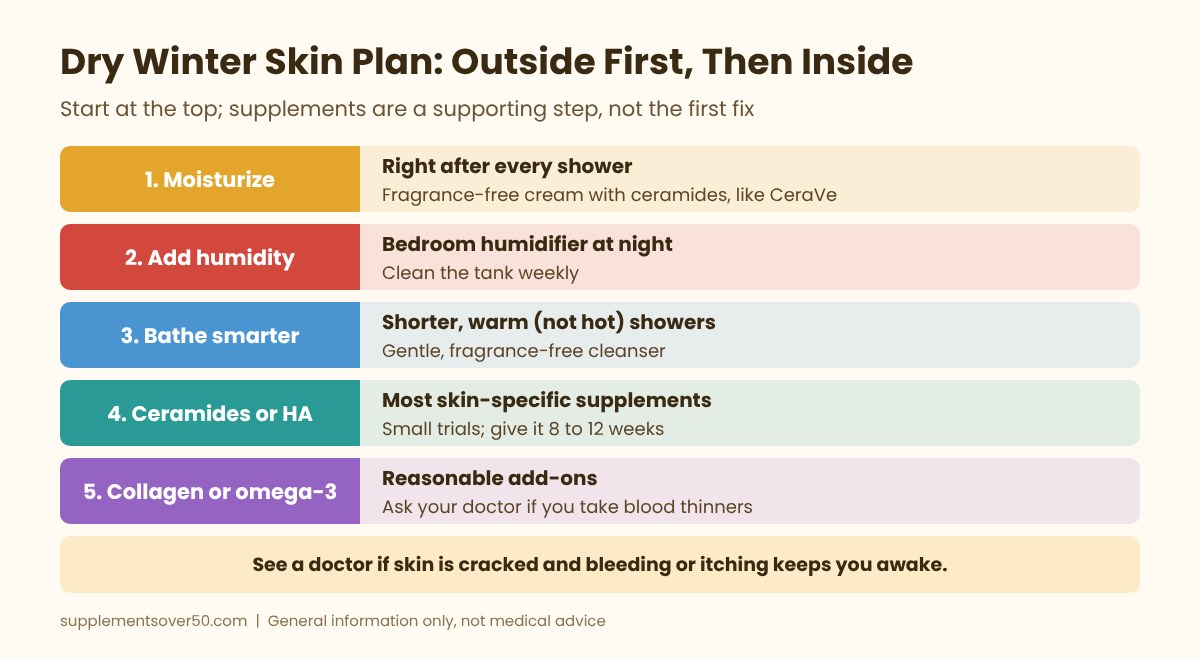
- Moisturize right after bathing, while your skin is still slightly damp, to lock water in.
- Choose a cream or ointment rather than a thin lotion. Look for ceramides, glycerin, hyaluronic acid or petrolatum, and avoid fragrance.
- Take shorter, warm (not hot) showers, and pat dry instead of rubbing.
- Use a gentle, fragrance-free cleanser instead of harsh soap.
- Run a humidifier in the bedroom at night, and clean it regularly.
- Drink enough fluids, especially if you take diuretics or do not feel thirsty, which is common with age.
CeraVe Moisturizing Cream is our go-to budget recommendation. It contains three ceramides and hyaluronic acid, is fragrance free and works on face, body and hands. The big tub lasts all winter.
A humidifier helps your skin, lips, eyes and nose all at once. The Levoit top-fill model is quiet, easy to refill and one of the best-selling humidifiers on Amazon. Use distilled or filtered water if your tap water is hard, and clean the tank weekly to prevent mold and bacteria.
For more topical options, see our guide to the best moisturizer for dry mature skin.
Oral Ceramides (Phytoceramides)
Ceramides are fats that make up a large part of the skin’s outer barrier. Oral ceramide supplements, often called phytoceramides, are made from plant sources such as wheat, rice or konjac. A handful of small clinical trials have found that taking plant ceramides daily for several weeks improved skin hydration and reduced dryness compared with a placebo. The studies are small and often sponsored by ingredient makers, so the evidence is promising rather than proven.
Sports Research Phytoceramides uses Ceratiq, a wheat-derived ceramide ingredient, in a softgel. Because it comes from wheat, check the label if you have a wheat allergy or celiac disease.
Life Extension Skin Restoring Ceramides is a well-known alternative from a brand with a long track record in supplements.
Oral Hyaluronic Acid
Hyaluronic acid is a molecule that helps skin hold water, and the amount in our skin declines with age. You probably know it from serums, but it is also sold as a supplement. Several small trials have found that taking oral hyaluronic acid, often around 100 to 200 mg a day, improved skin moisture over 8 to 12 weeks. As with ceramides, the trials are small, but hyaluronic acid has a good safety record.
NOW Hyaluronic Acid 100 mg is an affordable, popular option that also includes L-proline.
See our full guide to the best hyaluronic acid supplement over 50 for more options.
Collagen Peptides
Collagen gives skin its structure, and the body makes less of it every year after about 25. Hydrolyzed collagen peptides are broken down into small pieces that the body can absorb. A number of trials suggest that taking collagen daily for two to three months can modestly improve skin hydration and elasticity. Many of these studies were funded by collagen makers, so it is fair to treat the results with some caution, but collagen is safe for most people.
NeoCell Super Collagen +C is one of the most popular collagen supplements and adds vitamin C, which the body needs to build collagen.
Our guide to the best collagen supplement for skin over 50 compares marine, bovine and liquid options.
Omega-3 Fatty Acids
Omega-3 fats from fish oil are part of cell membranes throughout the body, including the skin, and they have anti-inflammatory effects. Research on omega-3s specifically for dry skin is limited, though there is more evidence for dry eyes, which often travel with dry skin in winter. If you rarely eat fatty fish, an omega-3 supplement makes sense for overall health, and any skin benefit is a bonus.
Fish oil can increase bleeding risk at high doses, so talk to your doctor if you take blood thinners. Our guide to supplements to avoid with blood thinners explains why.
What About Vitamin D, Vitamin E and Biotin?
Vitamin D is important for many reasons in winter, but there is little evidence it treats ordinary dry skin. See our winter immunity vitamins guide for dosing.
Vitamin E is common in skin creams, and true deficiency is rare. High-dose vitamin E supplements can increase bleeding risk, so we would not take them for dry skin.
Biotin is marketed for skin, hair and nails, but deficiency is uncommon, and high doses can interfere with some lab tests, including thyroid and heart tests. Tell your doctor if you take it.
When Dry Skin Needs a Doctor
See a doctor or dermatologist if your skin is cracked and bleeding, itching keeps you awake, a rash spreads or looks infected, or over-the-counter moisturizers have not helped after two weeks. Persistent itching without a rash can also be a sign of an underlying condition such as thyroid, kidney or liver problems, so it is worth checking.
What supplements help with dry skin in winter?
Oral ceramides (phytoceramides) and hyaluronic acid have the most skin-specific research, with small trials showing better skin hydration after 8 to 12 weeks. Collagen peptides may modestly improve hydration and elasticity. Omega-3s support overall health, but evidence for dry skin specifically is limited.
Do supplements work better than moisturizer for dry skin?
No. A good fragrance-free moisturizer, shorter warm showers and a humidifier usually make the biggest difference. Supplements are best used as a supporting step, not a replacement.
How long do skin supplements take to work?
Most studies on ceramides, hyaluronic acid and collagen measured results after 8 to 12 weeks of daily use. If you start in November, you may not notice a difference until midwinter.
Are phytoceramides safe for seniors?
They appear safe for most healthy adults in the studies done so far. Many phytoceramide products are made from wheat, so people with a wheat allergy or celiac disease should check the label. Ask your doctor if you take several medicines.
Why is my skin so dry after 50?
Aging skin makes less oil and fewer barrier fats such as ceramides, and it holds less water. Menopause reduces skin moisture further, and winter air and indoor heating add to the problem. Some medicines and conditions can also cause dry skin.
Does drinking more water help dry skin?
Staying hydrated matters for overall health, especially in older adults who may feel less thirsty. But drinking extra water alone rarely fixes dry skin. Moisturizing and controlling indoor humidity have a bigger effect.
Our Take
The best plan for dry winter skin after 50 starts on the outside: CeraVe Moisturizing Cream after every shower and a Levoit humidifier in the bedroom. If you want to add a supplement, Sports Research Phytoceramides or NOW Hyaluronic Acid are the most targeted choices. Give them two to three months, and see your doctor if dryness comes with cracking, bleeding or itching that will not quit.
This article is for general information only and is not medical advice. Talk to your doctor or pharmacist before starting a supplement, especially if you take blood thinners or other prescription medicines, have allergies or are being treated for a skin, thyroid or kidney condition.